
Catalogue Search | MBRL


Are you sure you want to remove the book from the shelf?

{{itemTitle}}
63
result(s) for
"Mouse, Mickey"
Sort by:

Mickey & Minnie : storybook collection
A collection of stories featuring Disney characters including tales about Donald competing in the county fair, Mickey and Minnie sailing down a river, and Goofy racing kites.
BOOK

A Mickey Mouse Reader
Ranging from the playful, to the fact-filled, and to the thoughtful, this collection tracks the fortunes of Walt Disney's flagship character. From the first full-fledged review of his screen debut in November 1928 to the present day, Mickey Mouse has won millions of fans and charmed even the harshest of critics. Almost half of the eighty-one texts inA Mickey Mouse Readerdocument the Mouse's rise to glory from that first cartoon,Steamboat Willie, through his seventh year when his first color animation,The Band Concert, was released. They include two important early critiques, one by the American culture critic Gilbert Seldes and one by the famed English novelist E. M. Forster.
Articles and essays chronicle the continued rise of Mickey Mouse to the rank of true icon. He remains arguably the most vivid graphic expression to date of key traits of the American character--pluck, cheerfulness, innocence, energy, and fidelity to family and friends. Among press reports in the book is one from June 1944 that puts to rest the urban legend that \"Mickey Mouse\" was a password or code word on D-Day. It was, however, the password for a major pre-invasion briefing.
Other items illuminate the origins of \"Mickey Mouse\" as a term for things deemed petty or unsophisticated. One piece explains how Walt and brother Roy Disney, almost single-handedly, invented the strategy of corporate synergy by tagging sales of Mickey Mouse toys and goods to the release of Mickey's latest cartoons shorts. In two especially interesting essays, Maurice Sendak and John Updike look back over the years and give their personal reflections on the character they loved as boys growing up in the 1930s.
eBook

5 minute Mickey Mouse stories
Follows Mickey and his friends on twelve adventures, as they learn to surf, go white-water rafting, and visit the amusement park.
BOOK

Imaging Criteria for the Diagnosis of Progressive Supranuclear Palsy: Supportive or Mandatory?
We present the case of a 54-year-old male, without any significant medical history, who insidiously developed speech disturbances and walking difficulties, accompanied by backward falls. The symptoms progressively worsened over time. The patient was initially diagnosed with Parkinson’s disease; however, he failed to respond to standard therapy with Levodopa. He came to our attention for worsening postural instability and binocular diplopia. A neurological exam was highly suggestive of a Parkinson-plus disease, most likely progressive supranuclear gaze palsy. Brain MRI was performed and revealed moderate midbrain atrophy with the characteristic “hummingbird” and “Mickey mouse” signs. An increased MR parkinsonism index was also noted. Based on all clinical and paraclinical data, a diagnosis of probable progressive supranuclear palsy was established. We review the main imaging features of this disease and their current role in diagnosis.
Journal Article

Learn to draw Disney Mickey Mouse and his friends
Provides step-by-step instructions on how to draw Mickey Mouse and his friends.
Book

The role of the “beret” sign and other markers in ultrasound diagnostic of the acrania–exencephaly–anencephaly sequence stages
IntroductionNeural tube defects (NTDs) are a group of heterogeneous congenital anomalies of the central nervous system (CNS). Acrania is a non-NTD congenital disorder related to the CNS. It can transform into anencephaly through the acrania–exencephaly–anencephaly sequence (AEAS). In AEAS, the cerebral tissue is not protected and is gradually destroyed due to exposure to the harmful effect of amniotic fluid and mechanical injuries. These lead to exencephaly and then into anencephaly. In contrast to primary anencephaly (NTDs), this type of anencephaly authors suggests calling secondary anencephaly.ObjectiveAnalysis of the known prenatal ultrasonography (US) signs associated with AEAS. Simultaneously, the authors propose a new sign in the differentiation of acrania from exencephaly and anencephaly, called the “beret” sign.MethodsIt is a two-centre retrospective observational study. As part of the study, 4060 US scans were analyzed.ResultsIn 10 cases, the absence of calvarium was diagnosed, allowing recognition of either AEAS stages or primary anencephaly. In 5 cases, cerebral structures were enclosed by an inertial rippled thin membrane, with a smooth outer contour. Between the described membrane and the brain structures, a thin anechoic space corresponding to cerebrospinal fluid was observed. This sign was defined as the “beret” sign. In these cases, acrania was diagnosed. In three cases calvarium was missing. The brain structures had an irregular appearance, did not wave and remained motionless. The outer contour was unequal as if divided into lobes. Amniotic fluid was anechoic. Exencephaly was diagnosed in these cases. In two cases calvarium, brain structures, and meninges were missing. The “frog eyes” sign and slightly echogenic amniotic fluid were visible. In this case, anencephaly was diagnosed.ConclusionsThe “beret” sign seems to be a promising tool in the diagnosis of acrania. Furthermore, echogenicity of amniotic fluid could be useful during differentiation between primary and secondary anencephaly.
Journal Article

The sorcerer's apprentice
A sorcerer's young apprentice attempts to practice magic in his master's absence, with disastrous results.
Book

Mickey Mouse Sign on Bone Scan in the Monostotic Form of Paget’s Disease Mimicking Osseous Metastasis
Paget’s disease is a chronic benign bone disease characterized by excessive and abnormal bone remodeling. Monostotic Paget’s disease accounts for only 20% of the cases, and the monostotic form involving the vertebra with the Mickey Mouse sign is very rare. Herein, we report a case of suspected bony metastasis in the second lumbar vertebra that was diagnosed as Paget’s disease because of the Mickey Mouse sign on bone scintigraphy, and the diagnosis was confirmed by biopsy. Therefore, bone scintigraphy may provide a positive contribution to the diagnosis, and may help to avoid unnecessary biopsy in cases with specific signs and patterns.
Journal Article

Walt Disney's Mickey and the beanstalk
Retells the traditional tale of Jack and the beanstalk with Mickey Mouse, Donald Duck, and Goofy playing major roles.
Book
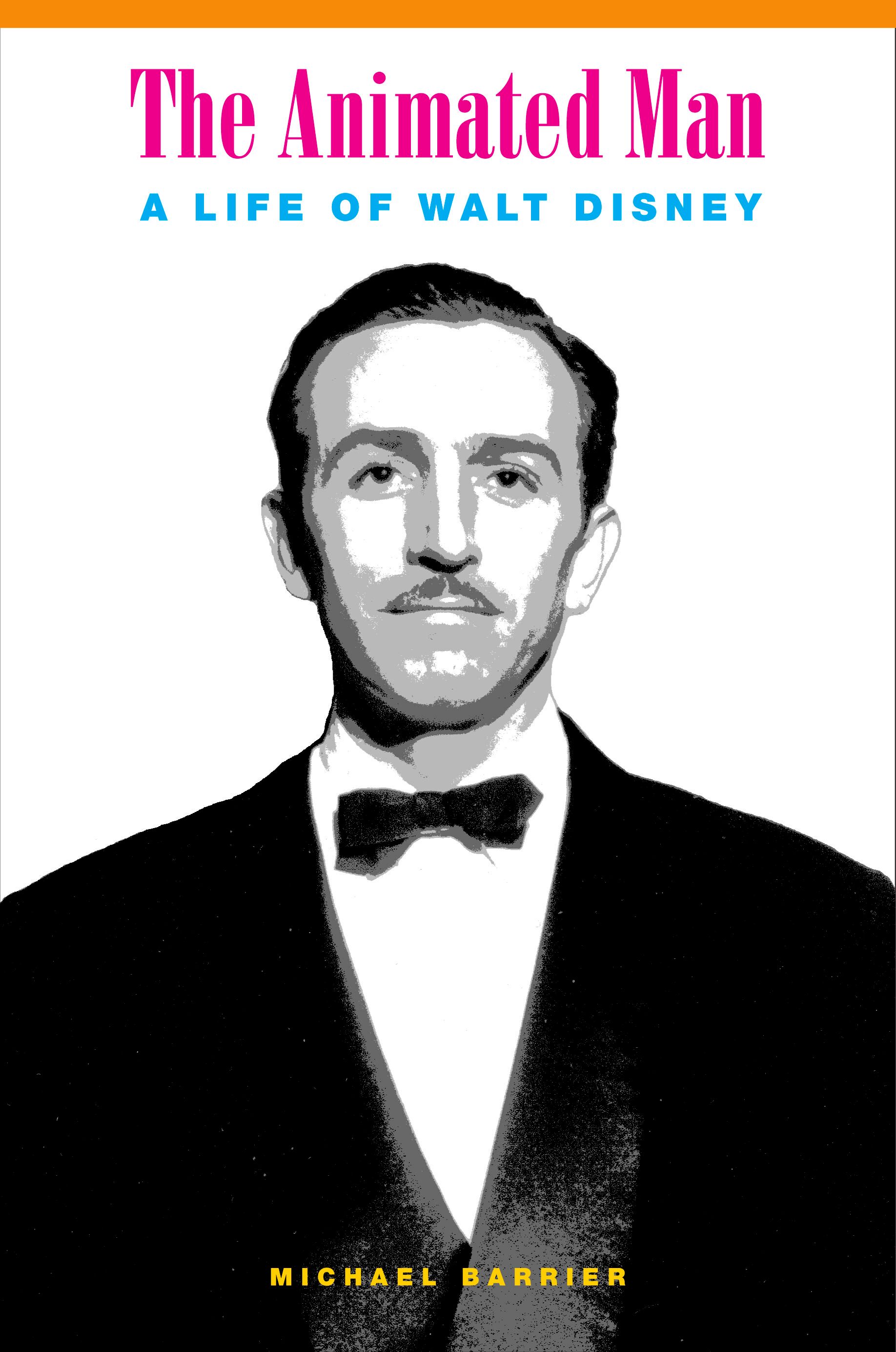
The Animated Man
Walt Disney (1901-1966) was one of the most significant creative forces of the twentieth century, a man who made a lasting impact on the art of the animated film, the history of American business, and the evolution of twentieth-century American culture. He was both a creative visionary and a dynamic entrepreneur, roles whose demands he often could not reconcile. In his compelling new biography, noted animation historian Michael Barrier avoids the well-traveled paths of previous biographers, who have tended to portray a blemish-free Disney or to indulge in lurid speculation. Instead, he takes the full measure of the man in his many aspects. A consummate storyteller, Barrier describes how Disney transformed himself from Midwestern farm boy to scrambling young businessman to pioneering artist and, finally, to entrepreneur on a grand scale. Barrier describes in absorbing detail how Disney synchronized sound with animation in Steamboat Willie; created in Snow White and the Seven Dwarfs sympathetic cartoon characters whose appeal rivaled that of the best live-action performers; grasped television’s true potential as an unparalleled promotional device; and—not least—parlayed a backyard railroad into the Disneyland juggernaut. Based on decades of painstaking research in the Disney studio’s archives and dozens of public and private archives in the United States and Europe, The Animated Man offers freshly documented and illuminating accounts of Disney’s childhood and young adulthood in rural Missouri and Kansas City. It sheds new light on such crucial episodes in Disney’s life as the devastating 1941 strike at his studio, when his ambitions as artist and entrepreneur first came into serious conflict.Beginning in 1969, two and a half years after Disney’s death, Barrier recorded long interviews with more than 150 people who worked alongside Disney, some as early as 1922. Now almost all deceased, only a few were ever interviewed for other books. Barrier juxtaposes Disney’s own recollections against the memories of those other players to great effect. What emerges is a portrait of Walt Disney as a flawed but fascinating artist, one whose imaginative leaps allowed him to vault ahead of the competition and produce work that even today commands the attention of audiences worldwide.
eBook