
Catalogue Search | MBRL


Are you sure you want to remove the book from the shelf?

{{itemTitle}}
6,558
result(s) for
"Moynihan, Daniel P"
Sort by:


Beyond Civil Rights
Shortly after the 1964 Civil Rights Act, Daniel Patrick Moynihan authored a government report titledThe Negro Family: A Case for National Actionthat captured the attention of President Lyndon Johnson. Responding to the demands of African American activists that the United States go beyond civil rights to secure economic justice, Moynihan thought his analysis of black families highlighted socioeconomic inequality. However, the report's central argument that poor families headed by single mothers inhibited African American progress touched off a heated controversy. The long-running dispute over Moynihan's conclusions changed how Americans talk about race, the family, and poverty.
Fifty years after its publication, the Moynihan Report remains a touchstone in contemporary racial politics, cited by President Barack Obama and Congressman Paul Ryan among others.Beyond Civil Rightsoffers the definitive history of the Moynihan Report controversy. Focusing on competing interpretations of the report from the mid-1960s to the late 1970s, Geary demonstrates its significance for liberals, conservatives, neoconservatives, civil rights leaders, Black Power activists, and feminists. He also illustrates the pitfalls of discussing racial inequality primarily in terms of family structure.Beyond Civil Rightscaptures a watershed moment in American history that reveals the roots of current political divisions and the stakes of a public debate that has extended for decades.
eBook

Blaming the Poor : The Long Shadow of the Moynihan Report on Cruel Images about Poverty
\"In 1965, the late Senator Daniel Patrick Moynihan--then a high-ranking official in the Department of Labor--sparked a firestorm when he released his report \"The Negro Family,\" which came to be regarded by both supporters and detractors as an indictment of African American culture. Blaming the Poor examines the regrettably durable impact of the Moynihan Report for race relations and social policy in America, challenging the humiliating image the report cast on poor black families and its misleading explanation of the causes of poverty. A leading authority on poverty and racism in the United States, Susan D. Greenbaum dismantles Moynihan's main thesis--that the so called matriarchal structure of the African American family \"feminized\" black men, making them inadequate workers and absent fathers, and resulting in what he called a tangle of pathology that led to a host of ills, from teen pregnancy to adult crime. Drawing on extensive scholarship, Greenbaum highlights the flaws in Moynihan's analysis. She reveals how his questionable ideas have been used to redirect blame for substandard schools, low wages, and the scarcity of jobs away from the societal forces that cause these problems, while simultaneously reinforcing stereotypes about African Americans. Greenbaum also critiques current policy issues that are directly affected by the tangle of pathology mindset--the demonization and destruction of public housing; the criminalization of black youth; and the continued humiliation of the poor by entrepreneurs who become rich consulting to teachers, non-profits, and social service personnel. A half century later, Moynihan's thesis remains for many a convenient justification for punitive measures and stingy indifference to the poor. Blaming the Poor debunks this infamous thesis, proposing instead more productive and humane policies to address the enormous problems facing us today. \"-- Provided by publisher.
Book

The Professor and the President
What happens when a conservative president makes a liberal professor from the Ivy League his top urban affairs adviser? The president is Richard Nixon, the professor is Harvard's Daniel Patrick Moynihan. Of all the odd couples in American public life, they are probably the oddest. Add another Ivy League professor to the White House staff when Nixon appoints Columbia's Arthur Burns, a conservative economist, as domestic policy adviser. The year is 1969, and what follows behind closed doors is a passionate debate of conflicting ideologies and personalities.
Who won? How? Why? Now nearly a half-century later, Stephen Hess, who was Nixon's biographer and Moynihan's deputy, recounts this fascinating story as if from his office in the West Wing.
Daniel Patrick Moynihan (1927-2003) described in the Almanac of American Politics as \"the nation's best thinker among politicians since Lincoln and its best politician among thinkers since Jefferson\", served in the administrations of four presidents, was ambassador to India, and U.S. representative to the United Nations, and was four times elected to the U.S. Senate from New York.
Praise for the works of Stephen Hess
Organzing the Presidency
Any president would benefit from reading Mr. Hess's analysis and any reader will enjoy the elegance with which it is written and the author's wide knowledge and good sense. -The Economist
The Presidential Campaign
Hess brings not only first-rate credentials, but a cool, dispassionate perspective, an incisive analytical approach, and a willingness to stick his neck out in making judgments. -American Political Science Review
From the Newswork Series
It is not much in vogue to speak of things like the public trust, but thankfully Stephen Hess is old fashioned. He reminds us in this valuable and provocative book that journalism is a public trust, providing the basic information on which citizens in a democracy vote, or tune out. - Ken Auletta, The New Yorker
eBook


From Main Street to Mall
The geography of American retail has changed dramatically since the first luxurious department stores sprang up in nineteenth-century cities. Introducing light, color, and music to dry-goods emporia, these \"palaces of consumption\" transformed mere trade into occasions for pleasure and spectacle. Through the early twentieth century, department stores remained centers of social activity in local communities. But after World War II, suburban growth and the ubiquity of automobiles shifted the seat of economic prosperity to malls and shopping centers. The subsequent rise of discount big-box stores and electronic shopping accelerated the pace at which local department stores were shuttered or absorbed by national chains. But as the outpouring of nostalgia for lost downtown stores and historic shopping districts would indicate, these vibrant social institutions were intimately connected to American political, cultural, and economic identities.The first national study of the department store industry, From Main Street to Mall traces the changing economic and political contexts that transformed the American shopping experience in the twentieth century. With careful attention to small-town stores as well as glamorous landmarks such as Marshall Field's in Chicago and Wanamaker's in Philadelphia, historian Vicki Howard offers a comprehensive account of the uneven trajectory that brought about the loss of locally identified department store firms and the rise of national chains like Macy's and J. C. Penney. She draws on a wealth of primary source evidence to demonstrate how the decisions of consumers, government policy makers, and department store industry leaders culminated in today's Wal-Mart world. Richly illustrated with archival photographs of the nation's beloved downtown business centers, From Main Street to Mall shows that department stores were more than just places to shop.
eBook


Moynihan's moment : America's fight against Zionism as racism
A critical look at American Ambassador to the UN Daniel Patrick Moynihan's valiant stand against its 1975 declaration of Zionism as a form of racism shows just how much -- and how little -- Moynihan's moment accomplished, and how relevant it remains today.
eBook
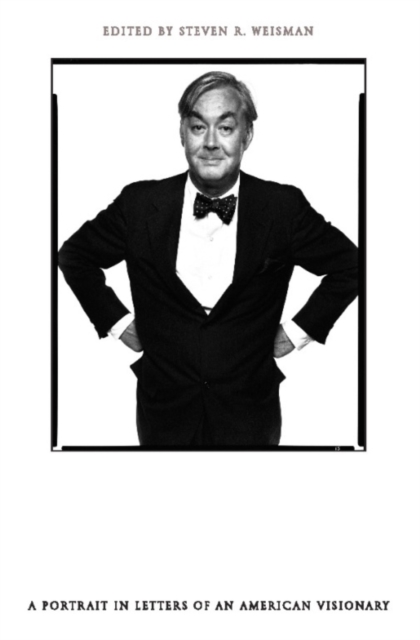
Daniel Patrick Moynihan : a portrait in letters of an American visionary
When Daniel Patrick Moynihan died in 2003 theEconomistdescribed him as \"a philosopher-politician-diplomat who two centuries earlier would not have been out of place among the Founding Fathers.\" Though Moynihan never wrote an autobiography, he was a gifted author and voluminous correspondent, and in this selection from his letters Steven Weisman has compiled a vivid portrait of Moynihan's life, in the senator's own words.Before his four terms as Senator from New York, Moynihan served in key positions under Presidents Kennedy, Johnson, Nixon, and Ford. His letters offer an extraordinary window into particular moments in history, from his feelings of loss at JFK's assassination, to his passionate pleas to Nixon not to make Vietnam a Nixon war, to his frustrations over healthcare and welfare reform during the Clinton era.This book showcases the unbridled range of Moynihan's intellect and interests, his appreciation for his constituents, his renowned wit, and his warmth even for those with whom he profoundly disagreed. Its publication is a significant literary event.
eBook

Daniel Patrick Moynihan and the Politics of Tragedy
How does tragedy, primarily a dramatic-literary experience, shape politics? While scholars have mostly looked to classical tragedy and expressions of public mourning to answer this, I employ a policy-oriented case study to do so: the politics of Daniel Patrick Moynihan. Widely known for his data-driven social science, I want to suggest the counterintuitive claim that the popular senator from New York was ironically also influenced deeply by literary tragedy. This article demonstrates how Moynihan cultivated a set of tragic sensibilities that informed his realist political calculations and implanted in his policies a tragic awareness that limited the goals of what government could achieve, while helping define what it should and how. Rather than evaluate the validity of his controversial proposals from the 1960s, I offer a critical reexamination that highlights the tragic impulses coloring them. In the process, I conceptualize a politics of tragedy as a “tamed” form of postwar liberalism.
Journal Article