
Catalogue Search | MBRL


Are you sure you want to remove the book from the shelf?

{{itemTitle}}
703
result(s) for
"Multicultural Media"
Sort by:

The Role of Multicultural Media in Connecting Municipal Governments with Ethnocultural and Immigrant Communities: The Case of Ottawa
This paper aims to advance understanding of the role ethnic and multicultural media can play in connecting municipal governments and Ethnocultural and Immigrant Communities (EICs). Using an innovative mixed-methods approach and methodological triangulation, we compare the access to and use of multicultural media among four EICs--the Chinese, Latin American, Somali, and South Asian--in Ottawa, Canada. Our cross-comparative study yields three main findings: 1) members of participating communities proactively and strategically use a variety of sources to access information about local services; 2) noteworthy differences exist in the access to and use of different types of media both across and within the four EICs, due to demographic and cultural differences; and 3) participants shared challenges and opportunities that multicultural media afford to better connect municipal government and EICs. The paper's findings make important empirical contributions to the literature on the integrative potential of ethnic and multicultural media by strengthening the reliability of data, validity of findings, and broadening and deepening understanding the role multicultural media play in promoting collaboration between city governments and diverse EICs.
Journal Article
Multicultural Media in a Post-Multicultural Canada? Rethinking Integration
This paper addresses the post-multicultural challenges that confront the integrative logic of Canada's multicultural media. Multicultural (or ethnic) media once complemented the integrative agenda of Canada's official multiculturalism, but the drift toward a post-multicultural Canada points to the possibility of a post-multicultural media that capitalizes on the positive aspects of multicultural media. The argument is predicated on the following assumption: an evolving context that no longer is multicultural but increasingly transnational, multiversal, and post-ethnic exposes the shortcomings of a multicultural media when applied to the lived-realities of those who resent being boxed into ethnic silos that gloss over multiple connections and multidimensional crossings. According to this line of argument, both diversity governance and ethnic media must reinvent themselves along more post-multicultural lines to better engage the transnational challenges and multiversal demands of a post-multicultural turn. Time will tell if a post-multicultural media can incorporate the strengths of a multicultural media, yet move positively forward in capturing the nuances of complex diversities and diverse complexities. Evidence would suggest \"yes\", and that a post-multicultural media may well represent an ideal that reflects and reinforces the new integrative realities of a post-ethnic Canada.
Journal Article
The Role of Multicultural Media in Connecting Municipal Governments with Ethnocultural Communities: The Case of Ottawa
This paper aims to advance understanding of the role ethnic and multicultural media can play in connecting municipal governments and Ethnocultural and Immigrant Communities (EICs). Using an innovative mixed-methods approach and methodological triangulation, we compare the access to and use of multicultural media among four EICs—the Chinese, Latin American, Somali and South Asian—in Ottawa, Canada. Our cross-comparative study yields three main findings: 1) members of participating communities proactively and strategically use a variety of sources to access information about local services; 2) noteworthy differences exist in the access to and use of different types of media both across and within the four EICs, due to demographic and cultural differences; and 3) participants shared challenges and opportunities that multicultural media afford to better connect municipal government and EICs. The paper’s findings make important empirical contributions to the literature on the integrative potential of ethnic and multicultural media by strengthening the reliability of data, validity of findings, and broadening and deepening understanding the role multicultural media play in promoting collaboration between city governments and diverse EICs.
Journal Article

The handbook of diasporas, media, and culture
A multidisciplinary, authoritative outline of the current intellectual landscape of the field.
Over the past three decades, the term 'diaspora' has been featured in many research studies and in wider theoretical debates in areas such as communications, the humanities, social sciences, politics, and international relations. The Handbook of Diasporas, Media, and Culture explores new dimensions of human mobility and connectivity—presenting state-of-the-art research and key debates on the intersection of media, cultural, and diasporic studies
This innovative and timely book helps readers to understand diasporic cultures and their impact on the globalized world.
The Handbook presents contributions from internationally-recognized scholars and researchers to strengthen understanding of diasporas and diasporic cultures, diasporic media and cultural resources, and the various forms of diasporic organization, expression, production, distribution, and consumption. Divided into seven sections, this wide-ranging volume covers topics such as methodological challenges and innovations in diasporic research, the construction of diasporic identity, the politics of diasporic integration, the intersection of gender and generation with the diasporic condition, new technologies in media, and many others. A much-needed resource for anyone with interest diasporic studies, this book:
* Presents new and original theory, research, and essays
* Employs unique methodological and conceptual debates
* Offers contributions from a multidisciplinary team of scholars and researchers
* Explores new and emerging trends in the study of diasporas and media
* Applies a wide-ranging, international perspective to the subject
Due to its international perspective, interdisciplinary approach, and wide range of authors from around the world, The Handbook of Diasporas, Media, and Culture is ideal for undergraduate and graduate students, teachers, lecturers, and researchers in areas that focus on the relationship of media and society, ethnic identity, race, class and gender, globalization and immigration, and other relevant fields.
eBook

Multicultural Media Use and Immigrant Settlement: A Comparative Study of Four Communities in Ottawa, Canada
Multicultural media serve as important sources of information for immigrant settlement. However, little is known about the role of multicultural media in the process of immigrant settlement. Our aim was to address this gap and to advance understanding of multicultural media use and immigrant settlement through a detailed empirical study involving four ethnocultural and immigrant communities (EICs)—the Chinese, Spanish-speaking Latin American, Somali, and South Asian—in Ottawa, Canada. Using a conceptual framework combining notions of immigrant contexts of reception, and immigrant settlement and information seeking, we present and analyze the findings of a large survey data set (
N
= 1212) comparing types of multicultural print, broadcast, and digital media use by immigration category, length of stay, and yearly household income. Based on our findings, we argue that variations exist in the use of multicultural media both within and across the four participating EICs; while factors such as availability of multicultural media as well as length of stay in Canada and, to some extent, household income play a role, immigration category is less significant. Furthermore, we advance that although EICs do use various types of multicultural media, they tend to favor digital media. These findings contribute to improved understanding of the role of multicultural media use in the everyday lives of EICs and provide directions for future research and for the development of relevant policies and practices to address immigrant information needs and facilitate their settlement process.
Journal Article
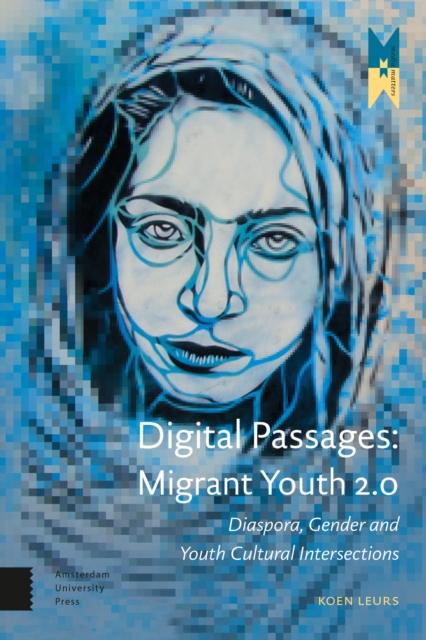
Digital Passages: Migrant Youth 2.0
Increasingly, young people live online, with the vast majority of their social and cultural interactions conducted through means other than face-to-face conversation. How does this transition impact the ways in which young migrants understand, negotiate, and perform identity? That's the question taken up by Digital Passages: Migrant Youth 2.0, a ground-breaking analysis of the ways that youth culture online interacts with issues of diaspora, gender, and belonging. Drawing on surveys, in-depth interviews, and ethnography, Koen Leurs builds an interdisciplinary portrait of online youth culture and the spaces it opens up for migrant youth to negotiate power relations and to promote intercultural understanding.
eBook
Commentary: Rethinking Multicultural/Multiracial Media and the Integrity of Immigrant Integration
While it is still early to tell, the 2015 federal election campaign suggests a different conjuncture: a new politics of “call out” and “call in” culture on racism in Canadian political culture, and new assertiveness and division of labour between multicultural and mainstream media in campaign coverage. After the majority of Canadian voters rejected racialized wedge politics, the next important task is de-essentialization. A term usually applied to identity politics, this article argues for a broader creative economy lens on how it can also be applied to multicultural/multiracial media policy, the forthcoming Syrian influx of refugees, and evaluating the inclusivity and integrity of immigrant integration.
Journal Article

Understanding ethnic media : producers, consumers, and societies
A relevant and timely book with a unique approach: the focus here is on how and why ethnic and racial minorities produce and consume media for themselves - not just how they are represented in or by the media.
eBook

Digital Passages
Increasingly, young people live online, with the vast majority of their social and cultural interactions conducted through means other than face-to-face conversation. How does this transition impact the ways in which young migrants understand, negotiate, and perform identity? That’s the question taken up by Digital Passages: Migrant Youth 2.0 , a groundbreaking analysis of the ways that youth culture online interacts with issues of diaspora, gender, and belonging. Drawing on surveys, in-depth interviews, and ethnography, Koen Leurs builds an interdisciplinary portrait of online youth culture and the spaces it opens up for migrant youth to negotiate power relations and to promote intercultural understanding.
eBook