
Catalogue Search | MBRL


Are you sure you want to remove the book from the shelf?

{{itemTitle}}
113
result(s) for
"Multicultural education Great Britain."
Sort by:

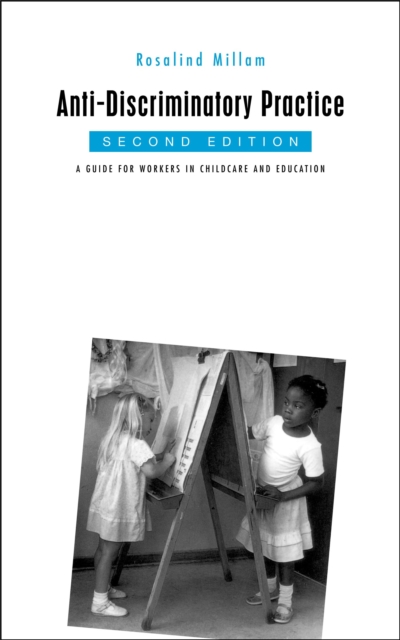
Anti-discriminatory practice
Those who work in childcare and educational settings have an ethical and legal responsibility to take into account children's cultural, ethnic, religious and linguistic backgrounds. This fully updated second edition of Rosalind Millam's popular handbook provides wide-ranging guide to anti-discriminatory practice, incorporating practical applications, research findings and legal issues.
eBook

Equality and ethnic identities : studies of self-concept, child abuse and education in a changing English culture
This book combines history, sociology, psychology and educational policy in research on a 40-year, crucial phase of development of ethnic identity, ethnic relations and educational and social policies for children in England, from pre-school to secondary school. The authors show how nursery children of different ethnicities interact in beginning their identity journeys in a culture of both inequality, and evolving ethnic relationships and patterns of harmony, in Britain's developing multicultural society. In looking at self-concept development in secondary school children through the lens of various kinds of child maltreatment, Alice Sawyerr and Christopher Bagley argue that ethnic minority children are psychological survivors, and African-Caribbean girls especially are making strong identity steps - it is the \"poor whites\" who will make up the precariat, the reserve army of labour, who are left behind in structures of inequality.-- Back cover.
Book

Equality, Participation and Inclusion 2
What are the experiences of children and young people?
How can we think about the challenges they face?
What systems and practices can support them?
How can we develop greater equality, participation and inclusion across diverse settings?
This second edition of Equality, Participation and Inclusion 2: Diverse Contexts is the second of two Readers aimed at people with an interest in issues of equality, participation and inclusion for children and young people. This second Reader focuses in particular upon the diverse experiences and contexts in which children and young people encounter issues of equality, participation and inclusion.
Comprising readings taken from the latest research in journal articles, newly commissioned chapters, as well as several chapters from the first edition that retain particular relevance, this fully updated second edition has broadened its focus to consider a wider range of diverse experiences and contexts, whilst maintaining an emphasis on educational settings.
Drawing on the writing of academics, practitioners, children and young people, this collection is a rich source of information and ideas for students and practitioners who are interested in thinking about how inequality and exclusion are experienced, and how they can be challenged, and will be of particular interest to those working in education, health, youth and community work, youth justice and social services. Families and advocates are also likely to be drawn to the material as much of it reflects on lived experiences and life stories.
Jonathan Rix is Senior Lecturer in inclusion, curriculum and learning at The Open University, UK.
Melanie Nind is Professor of Education at Southampton University, UK.
Kieron Sheehy is Senior Lecturer at the Centre for Childhood Development at The Open University, UK.
Katy Simmons is a Lecturer in inclusive and special education in the Centre for Curriculum and Teaching Studies at The Open University, UK.
John Parry is a Lecturer in early years and inclusion at The Open University, UK.
Rajni Kumrai is a Lecturer in education in the Faculty of Education and Language Studies at The Open University, UK.
Contents
1 Introduction Another place
John Parry, Jonty Rix, Rajni Kumrai and Chris Walsh
Part 1: More than one way
2 Reciprocal working by education, health and social services: lessons for a less-travelled road
Roy McConkey
3 Child and parent relationships with teachers in schools responsible for the education of children with serious medical conditions
Claire Norris and Alison Closs
4 Children’s homes and school exclusion: redefining the problem
Isabelle Brodie
5 Inclusion for the difficult to include
John Visser, Ted Cole and Harry Daniels
Part 2: Transitions: coming together
6 \"We are the ones we have been waiting for\": the work of community mobilisers in Milton Keynes
Katy Simmons, Alla Laerke, Danny Conway and Martin Woodhead
7 ‘Back to school’ - piloting an occupational therapy service in mainstream schools in the UK
Eve Hutton
8 Inclusion at Bangabandhu Primary School
Cathy Phillips and Helen Jenner
9 A personal perspective – developing a partnership approach at Deri View Primary School and Acorn Integrated Children’s Centre
Maggie Teague
10 Voices from segregated schooling: towards an inclusive education system
Tina Cook, John Swain and Sally French
11 Professional identity in multi-disciplinary teams: the staff speak
Ann Workman and Jeremy Pickard
Part 3: On the margins
12 Interviews with young people about behavioural support: equality, fairness and rights
Paul Hamill and Brian Boyd
13 Disadvantage and discrimination compounded: the experience of Pakistani and Bangladeshi parents of disabled children in the UK
Qulsom Fazil, Paul Bywaters, Zoebia Ali, Louise Wallace and Gurnam Singh
14 Teachers and Gypsy Travellers
Gwynedd Lloyd, Joan Stead, Elizabeth Jordan and Claire Norris
15 Peer support for young people with same-sex attraction
Colm Crowley, Susan Hallam, Rom Harre and Ingrid Lunt
16 Exclusion: a silent protest
Janet Collins
17 Media portrayal of young people – impact and influence,
Catherine Clark, Amrita Ghosh, Emrys Gree and Naushin Shariff
18 The impossibility of minority ethnic educational 'success'? An examination of the discourses of teachers and pupils in Britishs secondary schools
Louise Archer
Part 4: Thinking differently
19 Learning without limits
Susan Hart
20 Gender, ‘special educational needs’ and inclusion
Shereen Benjamin
21 ‘Part of who we are as a school should include responsibility for well-being’: links between the school environment, mental health and behaviour
Jennifer Spratt, Janet Shucksmith, Kate Philip and Cate Watson
22 Children and young people in hospitals: doing youth work in medical settings'
Scott Yates, Malcolm Payne, and Simon Dyson
23 Working in the community with young people who offend
Alice Sampson and Spyros Themelis
eBook

Chinese students, learning cultures and overseas study
\"This book focuses on the phenomenon of Chinese postgraduate students studying abroad and depicts their learning trajectory as they adjust to a new culture of teaching and learning in a new environment. Using an example of students at a British university suggestions are made about how they make adjustments, emotionally, cognitively, and behaviourally, in order to make their learning successful, with the result of changes and developments in their conceptions and beliefs about knowing and learning. It draws together understanding from the fields of intercultural adaptation theories, tertiary students' conceptions of learning research, and the interface of culture and learning, that is, cultures of learning, to explore the impact of studying abroad on students' intellectual development and personal growth so as to inform current international and intercultural education\"-- Provided by publisher.
Book

Creating Gender-Fair Schools, Classrooms and Colleges
For many teachers, gender issues related to role models, image and expectations have an effect upon the behaviour and achievement of both boys and girls, often to their disadvantage. This innovative and practical resource, for teachers of students aged 14-19provides: o a programme to promote gender equality and inclusivity in schools and colleges o a rationale for the programme based on social justice o a practical set of classroom activities to implement the programme The book adopts an ′action inquiry′ methodology - engaging students and staff in the processes of investigating what is currently happening, and planning, implementing and reviewing improvements. This contributes to the development of the school or college as a self-evaluating organisation which listens to the voice of the young person. The programme also supports teachers and other school staff in developing as reflective practitioners, and children and young people in developing as reflective learners.
eBook


Equity and Inclusion in Physical Education and Sport
An essential component of good practice in physical education is ensuring inclusivity for all pupils, regardless of need, ability or background. Now in a fully revised and updated new edition, Equity and Inclusion in Physical Education fully explores the theoretical and practical issues faced by physical education teachers today.
The book amalgamates areas of critical debate within the world of physical education and is structured around the key topics of ability, special educational needs, gender, sexuality, social class, race and ethnicity. These issues are discussed in relation to principles of equity, equality of opportunity, pedagogy, differentiation, curriculum planning and cultural awareness. Other chapters explore contemporary themes such as healthism and obesity and values in physical education and policy, whilst a chapter new to this edition demonstrates the importance of reflexivity and critical self-reflection in good inclusive practice.
As well as being a perfect introductory text for any course on inclusion or inclusive practice in physical education, the book offers invaluable, practical advice for established professionals, newly qualified teachers and trainees about how to meet equity and inclusion requirements. Examples of good practice are included throughout, as well as guidance on how to implement an inclusive PE curriculum within the school.
eBook


British-born Black African Youth and Educational Social Capital
This book examines the extent to which British-born Black African youth have access to opportunities and support during their pre-school, primary school and secondary school years.
Through the voice of British-born Black African youth, this book explores why and how some racial-ethnic and linguistic minority students fail academically while students from other linguistic minorities excel despite coming from similar socio-economic backgrounds. Drawing on interpretive-qualitative research analysis, the author demonstrates the racial dimension of social capital in education that challenges the traditional social capital theory, which recodes structural notions of racial inequality as primarily cultural, social, and human capital processes and interactions. In contrast to the focus on achievement gaps, the concept of opportunity gaps shows how and why language policies have shaped the educational experiences and outcomes of linguistic minority students.
This book will be of interest to policy makers, practitioners and scholars of Multicultural Education, Black and African Diaspora Studies and Educational Sociology.
eBook