
Catalogue Search | MBRL


Are you sure you want to remove the book from the shelf?

{{itemTitle}}
5
result(s) for
"Multilingual persons Biography."
Sort by:


Blacks, Reds, and Russians
One of the most compelling, yet little known stories of race relations in the twentieth century is the account of blacks who chose to leave the United States to be involved in the Soviet Experiment in the 1920s and 1930s. Frustrated by the limitations imposed by racism in their home country, African Americans were lured by the promise of opportunity abroad. A number of them settled there, raised families, and became integrated into society. The Soviet economy likewise reaped enormous benefits from the talent and expertise that these individuals brought, and the all around success story became a platform for political leaders to boast their party goals of creating a society where all members were equal.In Blacks, Reds, and Russians, Joy Gleason Carew offers insight into the political strategies that often underlie relationships between different peoples and countries. She draws on the autobiographies of key sojourners, including Harry Haywood and Robert Robinson, in addition to the writings of Claude McKay, W.E.B. Du Bois, and Langston Hughes. Interviews with the descendents of figures such as Paul Robeson and Oliver Golden offer rare personal insights into the story of a group of emigrants who, confronted by the daunting challenges of making a life for themselves in a racist United States, found unprecedented opportunities in communist Russia.
eBook
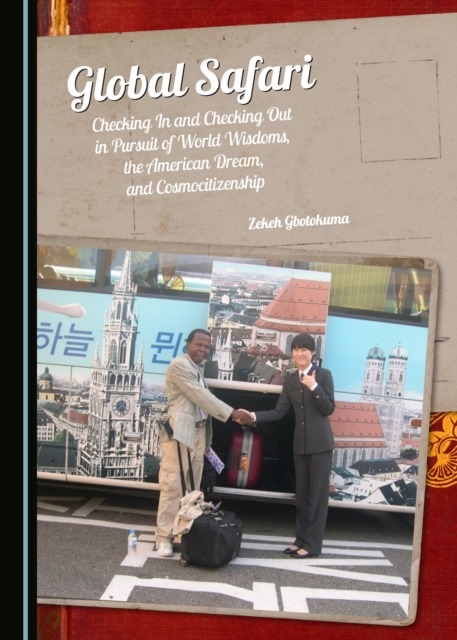
Global Safari
Global Safari is a memoir-travelogue, offering an account of the author's intercontinental travel experiences from his local village to the more global \"village\", from Africa to Europe, the Americas, and Asia. This book is a story about courage, international friendship, hope, survival, procrastinated return and homecoming to the Democratic Republic of the Congo. The book shows the process of achieving international competency and cosmocitizenship, or global citizenship, through a \"world-ready\" education, working, networking, and immersion into world cultures and languages. Its distinguishing features include its willingness to tell real-life stories, share lived travel-based experiences, and draw lessons for personal, professional, and community benefit. Its effective use of wonderful photographs will also provoke in the reader a desire to discover some of the cultural heritage sites and wonders of the world. In a nutshell, Global Safari is the account of the quest and conquest of a new self through transits, transitions, and translations.
eBook

On Austrian Soil
An award-winning teacher takes a journey into alien territory: Austria, Hitler's birthplace, and the territory of her own hatred. A teaching memoir that offers a pedagogy of hope. Most educators keep their teaching secret. In On Austrian Soil, an award-winning teacher, Sondra Perl, opens her classroom to reveal the struggles and successes she encounters when she, not without trepidation, raises the questions of history with her adult Austrian students, descendants of Nazis. Her students, teachers themselves, come face-to-face with the question of their responsibility not only to the past but also to the future. Perl’s careful descriptions are an invitation to scrutinize her teaching and thinking as well as her students’ own histories and hatreds. Writing together, she and her students break lifelong silences—discovering along the way the power of dialogue to transform deeply held prejudices.
eBook