
Catalogue Search | MBRL


Are you sure you want to remove the book from the shelf?

{{itemTitle}}
1,001
result(s) for
"Multilingualism Case studies."
Sort by:

Minority languages, national languages, and official language policies
\"In a context where linguistic and cultural diversity is characterized by ever-increasing complexity, adopting official multilingual policies to correct a country's ethno-linguistic, socio-economic, and symbolic imbalances presents many obstacles, but the greatest challenge is implementing them effectively. To what degree and in what ways have official mulitilingualism and multiculturalism policies actually succeeded in attaining their goals? Questioning and challenging foundational concepts, Minority Languages, National Languages, and Official Language Policies highlights the extent to which governments and international bodies are unable to manage complex linguistic and cultural diversity on an effective and sustained basis. This volume examines the principles, theory, intentions, and outcomes of official policies of multilingualism at the city, regional, and national levels through a series of international case studies. The eleven chapters--most focusing on lesser-known geopolitical contexts and languages--bring to the fore the many paradoxes that underlie the concept of diversity, lived experiences of and attitudes toward linguistic and cultural diversity, and the official multilingual policies designed to legally enhance, protect, or constrain otherness. An authoritative source of new and updated information, offering fresh interpretations and analyses of evolving sociolinguistic and political phenomena in today's global world, Minority Languages, National Languages, and Official Language Policies demonstrates how language policies often fail to deal appropriately or adequately with the issues they are designed to solve.\"-- Provided by publisher.
Book
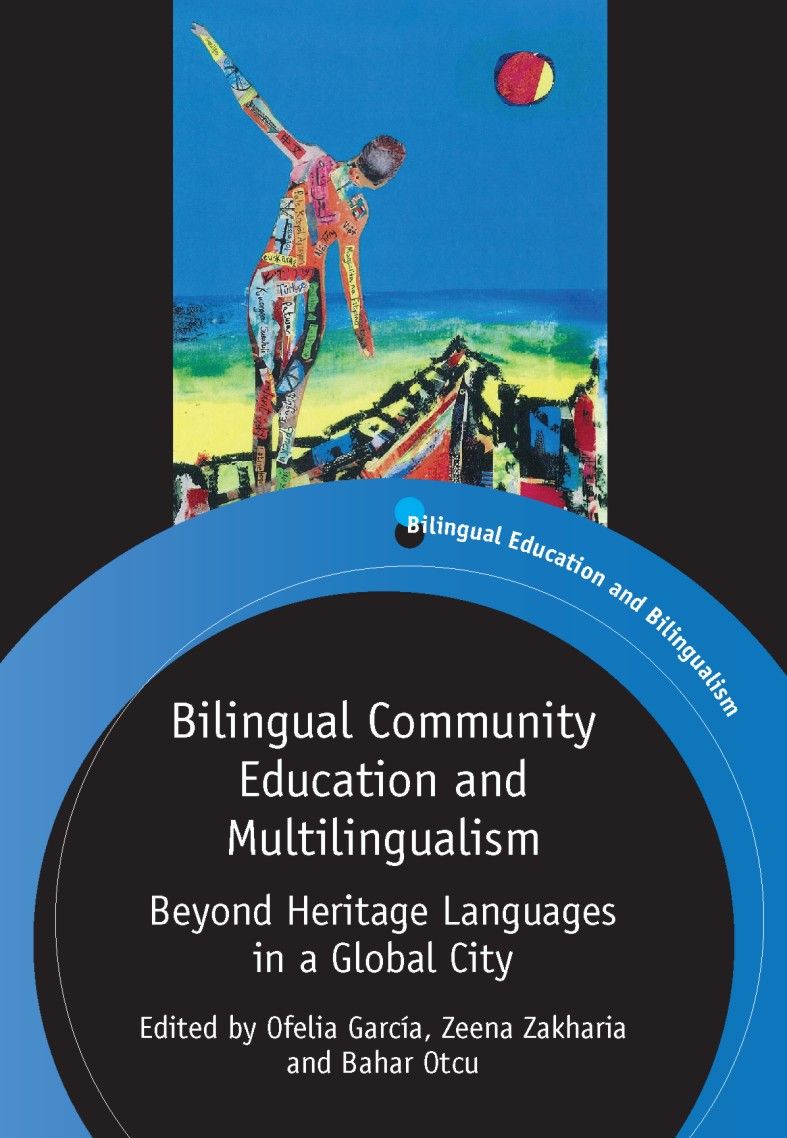
Bilingual community education and multilingualism
This book explores bilingual community education, specifically the educational spaces shaped and organized by American ethnolinguistic communities for their children in New York. It reveals how these groups' efforts go beyond what has been called 'heritage language education' to focus on the construction of bilingual American diasporic communities.
eBook

Multilingual global cities : Singapore, Hong Kong, Dubai
\"This volume sets out to investigate the linguistic ecologies of Singapore, Hong Kong and Dubai, with chapters that combine empirical and theoretical approaches to the sociolinguistics of multilingualism. One important feature of this publication is that that the five parts of the collection deal with such key issues as the historical dimension, language policies and language planning, contemporary societal multilingualism, multilingual language acquisition, and the localized Englishes of global cities. The first four sections of the volume provide a multi-levelled and finely-detailed description of multilingual diversity of three global cities, while the final section discusses postcolonial Englishes in the context of multilingual language acquisition and language contact\"-- Provided by publisher.
Book

International students' multilingual literacy practices : an asset-based approach to understanding academic discourse socialization
This book presents the results of research that focused on international students receiving writing instruction on a US university campus. It explores how the students developed their foreign-student identities and their own ways of grappling with the unique issues they encountered as they worked to improve their academic literacy skills.
eBook

Networked multilingualism: Some language practices on Facebook and their implications
Integrating research on multilingualism and computer-mediated communication, this paper proposes the term ‘networked multilingualism’ and presents findings from a case study to explore its implications for the theorising of multilingualism. Networked multilingualism is a cover term for multilingual practices that are shaped by two interrelated processes: being networked, i.e. digitally connected to other individuals and groups, and being in the network, i.e. embedded in the global mediascape of the web. It encompasses everything language users do with the entire range of linguistic resources within three sets of constraints: mediation of written language by digital technologies, access to network resources, and orientation to networked audiences. The empirical part of the paper discusses the Facebook language practices of a small group of Greek-background secondary school students in a German city. Data collection follows an online ethnography approach, which combines systematic observation of online activities, collection and linguistic analysis of screen data, and data elicited through direct contact with users. Focusing on four weeks of discourse on profile walls, the analysis examines the participants’ linguistic repertoires, their language choices for genres of self-presentation and dialogic exchange, and the performance of multilingual talk online. The findings suggest that the students’ networked multilingual practices are individualised, genre-shaped, and based on wide and stratified repertoires.
Journal Article

Translanguaging and Literacies
The authors trace the development of the concept of translanguaging, focusing on its relation to literacies. The authors describe its connection to literacy studies, with particular attention to bi/multilingual reading and writing. Then, the authors present the development of translanguaging as a sociolinguistic theory, discuss its formulations, and describe what is unique about translanguaging: its beginnings and grounding in educational practice and attention to the performances of multilinguals. The authors argue that multilingualism and bi/multiliteracies cannot be fully understood as simply the use of separate conventionally named languages or separate modes. Instead, translanguaging in literacies focuses on the actions of multilingual readers and writers, which go beyond traditional understandings of language, literacy, and other concepts, such as bi/multilingualism and bi/multilingual literacy. The authors show how multilinguals do language and literacy and how they do so in school. The authors review case studies that demonstrate how a translanguaging literacies framework is used to deepen multilingual students’ understandings of texts, generate students’ more diverse texts, develop students’ sense of confianza (confidence) in performing literacies, and foster critical metalinguistic awareness. The authors end by discussing implications for literacy pedagogy, as well as literacy research, that centers multilingual students.
Journal Article

Measuring bilingualism: The quest for a “bilingualism quotient”
The study of bilingualism has a history that extends from deciphering ancient multilingual texts to mapping the structure of the multilingual brain. The language experiences of individual bilinguals are equally diverse and characterized by unique contexts of acquisition and use that can shape not only sociocultural identity but also cognitive and neural function. Perhaps unsurprisingly, this variability in scholarly perspectives and language experiences has given rise to a range of methods for defining bilingualism. The goal of this article is to initiate a conversation about the utility of a more unified approach to how we think about, study, and measure bilingualism. Using concrete case studies, we illustrate the value of enhancing communication and streamlining terminology across researchers with different methodologies within questions, different questions within domains, and different domains within scientific inquiry. We specifically consider the utility and feasibility of a bilingualism quotient (BQ) construct, discuss the idea of a BQ relative to the well-established intelligence quotient, and include recommendations for next steps. We conclude that though the variability in language backgrounds and approaches to defining bilingualism presents significant challenges, concerted efforts to systematize and synthesize research across the field may enable the construction of a valid and generalizable index of multilingual experience.
Journal Article

Children's Consonant Acquisition in 27 Languages: A Cross-Linguistic Review
The aim of this study was to provide a cross-linguistic review of acquisition of consonant phonemes to inform speech-language pathologists' expectations of children's developmental capacity by (a) identifying characteristics of studies of consonant acquisition, (b) describing general principles of consonant acquisition, and (c) providing case studies for English, Japanese, Korean, and Spanish.
A cross-linguistic review was undertaken of 60 articles describing 64 studies of consonant acquisition by 26,007 children from 31 countries in 27 languages: Afrikaans, Arabic, Cantonese, Danish, Dutch, English, French, German, Greek, Haitian Creole, Hebrew, Hungarian, Icelandic, Italian, Jamaican Creole, Japanese, Korean, Malay, Maltese, Mandarin (Putonghua), Portuguese, Setswana (Tswana), Slovenian, Spanish, Swahili, Turkish, and Xhosa.
Most studies were cross-sectional and examined single word production. Combining data from 27 languages, most of the world's consonants were acquired by 5;0 years;months old. By 5;0, children produced at least 93% of consonants correctly. Plosives, nasals, and nonpulmonic consonants (e.g., clicks) were acquired earlier than trills, flaps, fricatives, and affricates. Most labial, pharyngeal, and posterior lingual consonants were acquired earlier than consonants with anterior tongue placement. However, there was an interaction between place and manner where plosives and nasals produced with anterior tongue placement were acquired earlier than anterior trills, fricatives, and affricates.
Children across the world acquire consonants at a young age. Five-year-old children have acquired most consonants within their ambient language; however, individual variability should be considered.
https://doi.org/10.23641/asha.6972857.
Journal Article

Concreteness effects in bilingual and monolingual word learning
Previous studies have demonstrated that bilingualism can facilitate novel-word learning. However, the mechanisms behind this bilingual advantage remain unknown. Here, we examined whether bilinguals may be more sensitive to semantic information associated with the novel words. To that end, we manipulated the concreteness of the referent in the word-learning paradigm, since concrete words have been shown to activate the semantic system more robustly than abstract words do. The results revealed that the bilingual advantage was stronger for novel words learned in association with concrete rather than abstract referents. These findings suggest that bilingual advantages for word learning may be rooted, at least in part, in bilinguals’ greater sensitivity to semantic information during learning.
Journal Article

Aviso o Alerta? Developing Effective, Inclusive, and Consistent Watch and Warning Translations for U.S. Spanish Speakers
Spanish-speaking populations in the United States are more vulnerable in disaster contexts due to inequities, such as language barriers, that prevent them from receiving life-saving information. For the past couple of decades, governmental organizations have addressed these issues by translating weather watches, warnings, and advisories into Spanish. Previous studies suggest that these Spanish translations do not communicate the same level of urgency as their English counterparts. To identify whether these translated products result in inequities between English and Spanish speaker reception and comprehension of forecast information, we asked a representative sample of U.S. English (n = 1,550) and Spanish (n = 1,050) speakers to correctly identify the translations of weather watches and warnings and found significant language inequities. Additionally, we asked U.S. Spanish speakers to indicate the urgency they felt when shown different Spanish words used in weather watch and warning translations. When presented with various translations for watch and warning terminology, respondents consistently rated aviso, the current translation of warning by the NWS and FEMA, as less urgent than many other alternatives. Additionally, the current translation of advisory, advertencia, communicated more urgency than both existing watch and warning translations in Spanish. To increase the effectiveness of severe weather messaging in multilingual contexts, translations should take into consideration factors such as culture and dialects of Spanish speakers in the United States and focus on translating the meaning, not the words, of key risk statements in weather products. We recommend vigilancia for “watch” and alerta for “warning” as research-supported terminologies to communicate urgency in Spanish.
Journal Article