
Catalogue Search | MBRL


Are you sure you want to remove the book from the shelf?

{{itemTitle}}
5,795
result(s) for
"Multinational states."
Sort by:

Constitutional asymmetry in multinational federalism : managing multinationalism in multi-tiered systems
This edited volume examines the link between constitutional asymmetry and multinationalism in multi-tiered systems through a comprehensive and rigorous comparative analysis, covering countries in Europe, Africa, and Asia.
Book

Crafting State-Nations : India and other multinational democracies
Political wisdom holds that the political boundaries of a state necessarily coincide with a nation's perceived cultural boundaries. Today, the sociocultural diversity of many polities renders this understanding obsolete. This volume provides the framework for the state-nation, a new paradigm that addresses the need within democratic nations to accommodate distinct ethnic and cultural groups within a country while maintaining national political coherence. First introduced briefly in 1996 by Alfred Stepan and Juan J. Linz, the state-nation is a country with significant multicultural—even multinational—components that engenders strong identification and loyalty from its citizens. Here, Indian political scholar Yogendra Yadav joins Stepan and Linz to outline and develop the concept further. The core of the book documents how state-nation policies have helped craft multiple but complementary identities in India in contrast to nation-state policies in Sri Lanka, which contributed to polarized and warring identities. The authors support their argument with the results of some of the largest and most original surveys ever designed and employed for comparative political research. They include a chapter discussing why the U.S. constitutional model, often seen as the preferred template for all the world's federations, would have been particularly inappropriate for crafting democracy in politically robust multinational countries such as India or Spain. To expand the repertoire of how even unitary states can respond to territorially concentrated minorities with some secessionist desires, the authors develop a revised theory of federacy and show how such a formula helped craft the recent peace agreement in Aceh, Indonesia. Empirically thorough and conceptually clear, Crafting State-Nations will have a substantial impact on the study of comparative political institutions and the conception and understanding of nationalism and democracy.
eBook


Recognition and Redistribution in Multinational Federations
World’s leading theorists of multinational justice on sub-state national minority groups. Almost without exception, multinational states across the West are facing existential crises precipitated by the resurgence of sub-state national minority groups. This edited volume brings together many of the world’s leading theorists of multinational justice in order to analyse two of the most frequent areas of debate and dispute in multinational federations: recognition and redistribution. The authors address questions such as the following: What are the most appropriate forms of institutional recognition for sub-state national groups? How is the concept of redistributive justice affected by the presence of federal institutions and autonomous sub-state nationalities? And what are the potential sources of stability that fractious federations can call upon? As well as extensive theoretical analyses, the book is peppered throughout with examples drawn from actual multinational states including Canada, Belgium, Spain, and the United Kingdom.
eBook

Multination states in Asia : accommodation or resistance
\"As countries in Asia try to create unified polities, many face challenges from minority groups within their own borders seeking independence. This volume brings together international experts on countries in all regions of Asia to debate how differently they have responded to this problem. Why have some Asian countries, for example, clamped down on their national minorities in favour of homogeneity, whereas others have been willing to accommodate statehood or at least some form of political autonomy? Together they suggest broad patterns and explanatory factors that are rooted in the domestic arena, including state structure and regime type, as well as historical trajectories. In particular, they find that the paths to independence, as well as the cultural elements that have been selected to define post-colonial identities, have decisively influenced state strategies. This is a global phenomenon - and the book explains the broader theoretical and political implications - but violence and ethnic unrest have been particularly prevalent in Asia, and this is as true of China in its relationship to Tibet, as of Burma and Sri Lanka in relation to their national minorities. As the first book to analyse this phenomenon across Asia, it will attract a readership of students and scholars across a broad range of disciplines\"--Provided by publisher.
Book
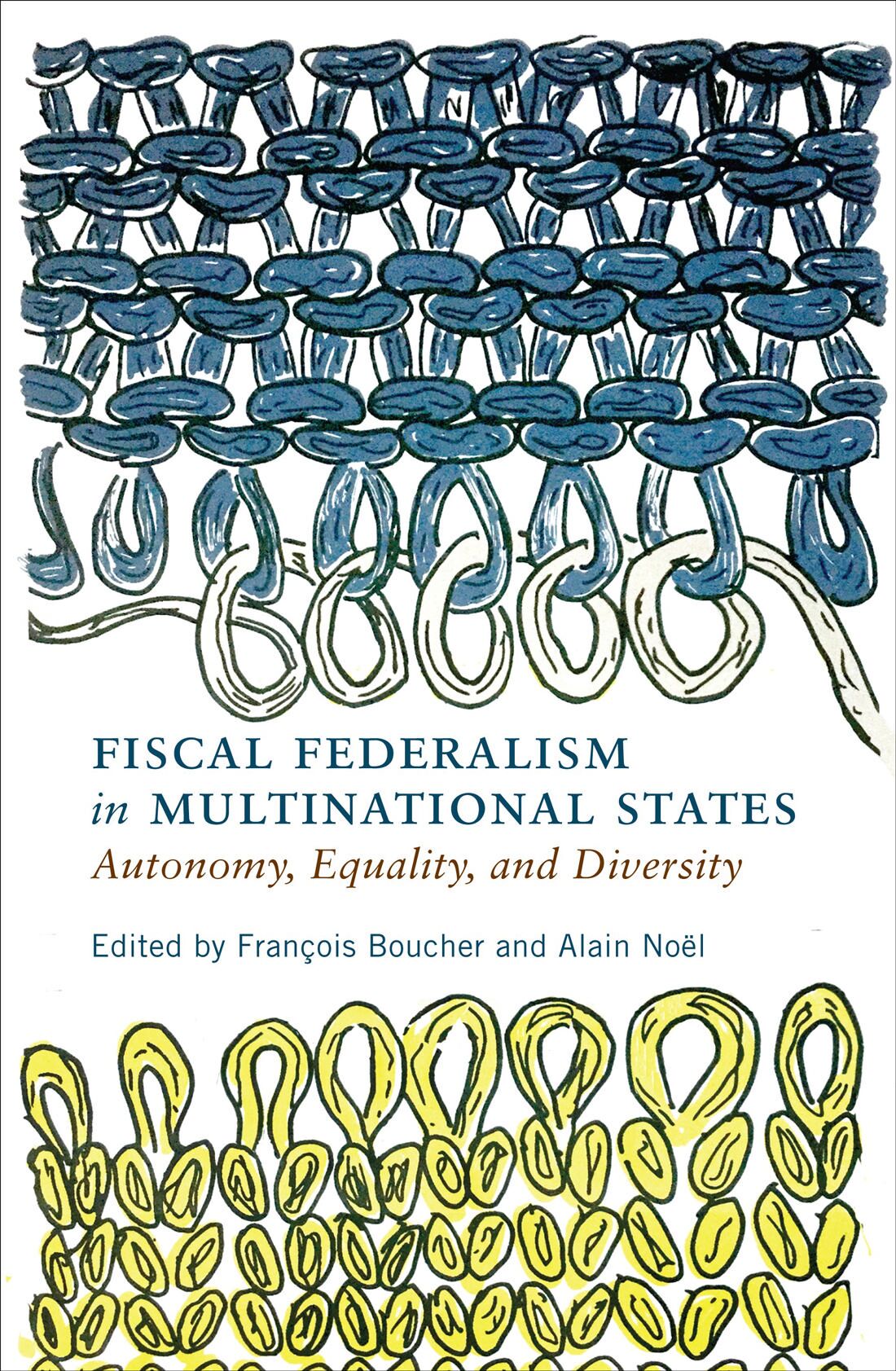
Fiscal Federalism in Multinational States
Substate nationalism is often studied as a question of political identity and cultural recognition. The same applies to the study of multinational federalism – it is mainly conceived as a tool for the accommodation of minority cultures and identities. Few works in political philosophy and political science pay attention to the fiscal and redistributive dimensions of substate nationalism and multinational federalism. Yet nationalist movements in Western countries make crucial claims about fiscal autonomy and the fair distribution of resources between national groups within the same state.In recent years, Scottish nationalists have demanded greater tax autonomy, Catalan and Flemish nationalists have viewed themselves as unfairly disadvantaged by centralized fiscal arrangements, and equalization payments and social transfers in Canada have exacerbated tensions within the federation. In Fiscal Federalism in Multinational States contributors from political philosophy and political science disciplines explore the fiscal side of substate nationalism in Canada, Belgium, the United Kingdom, Spain, and Australia. Chapters examine the connection between secessionist claims and interregional redistributive arrangements, power relations in federations where taxing and spending responsibilities are shared between orders of government, the relationship between substate nationalism and fiscal autonomy, and the role of federal governments in redistributing resources among substate national groups.Fiscal Federalism in Multinational States brings together scholars of nationalism and federalism in a groundbreaking analysis of the connections between nationalist claims and fiscal debates within plurinational states.
eBook


Diversity, Autonomy and Solidarity in Multinational States: Current Developments in the Spanish-Catalan and the Jews-Arabs Political Disputes
Abstract
The concept of the nation state - and specifically the tension between affirming solidarity among nation-state compatriots and respecting national minorities' rights in order to preserve diversity and secure their autonomy - has been on the global agenda over the last two centuries, especially in Europe. In recent years, two cases, in Catalonia and in Israel - different in many respects but similar in others - serve as inspiring test cases for analysing questions of national identities and state cohesion. Both of these cases portray the dilemmas surrounding national identity in an allegedly dichotomic fashion, thus requiring a choice between independence and secession or unionism and assimilation. This article suggests that a dichotomic perspective is not compelling and that solidarity and autonomy are not necessarily contradictory. It explores the connection between solidarity and autonomy and applies the analysis to the case studies of Catalonia and Israel separately, given the unique characteristics of each case.
Journal Article


A review of the internationalization of state-owned firms and sovereign wealth funds: Governments’ nonbusiness objectives and discreet power
We review and bridge the literature on the internationalization of state-owned firms and sovereign wealth funds to provide a novel understanding of how government ownership affects foreign investments in three ways. First, we explain how state-owned firms and funds behave differently from private ones because they need to balance governments’ nonbusiness objectives and firms’ business goals. This results in competing predictions on whether government ownership helps or hinders internationalization due to particular nonbusiness objectives. Second, building on the review, we provide suggestions on how to extend research topics and theories of the firm by incorporating these nonbusiness objectives in the internationalization decisions in four areas: home government’s endowments, characteristics, and attitudes; host-country expansion’s support, influence, and impact; home- and host-country relationship conflicts, mediation, and disguising; and management’s orientation, opacity, and arbitrage. Third, we capture how governments may use state-owned multinationals and sovereign wealth funds to nudge host-country governments by introducing the concept of discreet power and the use of four strategies (recognition, values, development, and supremacy) to achieve it. This helps to outline the beginning of a unified approach to how governments use their foreign investments to achieve nonbusiness goals.
Journal Article