
Catalogue Search | MBRL


Are you sure you want to remove the book from the shelf?

{{itemTitle}}
2
result(s) for
"Mural painting and decoration, Renaissance -- Italy -- Rome"
Sort by:

The Power and the Glorification
Focusing on a turbulent time in the history of the Roman Catholic Church, The Power and the Glorification considers how, in the fifteenth and sixteenth centuries, the papacy employed the visual arts to help reinforce Catholic power structures. All means of propaganda were deployed to counter the papacy’s eroding authority in the wake of the Great Schism of 1378 and in response to the upheaval surrounding the Protestant Reformation a century later. In the Vatican and elsewhere in Rome, extensive decorative cycles were commissioned to represent the strength of the church and historical justifications for its supreme authority. Replicating the contemporary viewer’s experience is central to De Jong’s approach, and he encourages readers to consider the works through fifteenth- and sixteenth-century eyes. De Jong argues that most visitors would only have had a limited knowledge of the historical events represented in these works, and would likely have accepted (or been intended to accept) what they saw at face value. With that end in mind, the painters’ advisors did their best to “manipulate” the viewer accordingly, and De Jong discusses their strategies and methods.
eBook
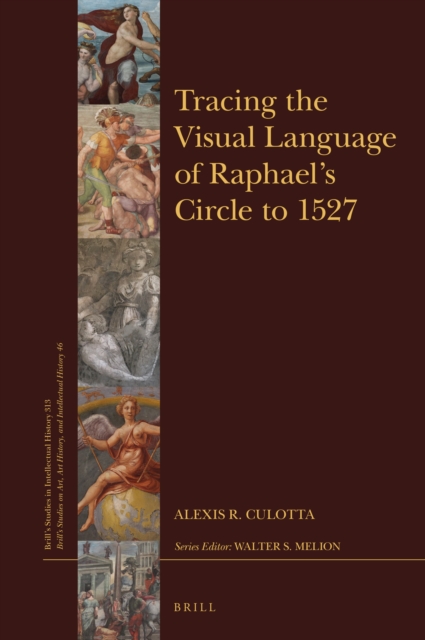
Tracing the Visual Language of Raphael's Circle To 1527
Alexis R. Culotta explores how the Renaissance master's recombination of visual sources ultimately served as a springboard for artistic innovation for his close associates as they collaborated in the years following Raphael's death.
eBook