
Catalogue Search | MBRL


Are you sure you want to remove the book from the shelf?

{{itemTitle}}
293
result(s) for
"Murderers Psychology."
Sort by:

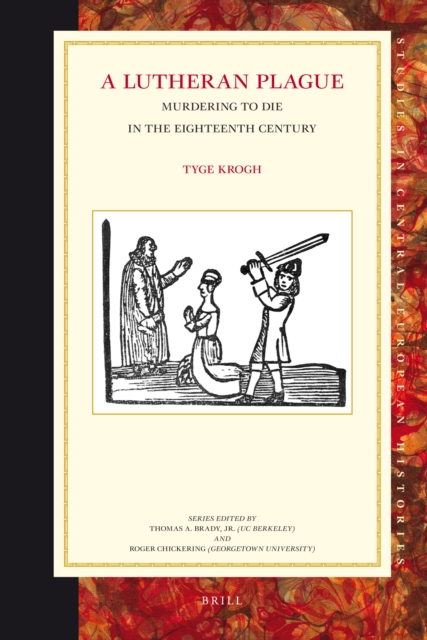
A Lutheran Plague
Suicide murders - i.e., killings in order to be executed - were alarmingly frequent in eighteenth-century Lutheran Europe. The book traces the murderers motives - an investigation that leads to the Pietist care for death convicts, into central elements of Lutheran soteriology and to the idea of capital punishment as being divinely ordained. At dræbe nogen alene for at blive henrettet!. Sådanne mord var alarmerende hyppige i 1700-tallets lutherske Europa. Bogen eftersporer mordernes motiver - en undersøgelse der fører til den pietistiske omsorg for dødsdømte, til centrale dele af den lutherske frelseforståelse og til forestillingen om, at dødsstraffene var direkte beordrede af Gud.
eBook

The ploughmen : a novel
\"Valentine Millimaki, a troubled young deputy, finds himself seeking counsel from John Gload, a killer awaiting trial, in this debut novel. The strange intimacy of their connection takes a startling turn with a brazen act of violence, a manhunt, and a stunning revelation that leave Gload's past and Millimaki's future forever entwined\"-- Provided by publisher.
Book
Listening to killers
Listening to Killers offers an inside look at twenty years' worth of murder files from Dr. James Garbarino, a leading expert psychological witness who listens to killers so that he can testify in court. The author offers detailed accounts of how killers travel a path that leads from childhood innocence to lethal violence in adolescence or adulthood. He places the emotional and moral damage of each individual killer within a larger scientific framework of social, psychological, anthropological, and biological research on human development. By linking individual cases to broad social and cultural issues and illustrating the social toxicity and unresolved trauma that drive some people to kill, Dr. Garbarino highlights the humanity we share with killers and the role of understanding and empathy in breaking the cycle of violence.
eBook


The making of Lee Boyd Malvo
In October of 2002, a series of sniper attacks paralyzed the Washington Beltway, turning normally placid gas stations, parking lots, restaurants, and school grounds into chaotic killing fields. After the spree, ten people were dead and several others wounded. The perpetrators were forty-one-year-old John Allen Muhammad and his seventeen-year-old protégé, Lee Boyd Malvo.
Called in by the judge to serve on Malvo's defense team, social worker Carmeta Albarus was instructed by the court to uncover any information that might help mitigate the death sentence the teen faced. Albarus met with Malvo numerous times and repeatedly traveled back to his homeland of Jamaica, as well as to Antigua, to interview his parents, family members, teachers, and friends. What she uncovered was the story of a once promising, intelligent young man, whose repeated abuse and abandonment left him detached from his biological parents and desperate for guidance and support. In search of a father figure, Malvo instead found John Muhammad, a veteran of the first Gulf War who intentionally shaped his protégé through a ruthlessly efficient campaign of brainwashing, sniper training, and race hatred, turning the susceptible teen into an angry, raging, and dissociated killer with no empathy for his victims.
In this intimate and carefully documented account, Albarus details the nature of Malvo's tragic attachment to his perceived \"hero father,\" his indoctrination, and his subsequent dissociation. She recounts her role in helping to extricate Malvo from the psychological clutches of Muhammad, which led to a dramatic courtroom confrontation with the man who manipulated and exploited him. Psychologist Jonathan H. Mack identifies and analyzes the underlying clinical psychological and behavioral processes that led to Malvo's dissociation and turn toward serial violence. With this tragic tale, the authors emphasize the importance of parental attachment and the need for positive and loving relationships during the critical years of early childhood development. By closely examining the impact of Lee Boyd Malvo's childhood on his later development, they reach out to parents, social workers, and the community for greater awareness and prevention.
eBook

The psychology of lust murder : paraphilia, sexual killing, and serial homicide
The Psychology of Lust Murder systematically examines the phenomenon of paraphilia (i.e., aberrant sexuality) in relationship to the crime of lust murder. By synthesizing the relevant theories on sexual homicide and serial killing, the authors develop an original, timely, sensible model that accounts for the emergence and progression of paraphilias expressed through increasingly violent erotic fantasies. Over time, these disturbing paraphilic images that, among other things, involve rape, body mutilation and dismemberment, torture, post-mortem sexual intercourse, and cannibalism, are all actualized. Thus, it is the sustained presence of deviant sexuality that contributes to and serves as underlying motive for the phenomenon of lust murder (a.k.a. erotophonophilia). Going well beyond theoretical speculation, the authors (Dr. Catherine Purcell, a forensic psychologist and Dr. Bruce Arrigo, a criminologist) apply their integrated model to the gruesome and chilling case of Jeffrey Dahmer. They convincingly demonstrate where and how their conceptual framework provides a more complete explanation of lust homicide than any other model available in the field today. The book concludes with a number of practical suggestions linked to clinical prevention, diagnosis, and treatment strategies; police training, profiling, and apprehension efforts; as well as legal and public policy responses to sexually violent and predatory assailants. Comprehensive in its coverage, accessible in its prose, and thoughtful in its analysis, The Psychology of Lust Murder is a must read for any person interested in the crime of erotophonophilia and those offenders responsible for its serial commission. * Contributes, in a thoughtful and scholarly way, to the audiences' existing library of books on crimes and criminals* Provides new and insightful information on the criminal behavior of Jeffrey Dahmer* Enables readers to compare and contrast different models/theories on sexual homicide and serial murder* Assists researchers, educators, public officials, and the lay public determine how best to respond to the phenomenon of lust murder
eBook


Myth of the Chosen One
The case of Javed Iqbal, an alleged serial killer, attracted great attention around the world. Killing of even one person is a heinous act, but here is a man attributed with about a hundred cold-blooded murders of persons of young and tender ages. In the examination of this world renown case, Dr. Sohail has taken pains to examine this shocking episode from the point of view of a psychiatrist. As William J. McCormack, Chief of Police (Ret.), Municipality of Metropolitan Toronto, Canada says, \"During my career on the Homicide Squad of the Metropolitan Toronto Police, I solved over 100 murders but never have I seen a crime so riddled with unanswered questions as this one. The entire question of the rise of serial killers across the world should be everyone's concern including their upbringing, psychology and environment, but most importantly, the increasing danger they present to society and to those who dedicate themselves \"To Serve and Protect.\" Sohail has travelled a long journey in distance and depth to explore and uncover the motivation and working of the troubled mind of a killer. In his book, drawing from world literature, he skillfully presents the analysis of experts in the field of human abnormal behavior. His own interpretation of the killer's state of mind, which is based on his years of experience in the helping profession, creates an insightful and absorbing story.
eBook