
Catalogue Search | MBRL


Are you sure you want to remove the book from the shelf?

{{itemTitle}}
5,477
result(s) for
"Murderers."
Sort by:

The deadliest sins
\"The headlines scream the ghastly news of an abandoned truck filled with murdered immigrants. Detective Jack Murphy and his partner Liddell Blanchard are on the case. They've got a lone survivor, rumors of a witness, and the feds getting in their way. Jack's gut tells him there's a connection with a local killing-and the bloodshed is far from over. He's going up against a butcher who commits the unspeakable in the name of protecting America. Some say the worst crime is to look the other way. Jack Murphy only looks for justice.\"--Back cover.
Book

Season of Terror
Season of Terror is the first book-length treatment of the little-known true story of the Espinosas-serial murderers with a mission to kill every Anglo in Civil War-era Colorado Territory-and the men who brought them down. For eight months during the spring and fall of 1863, brothers Felipe Nerio and José Vivián Espinosa and their young nephew, José Vincente, New Mexico-born Hispanos, killed and mutilated an estimated thirty-two victims before their rampage came to a bloody end. Their motives were obscure, although they were members of the Penitentes, a lay Catholic brotherhood devoted to self-torture in emulation of the sufferings of Christ, and some suppose they believed themselves inspired by the Virgin Mary to commit their slaughters. Until now, the story of their rampage has been recounted as lurid melodrama or ignored by academic historians. Featuring a fascinating array of frontier characters, Season of Terror exposes this neglected truth about Colorado's past and examines the ethnic, religious, political, military, and moral complexity of the controversy that began as a regional incident but eventually demanded the attention of President Lincoln.
eBook

Blood mist
\"DCI Eve Clay got the call at five minutes to midnight. A family of six, slaughtered in their beds, their bodies dragged out to the landing to form an arcane pattern. Outside, a blizzard rages past the well-kept houses of the Serpentine. None of the neighbours heard a sound. Someone took great care to arrange those bodies so precisely. But who? And why? Somewhere in Eve's mind, a long-buried memory flickers. But there is no time for hunches. She must find the killers before they strike again. As Liverpool holds its breath, DCI Eve Clay hunts a ruthless killer who knows more about her past than she does...\"--Jacket flap.
Book
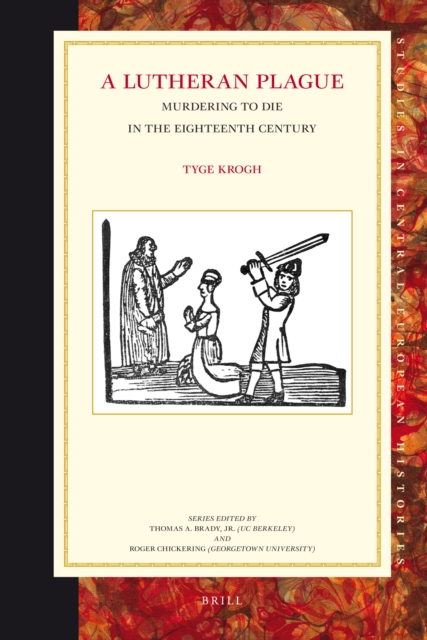
A Lutheran Plague
Suicide murders - i.e., killings in order to be executed - were alarmingly frequent in eighteenth-century Lutheran Europe. The book traces the murderers motives - an investigation that leads to the Pietist care for death convicts, into central elements of Lutheran soteriology and to the idea of capital punishment as being divinely ordained. At dræbe nogen alene for at blive henrettet!. Sådanne mord var alarmerende hyppige i 1700-tallets lutherske Europa. Bogen eftersporer mordernes motiver - en undersøgelse der fører til den pietistiske omsorg for dødsdømte, til centrale dele af den lutherske frelseforståelse og til forestillingen om, at dødsstraffene var direkte beordrede af Gud.
eBook


Language, Ideology and Identity in Serial Killer Narratives
In this book, Gregoriou explores the portrayal of the serial killer identity and its related ideology across a range of contemporary crime narratives, including detective fiction, the true crime genre and media journalism. How exactly is the serial killer consciousness portrayed, how is the killing linguistically justified, and how distinguishing is the language revolving around criminal ideology and identity across these narrative genres? By employing linguistic and content-related methods of analysis, her study aims to work toward the development of a stylistic framework on the representation of serial killer ideology across factual (i.e. media texts), factional (i.e. true crime books) and fictional (i.e. novels) murder narratives. ‘Schema’ is a term commonly used to refer to organised bundles of knowledge in our brains, which are activated once we come across situations we have previously experienced, a ‘group schema’ being one such inventory shared by many. By analysing serial murder narratives across various genres, Gregoriou uncovers a widely shared ‘group schema’ for these murderers, and questions the extent to which real criminal minds are in fact linguistically fictionalised. Gregoriou’s study of the mental functioning and representation of criminal personas can help illuminate our schematic understanding of actual criminal minds.
Christiana Gregoriou is a lecturer in English Stylistics at the University of Leeds. She has an interest in the linguistic make-up of literary texts, and crime narratives in particular. She's published on the criminal mind style, a book on English Literary Stylistics and a monograph on Deviance in Contemporary Crime Fiction .
1. Crime Scenes 2. Killer Headlines 3. True Crime! 4. Buying Crime 5. The Verdict
eBook

The writing in the stone
\"The landscape of this dark and powerful story is the ancient world of Assyria some 3000 years ago, a time when writing was in the world's oldest script, cuneiform, and the domination of unseen forces firmly in the hands of the state's leading Exorcist. In the capital, Nineveh, resides a deep and complex man, the power behind the King of the World. Faced with unforeseen disaster that threatens his authority, he emerges as a psychopathic killer\"--Amazon.com
Book

Monsters and Monarchs
Jack the Ripper.Jeffrey Dahmer.John Wayne Gacy.Locusta of Gaul.If that last name doesn't seem to fit with the others, it's likely because our modern society largely believes that serial killers are a recent phenomenon.
eBook
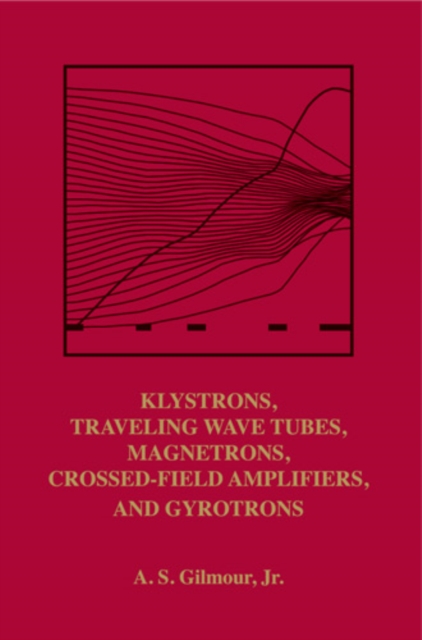
Klystrons, Traveling Wave Tubes, Magnetrons, Crossed-Field Amplifiers, and Gyrotrons
Microwave tubes are vacuum electron devices used for the generation and amplification of radio frequencies in the microwave range. An established technology area, the use of tubes remains essential in the field today for high-power applications. The culmination of the author's 50 years of industry experience, this authoritative resource offers you a thorough understanding of the operations and major classes of microwave tubes.Minimizing the use of advanced mathematics, the book places emphasis on clear qualitative explanations of phenomena. This practical reference serves as an excellent introduction for newcomers to the field and offers established tube engineers a comprehensive refresher. Professionals find coverage of all major tube classifications, including klystrons, traveling wave tubes (TWTs), magnetrons, cross field amplifiers, and gyrotrons.
eBook