
Catalogue Search | MBRL


Are you sure you want to remove the book from the shelf?

{{itemTitle}}
20,352
result(s) for
"Museums Employees."
Sort by:

Women in the museum : lessons from the workplace
\"Women in the Museum explores the professional lives of the sector's female workforce.\"--Provided by publisher.
Book
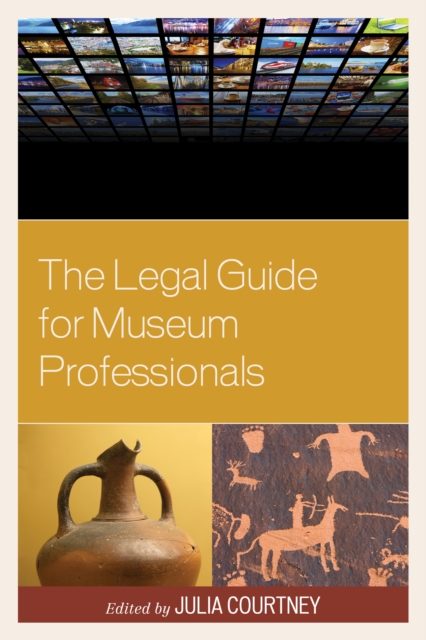
The legal guide for museum professionals
From intellectual property law to navigating the hazards of social media, de-accessioning concerns to governance law, copyright, intellectual property law, and rights and reproduction questions to issues of public trust, The Legal Guide for Museum Professionals provides answers and action steps for mid to small-sized museums of all disciplines.
eBook

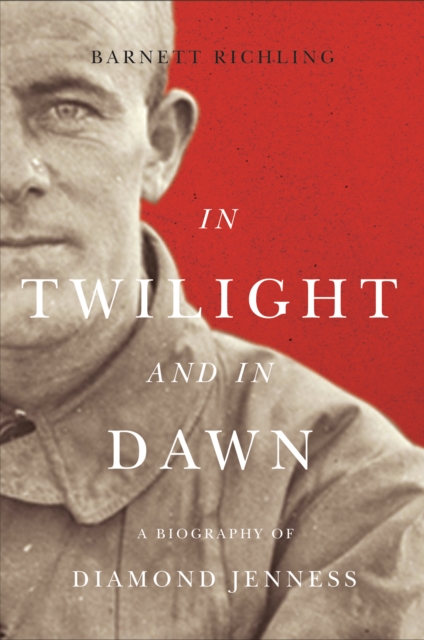
In Twilight and in Dawn
When New Zealand-born and Oxford-educated anthropologist Diamond Jenness set aside hopes of building a career in the South Pacific to join Vilhjalmur Stefansson's Canadian Arctic Expedition, he had little idea of what lay ahead. But Jenness thrived under the duress of that transformational experience: the groundbreaking ethnographic work he accomplished, recounted in People of the Twilight and in Dawn in Arctic Alaska, proved to be a lasting contribution to twentieth-century anthropology, and the foundation of a career he would devote to researching Canada's first peoples. Barnett Richling draws upon a wealth of documentary sources to shed light on Jenness's tenure with the Anthropological Division of the National Museum of Canada - a forerunner of the Canadian Museum of Civilization - during which his investigations took him beyond the Arctic to seven First Nations communities from Georgian Bay to British Columbia's interior. Jenness was renowned as a pre-eminent scholar of Inuit culture, but he also stood out for the contributions his field work made to linguistics, ethnology, material culture, and Northern archaeology. His story is also an institutional one: Jenness worked as a public servant at a time when the federal government spearheaded anthropological research, although his abiding commitment to the first peoples of his adopted homeland placed him at odds with Ottawa's approach to aboriginal affairs. In Twilight and in Dawn is an exploration of one man's life in anthropology, and of the conditions - at the museum, on the reserves, in society's mainstream, and in the world at large - that inspired and shaped Jenness's contributions to science, to his profession, and to public life. An informative study of the evolution of a discipline focused through the life of one of its leading practitioners, In Twilight and in Dawn is an illuminating look at anthropological thought and practice in Canada during the first half of the twentieth century.
eBook

Behavior
Most people who work in museums do so in a relatively well‐behaved manner. In keeping with demographics and social orders, most museum white‐collar employees n the United States were from the white, Anglo‐Saxon, Protestant world of wealth, aspired to it, or were comfortable in it. Certain institutionalized behavior expectations remain of the old order. Most employees don't act up or out on the job. They dress conservatively and say please and thank you, even to excess. The tone for a mannerly workplace starts at the top, in the director's office. Poor museum leaders set a bad example for employees and create a work atmosphere that limits quality and quantity outcomes. There are many recommendations regarding manners and customs that should be expected of museum employees. What a person wears at work is important. Most museum employees dress appropriately for their jobs.
Book Chapter


Museums and Communities
This edited volume critically engages with contemporary scholarship on museums and their engagement with the communities they purport to serve and represent. Foregrounding new curatorial strategies, it addresses a significant gap in the available literature, exploring some of the complex issues arising from recent approaches to collaboration between museums and their communities. The book unpacks taken-for-granted notions such as scholarship, community, participation and collaboration, which can gloss over the complexity of identities and lead to tokenistic claims of inclusion by museums. Over sixteen chapters, well-respected authors from the US, Australia and Europe offer a timely critique to address what happens when museums put community-minded principles into practice, challenging readers to move beyond shallow notions of political correctness that ignore vital difference in this contested field. Contributors address a wide range of key issues, asking pertinent questions such as how museums negotiate the complexities of integrating collaboration when the target community is a living, fluid, changeable mass of people with their own agendas and agency. When is engagement real as opposed to symbolic, who benefits from and who drives initiatives? What particular challenges and benefits do artist collaborations bring? Recognising the multiple perspectives of community participants is one thing, but how can museums incorporate this successfully into exhibition practice? Students of museum and cultural studies, practitioners and everyone who cares about museums around the world will find this volume essential reading.
eBook

A practical guide to museum ethics
\"With money increasingly difficult to raise, is a museum more likely to accede to potential funders' demands even when those demands might compromise the museum's integrity? When a museum is struggling with debilitating debt, should the sale of selected items from its collections and the use of the resulting proceeds bring the museum into a more stable financial position? When a museum attempts to build its attendance and attract local visitors by crowdsourcing exhibitions, is it undermining its integrity? Ethical questions about museum activities are legion, yet they are usually only discussed when they become headlines in newspapers. Museum staff respond to such problems under pressure, often unable to take the time required to think through the sensitive and complex issues involved. Grounded in a series of case studies, A Practical Guide to Museum Ethics confronts types of ethical dilemmas museums face and explores attempts to resolve them in chapters dealing with accessibility, disability, and diversity; collections; conflict of interest; governance; management; deaccessioning; and accountability and transparency. Suitable for classroom use as well as a professional reference, here is a comprehensive, practical guide for dealing with ethical issues in museums\"--From publisher's website.
Book

Made in Newark
What does it mean to turn the public library or museum into a civic forum?Made in Newarkdescribes a turbulent industrial city at the dawn of the twentieth century and the ways it inspired the library's outspoken director, John Cotton Dana, to collaborate with industrialists, social workers, educators, and New Women.This is the story of experimental exhibitions in the library and the founding of the Newark Museum Associationùa project in which cultural literacy was intertwined with civics and consumption. Local artisans demonstrated crafts, connecting the cultural institution to the department store, school, and factory, all of which invoked the ideal of municipal patriotism. Today, as cultural institutions reappraise their relevance,Made in Newarkexplores precedents for contemporary debates over the ways the library and museum engage communities, define heritage in a multicultural era, and add value to the economy.
eBook