
Catalogue Search | MBRL


Are you sure you want to remove the book from the shelf?

{{itemTitle}}
99
result(s) for
"Music Arab countries"
Sort by:
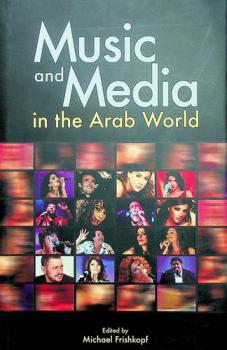
Music and media in the Arab world
Since the turn of the twentieth century the dramatic rise of mass media has profoundly transformed music practices in the Arab world. Music has adapted to successive forms of media dissemination-from phonograph cylinders to MP3s-each subjected to the political and economic forces of its particular era and region. Carried by mass media, the broader culture of Arab music has been thoroughly transformed as well. Simultaneously, mass mediated music has become a powerful social force. While parallel processes have unfolded worldwide, their implications in the Arabic-speaking world have thus far received little scholarly attention. This provocative volume features sixteen new essays examining these issues, especially televised music and the controversial new genre of the music video. Perceptive voices-both emerging and established-represent a wide variety of academic disciplines. Incisive essays by Egyptian critics display the textures of public Arabic discourse to an English readership. Authors address the key issues of contemporary Arab society-gender and sexuality, Islam, class, economy, power, and nation-as refracted through the culture of mediated music. Interconnected by a web of recurrent concepts, this collection transcends music to become an important resource for the study of contemporary Arab society and culture. Contributors: Wael Abdel Fattah, Yasser Abdel-Latif, Moataz Abdel Aziz, Tamim Al-Barghouti, Mounir Al Wassimi, Walter Armbrust, Elisabeth Cestor, Hani Darwish, Walid El Khachab, Abdel-Wahab Elmessiri, James Grippo, Patricia Kubala, Katherine Meizel, Zein Nassar, Ibrahim Saleh, and Laith Ulaby. -Product Description
Book

Resistance in Contemporary Middle Eastern Cultures
This study highlights the connections between power, cultural products, resistance, and the artistic strategies through which that resistance is voiced in the Middle East. Exploring cultural displays of dissent in the form of literary works, films, and music, the collection uses the concept of 'cultural resistance' to describe the way culture and cultural creations are used to resist or even change the dominant political, social, economic, and cultural discourses and structures either consciously or unconsciously. The contributors do not claim that these cultural products constitute organized resistance movements, but rather that they reflect instances of defiance that stem from their peculiar contexts. If culture can be used to consolidate and perpetuate power relations in societies, it can also be used as the site of resistance to oppression in its various forms: gender, class, ethnicity, and sexuality, subverting existing dominant social and political hegemonies in the Middle East.
eBook

Music and media in the Arab world
Since the turn of the twentieth century the dramatic rise of mass media has profoundly transformed music practices in the Arab world. Music has adapted to successive forms of media dissemination - from phonograph cylinders to MP3s - each subjected to the political and economic forces of its particular era and region. Carried by mass media, the broader culture of Arab music has been thoroughly transformed as well. Simultaneously, mass mediated music has become a powerful social force. While parallel processes have unfolded worldwide, their implications in the Arabic-speaking world have thus far received little scholarly attention. This provocative volume features sixteen new essays examining these issues, especially televised music and the controversial new genre of the music video. Perceptive voices - both emerging and established - represent a wide variety of academic disciplines. Incisive essays by Egyptian critics display the textures of public Arabic discourse to an English readership. Authors address the key issues of contemporary Arab society - gender and sexuality, Islam, class, economy, power, and nation - as refracted through the culture of mediated music. Interconnected by a web of recurrent concepts, this collection transcends music to become an important resource for the study of contemporary Arab society and culture. Contributors: Wael Abdel Fattah, Yasser Abdel-Latif, Moataz Abdel Aziz, Tamim Al-Barghouti, Mounir Al Wassimi, Walter Armbrust, Elisabeth Cestor, Hani Darwish, Walid El Khachab, Abdel-Wahab Elmessiri, James Grippo, Patricia Kubala, Katherine Meizel, Zein Nassar, Ibrahim Saleh, and Laith Ulaby. --- Product Description.
Book

An Arabic Musical and Socio-Cultural Glossary of Kitāb al-Aghānī
George Dimitri Sawa's Arabic Musical and Socio-Cultural Glossary of Kitāb al-Aghānī is the first comprehensive lexicographical study of Umayyad and early Abbāsid-era music theory and practices, and of the behavior of court musicians as depicted in the Aghānī.
eBook

Höfische Musikkultur im klassischen Islam : Ibn Faḍlallāh al-ʿUmarī (gest. 749/1349) über die dichterische und musikalische Kunst der Sängersklavinnen
In Höfische Musikkultur im klassischen Islam wirft Yasemin Gökpinar einen frischen Blick auf die Sängersklavinnen und ihr Liedrepertoire inmitten der Ambiguitäten des Hoflebens von den Abbasiden bis zu den Mamluken. In the present volume Yasemin Gökpinar offers new perspectives on singing slave girls and their song repertoires, in the midst of the ambiguities of court life, from the Abbasids to the Mamluks.
eBook


Music in Arabia : perspectives on heritage, mobility, and nation
Music in Arabia extends and challenges existing narratives of the region's distinctive but understudied music to reveal diverse and dynamic music cultures rooted in centuries-old heritage. Contributors to Music in Arabia bring a critical eye and ear to the contemporary soundscape, musical life, and expressive culture in the Gulf region. Including work by leading scholars and local authorities, this collection presents fresh perspectives and new research addressing why musical expression is fundamental to the area's diverse, transnational communities. The volume also examines music circulation as a commodity, such as with the production of early recordings, the transnational music industry, the context of the Arab Spring, and the region's popular music markets. As a bonus, readers can access a linked website containing audiovisual examples of the music, dance, and expressive culture introduced throughout the book. With the work of resident scholars and heritage practitioners in conversation with that of researchers from the United States and Europe, Music in Arabia offers both context and content to clarify how music articulates identity and nation among multiethnic, multiracial, and multinational populations.
eBook

The lost paradise : Andalusi music in urban North Africa
For more than a century, urban North Africans have sought to protect and revive Andalusi music, a prestigious Arabic-language performance tradition said to originate in the \"lost paradise\" of medieval Islamic Spain. Yet despite the Andalusi repertoire's enshrinement as the national classical music of postcolonial North Africa, its devotees continue to describe it as being in danger of disappearance. In The Lost Paradise, Jonathan Glasser explores the close connection between the paradox of patrimony and the questions of embodiment, genealogy, secrecy, and social class that have long been central to Andalusi musical practice.
Through a historical and ethnographic account of the Andalusi music of Algiers, Tlemcen, and their Algerian and Moroccan borderlands since the end of the nineteenth century, Glasser shows how anxiety about Andalusi music's disappearance has emerged from within the practice itself and come to be central to its ethos. The result is a sophisticated examination of musical survival and transformation that is also a meditation on temporality, labor, colonialism and nationalism, and the relationship of the living to the dead.
eBook