
Catalogue Search | MBRL


Are you sure you want to remove the book from the shelf?

{{itemTitle}}
107
result(s) for
"Music Instruction and study Activity programs."
Sort by:

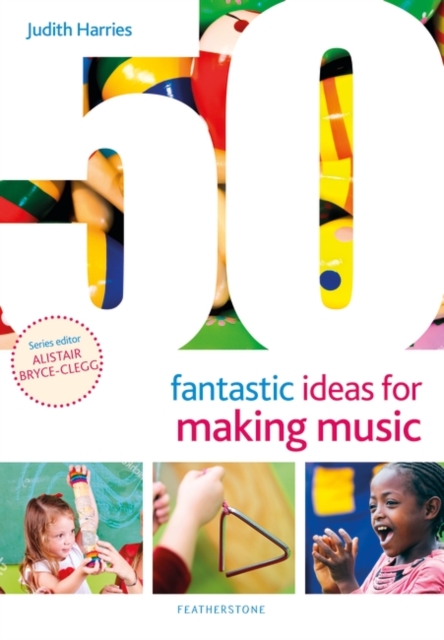
50 Fantastic Ideas for Making Music
The 50 Fantastic Ideas series is packed full of fun, original, skills-based activities for Early Years practitioners to use with children aged 0-5.Each activity features step-by-step guidance, a list of resources, and a detailed explanation of the skills children will learn.
eBook

Musical activities in Hong Kong kindergartens: The role of teaching experience
We investigated the provision of musical activities in Hong Kong kindergartens and analysed potential differences among teachers with different levels of teaching experience. Using a self-designed survey, we asked 1,019 teachers how often they conducted 18 specific musical activities. Overall, we found that participants provided considerable music exposure to children. Advanced teachers (more than 15 years' experience) reported conducting more musical activities for children than Beginning teachers (less than 5 years). Principal component analysis revealed the existence of four components: Singing and Transitions (the most frequent); Movement, Technology and Thematic Activities; Sound Production; and Creativity and Self-expression (the least frequent). Teachers with varying teaching experience tend to focus on different musical activities in the classroom. Specifically, Beginning teachers reported to conduct significantly fewer musical creativity activities than Advanced teachers. We conclude that teaching experience is a crucial factor that affects the provision and types of musical activities conducted by kindergarten teachers. Findings May guide subsequent professional development efforts to better prepare kindergarten teachers with different profiles to achieve the learning objectives established in the curriculum framework.
Journal Article
Music 3-5
This book gives information, ideas and principles for music with three to five year olds that are both down-to-earth and up-to-date. Written in a style which is engaging and readable, it integrates recent theory and practice illustrating the discussion with examples and ideas taken from real life.
Chapters in this inspiring and engaging book show practitioners how to:
connect with the educational concepts and principles of using music in early years settings
recognise and understand children's musical starting points
foster creativity through music
support listening and communication through music
learn the key areas of listening, singing, using instruments and dancing
develop children's musical understanding
widen opportunities for music through resources, new technologies and visiting artist projects.
Early years practitioners and students will find this a valuable introduction to music with young children. More experienced practitioners will find the contemporary ideas a source of inspiration.
Books in this series address key issues for early years practitioners working in today's Foundation Stage environments. Each title is packed full of practical activities, support, advice and guidance, all of which is in line with current government early years policy. The authors use their experience and expertise to write accessibly and informatively, emphasising through the use of case studies the practical aspects of the subject, whilst retaining strong theoretical underpinnings throughout.
eBook
Reflections of two musicians : 'Keep the faith and play on'
COVID-19 pandemic impacted all aspects of life including faith communities around the globe. It has taken musicians and worshippers out of their comfort zones challenging the traditional delivery of church services. Music forms an
important aspect in worship and is a vital link that connects parishioners to God and each other. Thus, in times of trials and tribulations, music and worship can positively enhance wellbeing. In this paper, the authors draw on
autoethnographic narratives, sharing personal memories and reflective journals from March 2020 to October 2022 from two different church settings in Australia. Through their shared emotions, challenges and experiences, they discuss two
themes (discordant moments and harmonious reflections) that describe the meaning of how playing music in church during this time affected their commitment and connection to faith. Whilst recommendations are offered, they acknowledge that
generalisations to other faith settings and musicians cannot be made. As music plays a significant role in the lives of church musicians in faith communities, the authors continue to strive to 'keep the faith and play on'. [Author
abstract]
Journal Article
Higher Education Grants or Gifts of Interest to African Americans
Here is this week’s news of grants or gifts to historically Black colleges and universities or for programs of particular interest to African Americans in higher education. The National Institute of Diabetes and Digestive and Kidney Diseases, part of the National Institutes of Health, has awarded a $4 million grant to support a collaboration between […]
Journal Article
Music education practices in Maltese band clubs pre, during and post COVID-19
This paper explores the narrative of two members of one of the Schools of Music affiliated to the same band club in Malta, focusing on the practice pre, during and post COVID-19 and the impact on its community impact. The paper also
investigates the contributory factors of community and adult music-making as part of the social fabric. The UN Policy Brief (2020) states that the COVID-19 pandemic has created the largest disruption of education systems in human
history, affecting nearly 1.6 billion learners in more than 190 countries. The challenge in Malta is to restore cultural interaction, fair access of digital equity, and the preservation of community tradition. Sparkman (2017) highlights
ideas of updating music education to close the social gap, making it accessible for all, and validating the contribution of music to community welfare and human well-being. A similar rationale advocated by Muezzinoglu and Gorgoretti
(2019) suggests catering for student interests with new music teaching approaches that are inclusive and complementary with today's social expectations. Music education needs to strike a balance between the attention to developing
technical and expressive facility - aesthetic encounter (Greene, 2001) and the social aspect of collective music-making - collectivism. In exploring the views of two members of one of the Schools of Music affiliated to the same band club
in Malta, the interviewees' narratives shed light on the three categories of Practice, Participation and Social Activity. The interviews with participants not only address the sustainability of community and adult music practice, but
also a sense of belonging that is the Band Clubs as a community of learners. In doing so it is focused on the music education practice pre, during and post COVID-19 in the Band Clubs and its community impact. Data was analysed with
content analysis and findings suggest this community institution has and does offer socially sound music education, but with a need for informed current and future practice. [Author abstract]
Journal Article
Teaching music to deaf students : A personal reflection
For the past 12 years I have been involved teaching music at a deaf school in Melbourne, philanthropically supported by Musica Viva's Equal Music program. The students use Auslan as their primary language and prior to the residency
there had not been a music program in the school for more than a decade. Students now participate fully in the program, playing instruments and participating in dancing and movement activities, Auslan choirs, and composing and performing
music. The end-of-year concert is the major date in the school calendar and students are able to demonstrate their achievements to family, friends and the Deaf community. The journey for all involved has not been a linear one, but rather
one forged through trial and error due to so little research being available in this area. What is now known about teaching music to deaf children is that if they are given the opportunity to learn to play and perform music, the students
succeed. [Author abstract]
Journal Article

Pathways Through Peer Assessment: Implementing Peer Assessment in a Lower Secondary Physics Classroom
Peer assessment has been shown to advance learning, for example, by improving one’s work, but the variance of learning benefits within or between studies has not been explained. The purpose of this case study was to examine what kinds of pathways students have through peer assessment and to study which factors affect them when peer assessment is implemented in the early stage of physics studies in the context of conducting and reporting inquiry. Data sources used include field notes, audio recordings of lessons, student lab reports, written peer feedback, and student interviews. We examined peer assessment from the perspective of individual students and found 3 profiles of peer assessment: (1) students that improved their lab report after peer assessment and expressed other benefits, (2) students that did not improve their lab report but expressed other benefits, and (3) students that did not experience any benefits. Three factors were found to explain these differences in students’ pathways: (1) students’ engagement in conducting and reporting inquiry, (2) the quality of received feedback, and (3) students’ understanding of formative assessment. Most students experienced some benefits of peer assessment, even if they did not put effort into their own work or receive constructive feedback. Nevertheless, in this case study, both improving one’s work and experiencing other benefits of peer assessment required sufficient accomplishment of all 3 factors.
Journal Article

Music as a Tool for Promoting Environmental Awareness. Experiences of Undergraduate Education Students on the Production of Video Tales in the COVID-19 Pandemic
This paper elaborates on the didactic implementation of musical theater with undergraduate education students. Students had to select, prepare, justify, design, elaborate, rehearse, stage, and record an educational tale that targets ecological and environmental values in its main plot or storyline. Due to the COVID-19 pandemic, the implementation of this didactic proposal went online, and the interactions between students took place through video calls. This study surveyed a sample of 86 participants (n = 86) from a population of 116 students (N = 116) from the Faculty of Education of Albacete (UCLM) to investigate the advantages and disadvantages of carrying out this activity in an online format. The main challenges exposed the complexity of coordinating a team in a completely online format, problems related to physical isolation, and the limited access to a high-quality internet connection. The reported benefits included the development of digital competences, the interactions through social media, and creative thinking. Most students viewed this activity as didactically innovative and 98.84% agreed that musical tales and musical theater can be useful for promoting environmental awareness.
Journal Article