
Catalogue Search | MBRL


Are you sure you want to remove the book from the shelf?

{{itemTitle}}
33,144
result(s) for
"Music in literature"
Sort by:


Orphic Bend
Restages fundamental debates about the relationship between poetry and music WINNER OF THE ELIZABETH AGEE PRIZE IN AMERICAN LITERATURE Orphic Bend: Music and Innovative Poetics explores the impact of music on recent pioneering literary practices in the United States.Adopting the myth of Orpheus as its framework, Robert L.
eBook

Arts of Incompletion
Incompletion is an essential condition of cultural history, and particularly the idea of the fragment became a central element of Romantic art which continued being of high relevance to the various strands of modernist and contemporary aesthetics.
eBook

Women and Music in the Age of Austen
Women and Music in the Age of Austen highlights the central role women played in musical performance, composition, reception, and representation, and analyzes its formative and lasting effect on Georgian culture.
eBook


Phonographic Memories
Phonographic Memories is the first book to perform a sustained analysis of the narrative and thematic influence of Caribbean popular music on the Caribbean novel. Tracing a region-wide attention to the deep connections between music and memory in the work of Lawrence Scott, Oscar Hijuelos, Colin Channer, Daniel Maximin, and Ramabai Espinet, Njelle Hamilton tunes in to each novel’s soundtrack while considering the broader listening cultures that sustain collective memory and situate Caribbean subjects in specific localities. These “musical fictions” depict Caribbean people turning to calypso, bolero, reggae, gwoka, and dub to record, retrieve, and replay personal and cultural memories. Offering a fresh perspective on musical nationalism and nostalgic memory in the era of globalization, Phonographic Memories affirms the continued importance of Caribbean music in providing contemporary novelists ethical narrative models for sounding marginalized memories and voices. Njelle W. Hamilton's Spotify playlist to accompany Phonographic Memories: https://spoti.fi/2tCQRm8
eBook

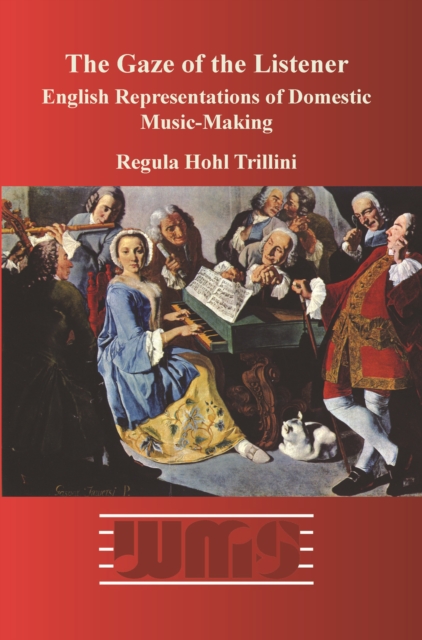
The Gaze of the Listener
This study analyzes representations of music in fiction, drama and poetry as well as normative texts in order to contribute to a gendered cultural history of domestic performance. From the Tudors to the First World War, playing the harpsichord or piano was an indispensable asset of any potential bride, and education manuals as well as courtship plots and love poems pay homage to this social function of music. The Gaze of the Listener charts the fundamental tension which determines all these texts: while music is warmly recommended in conduct books and provides standard metaphors like concord and harmony for virtuous love, a profound anxiety about its sensuous inarticulateness and implicit femininity unsettles all descriptions of actual music-making. Along with repressive plot lines, the privileging of visual perception over musical appreciation is the most telling indicator of this problem. The Gaze of the Listener is the first coherent account of this discourse and its historical continuity from the Elizabethan to the Edwardian period and provides a significant background for more narrowly focused research. Its uniquely wide database contextualizes numerous minor works with classics without limiting itself to the fringe phenomenon of musician novels. Including a fresh account of the novels of Jane Austen in their contemporary (rather than Victorian) context, the book is of interest to scholars and students in gender studies, English literature, cultural studies and musicology.
eBook