
Catalogue Search | MBRL


Are you sure you want to remove the book from the shelf?

{{itemTitle}}
27
result(s) for
"Musical instruments China History."
Sort by:


Third Front as Method: Mao, Market and the Present in CCTV Documentaries
This article examines two major recent CCTV documentaries on the Third Front and its afterlives. The Big Third Front (2017) and Vicissitudes of the Third Front (2016) construct strong narratives about the Third Front during the Mao era, depicting it as a heroic struggle against nature which was forced upon China by foreign enemies. However, both documentaries encounter difficulties in adhering to the usual presentation of the Deng era as a resoundingly successful transformation. Vicissitudes ambivalently characterizes the Deng era as one of relative decline in contrast to the glorious early years of the Third Front and the flourishing present. The Big Third Front, meanwhile, conflates historical footage of the 1950s–1990s in a way that undermines the usual official division of PRC history into Mao and reform eras. This paper concludes by suggesting that academic focus on the Third Front can serve as a methodological tool for complicating the periodization of PRC history.
Journal Article

Moving the Living and the Dead
The bronze drum in Asia has long been regarded as a form of antiquity and a cultural relic of the bronze age, representative of cultural groups found in China, Vietnam, Laos, and Myanmar’s border region. Through a close examination of bronze drum culture among the Baiku Yao ethnic minority of northwest Guangxi Zhuang Autonomous Region, in southern China, this article reveals the constitutive role drums play in contemporary social and religious life. This article draws on eight years of ethnographic data and builds on a material culture studies analytical framework to describe the sacralized life of the bronze drum. Through a ritualized anthropomorphic metamorphosis, the bronze drum is said to become a constituted member of the Baiku Yao community and hold sacred power to bridge the human and spirit worlds during funeral ceremonies. This article analyzes the symbolic dimensions of the bronze drum as a cultural practice and as a medium through which Baiku Yao ritual order, social organization and arrangements, and interactions with the spirit world can be understood. It reveals that bronze drums today possess agency in their power to move people, living and dead.
Journal Article

Homoeroticising Archaic Wind Music: A Rhizomatic Return to Ancient China
This article explores Archaic Wind music (gufeng 古風) and its implications for Sinophone articulations. Gufeng can be categorised as a particular type of music with lyrical, musical, and symbolic references to ancient China that is produced, consumed, and circulated within an online fan community. While the lyrics of gufeng music express a post-loyalist yearning to return to the fictional roots of “Cultural China,” its video adaptations deconstruct the authenticity of such cultural roots in their homoerotic subtext. Exploring the audio-visual texts of the gufeng music, I suggest that it shows a rhizomatic return to ancient China that disorients the routes to the past.
Journal Article

Music Iconography, Opera, Gender and Cultural Revolution – The Case Study of the Kwok On Collection (Portugal)
This study aims to revisit the creation of opera, symphonic versions of opera and ballet (yangbanxi) during the period of the Cultural Revolution of Mao's China. Beginning with the Kwok Collection (Fundação Oriente, Portugal), I aim to establish a new vision of the yangbanxi (production and reception) by means of an analysis of sources with musical iconography. The focus of the study is on questions of gender and the way in which the feminine was an indispensable tool for the construction and dissemination of the idea of a new nation-state. This study thus aims to make a new contribution to the area, showing how the construction of new opera heroines, communist and of the proletariat, is built on the image of the first \"heroine-villain\" constructed by the regime, Jiang Qing, the fourth wife of Mao Zedong. The title chosen demonstrates the paradox of the importance of woman in opera and in politics at a time when the only image to be left to posterity was that of a dominant male hero, Mao Zedong.
Journal Article
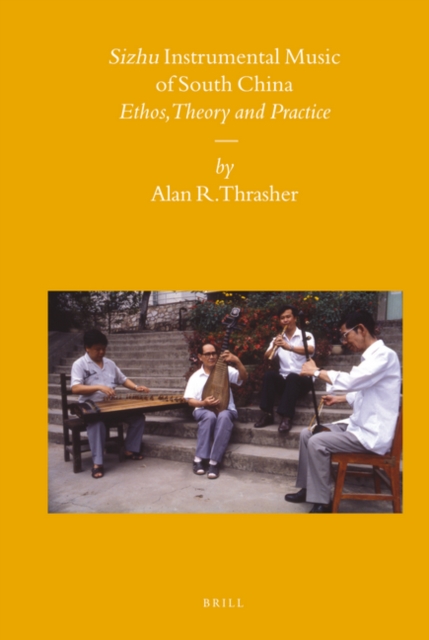
Sizhu Instrumental Music of South China
According to a reader's report, this is \"one of the finest studies on (any kind of) Chinese music to emerge in recent years.\" Based on extensive fieldwork and a thorough knowledge of the scholarly literature, the author examines the theoretical underpinnings of the 'silk and bamboo' instrumental ensemble traditions of the Chaozhou, Hakka and Cantonese peoples of South China.
eBook

Gifted education in China
The purpose of the present article is to provide an overview of gifted education in China, by tracing the social and cultural roots of the education system, and to review recent research that relates to current practices in gifted education. As a starting point, I will analyse conceptualisations and definitions of the key terms talent and giftedness in a Chinese cultural context, along with society's understanding of talents and giftedness, and show how these concepts are different from and similar to Western conceptions and beliefs. Following standard educational practice, I will introduce the important research findings of the last decade and analyse major articles according to whether they follow an educational or psychological approach. Finally, I will provide an overview of education efforts for gifted students, including difficult issues that need more attention, and discuss China's contribution to gifted education in domestic and international contexts.
Journal Article

From Cantonese religious procession to Australian cultural heritage: the changing Chinese face of Bendigo's Easter Parade
Chinese processional and musical performances in Australia are the subject of several key studies; however, the origin of the performances or their continuation during the 'White Australia' policy era and their transformations over time are neglected. This article investigates the Chinese processional performances that have featured at the Bendigo Easter Fair since the late nineteenth century, and outlines three stages in the transformation of the procession from a Chinese religious procession to a performance of Bendigo's cultural heritage. The case shows a dynamic, bi-directional relationship between the Anglo-Celtic and Chinese communities that predates the 'White Australia' policy and continued throughout the era. It offers reconsiderations of several issues in the study of Chinese transnational communities, namely the importance of culture in establishing transnational networks, the role of music in maintaining and recreating cultural identities, and the importance of the Chinese processional performance in multicultural Australian history.
Journal Article

An encounter with Chinese music in mid-18th-century London
This article offers an overview of British responses to Chinese music in the 18th century, and discusses in depth an informal musical performance by a Chinese visitor to London, not previously remarked upon in musicological literature. Taking place in 1756, this may have been the earliest Chinese musical performance in the West. The imbalance between the European response to Chinese visual and musical cultures is explored, and an examination of Purcell's The Fairy Queen is used to argue that even in musical contexts it is Chinese visual culture, rather than musical culture, which was most prominent. British responses to Chinese music are distinguished from those of continental Europe, on which they are nevertheless shown largely to depend at least until the period of Lord Macartney's embassy to China in 1793. A transcription of one of the pieces of music played by the Chinese visitor (which was published in a contemporary magazine account of the event as 'A Chinese Air') is discussed, and the Chinese performer is identified as 'Loum Kiqua' with the aid of other documentation of the period. A portrait of Loum Kiqua by Dominic Serres—known today only through a print by Thomas Burford—is considered. Broader issues of Chinese-Western crosscultural musical interchange are raised with reference to the specific example of 'The Chinese Air', and the possibility is also considered that Loum Kiqua met Samuel Johnson and Oliver Goldsmith during his stay in London, perhaps even providing one of the inspirations for the latter's The Citizen of the World, a satire on British society presented as written by a Chinese visitor. Amongst Western commentators on Chinese music considered are Gaspar da Cruz, Jean-Baptiste Du Halde, Joseph-Marie Amiot, John Barrow, Johann Christian Hüttner and Charles Burney.
Journal Article

Colin Mackerras
Colin Mackerras built a foundation f or later scholarship through his careful documentation of Chinese performance from a social and political perspective. His research illuminates the history of jingju, the theatre of the PRC, and the performance of minorities in China and beyond.
Journal Article