
Catalogue Search | MBRL


Are you sure you want to remove the book from the shelf?

{{itemTitle}}
4,287
result(s) for
"Musical instruments History."
Sort by:


Bach's Feet
The organist seated at the king of instruments with thousands of pipes rising all around him, his hands busy at the manuals and his feet patrolling the pedalboard, is a symbol of musical self-sufficiency yielding musical possibilities beyond that of any other mode of solo performance. In this book, David Yearsley presents a new interpretation of the significance of the oldest and richest of European instruments, by investigating the German origins of the uniquely independent use of the feet in organ playing. Delving into a range of musical, literary and visual sources, Bach's Feet demonstrates the cultural importance of this physically demanding mode of music-making, from the blind German organists of the fifteenth century, through the central contribution of Bach's music and legacy, to the newly-pedaling organists of the British Empire and the sinister visions of Nazi propagandists.
eBook
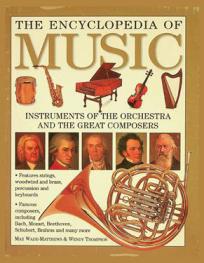
The encyclopedia of music : instruments of the orchestra and the great composers
\"A comprehensive encyclopedia of musical instruments, covering all sections of the orchestra: strings, woodwind and brass, percussion, keyboards and the voice, as well as historical, rare and non-Western instruments. An authoritative guide to over 100 of the most famous classical composers, from Bach to Xenakis, encompassing all styles of composition from medieval times to the present day. The text features concise, at-a-glance fact boxes that summarize key information about instruments, performers and composers' key works. Fully illustrated with over 1,000 photographs and illustrations of musical instruments and composers, the places where they lived and worked, scenes from their ballet or operas, and examples of their handwritten manuscripts.\"
Reference book
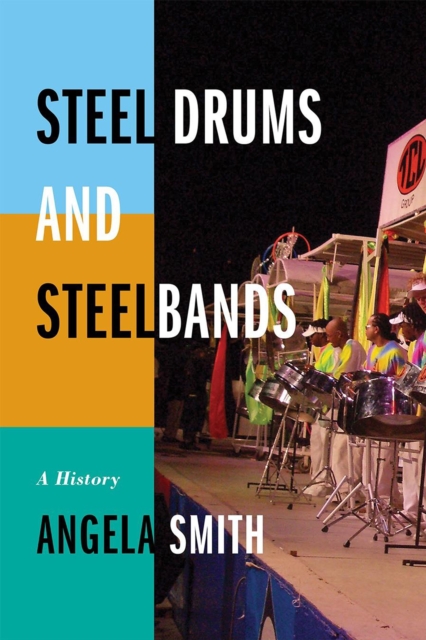
Steel drums and steelbands
Steel Drums and Steelbands: A History is a vivid account of the events that led to the “accidental” invention of the steel drum: the only acoustic musical instrument invented in the 20th century. Angela Smith walks readers through the evolution of the steel drum from an object of scorn and tool of violence to one of the most studied, performed, and appreciated musical instruments today. Smith explores the development of the modern steelband, from its roots in African slavery in early Trinidad to the vast array of experiments in technological innovation and to the current explosion of steelbands in American schools. The book offers insights directly from major contributors of the steelband movement with sections devoted exclusively to pioneers and innovators. Drawing on seven years of research, repeated trips to the birthplace of the steel drum, Trinidad, and interviews with steelband pioneers, Smith takes readers far beyond the sunny associations of the steel drum with island vacations, cruise ships, and multiple encores of “Yellow Bird.” Digging deep into Trinidad’s history—a tale of indigenous extermination and African slavery, of French settlement and Spanish and British colonialism before mid-century independence—Smith weaves an unforgettable narrative of talking drums, kalinda stick fights, tamboo bamboo bands, iron bands, calypso, Carnival, and the U. S. military. Together, all played major roles in the evolution of today’s steelband and in the panman’s journey from renegade to hero in the steelband’s move from the panyards of Trinidad’s poorest neighborhoods to the world’s most prestigious concert halls. The reader will discover how an instrument created by teenage boys, descendants of African slaves, became a world musical phenomena. Steel Drums and Steelbands is the ideal introduction to the steel drum, steelbands, and their history.
eBook


The Organs of J.S. Bach
The Organs of J. S. Bach is a comprehensive and fascinating guide to the organs encountered by Bach throughout Germany in his roles as organist, concert artist, examiner, teacher, and visitor. Newly revised and updated, the book's entries are listed alphabetically by geographical location, from Arnstadt to Zschortau, providing an easy-to-reference overview.
Includes detailed organ-specific information:
high-quality color photographs
each instrument's history, its connection to Bach, and its disposition as Bach would have known it
architectural histories of the churches housing the instruments
identification of church organists
Lynn Edwards Butler's graceful translation of Christoph Wolff and Markus Zepf's volume incorporates new research and many corrections and updates to the original German edition. Bibliographical references are updated to include English-language sources, and the translation includes an expanded essay by Christoph Wolff on Bach as organist, organ composer, and organ expert.
The volume includes maps, a timeline of organ-related events, transcriptions of Bach's organ reports, a guide to examining organs attributed to Saxony's most famous organ builder Gottfried Silbermann, and biographical information on organ builders.
Publication of this volume is supported by the American Bach Society.
eBook


Instruments for New Music
Player pianos, radio-electric circuits, gramophone records, and optical sound film-these were the cutting-edge acoustic technologies of the early twentieth century, and for many musicians and artists of the time, these devices were also the implements of a musical revolution.Instruments for New Musictraces a diffuse network of cultural agents who shared the belief that a truly modern music could be attained only through a radical challenge to the technological foundations of the art. Centered in Germany during the 1920s and 1930s, the movement to create new instruments encompassed a broad spectrum of experiments, from the exploration of microtonal tunings and exotic tone colors to the ability to compose directly for automatic musical machines. This movement comprised composers, inventors, and visual artists, including Paul Hindemith, Ernst Toch, Jörg Mager, Friedrich Trautwein, László Moholy-Nagy, Walter Ruttmann, and Oskar Fischinger. Patteson's fascinating study combines an artifact-oriented history of new music in the early twentieth century with an astute revisiting of still-relevant debates about the relationship between technology and the arts.
eBook

Sound tracks : uncovering our musical past
'Sound Tracks' tells the history of our relationship with music in 60 detective stories, each focusing on the discovery of a musical instrument in archaeological digs around the world. Taking us from the present day back to the dawn of time, long-lost music is here reconstructed as we enter the worlds of its makers. We feel a child's delight at playing with a water-filled pot that chirps like a bird in Peru in 700 AD; we appreciate the challenge of a soldier sending signals by trumpet along Hadrian's Wall; we hear the chiming of 64 bells buried in a tomb in 5th century China. Graeme Lawson leads us on a grand tour of the world's greatest musical discoveries, revealing that music is part of our DNA - not just in its role as pastime, entertainment or religious expression but also in how we commemorate our pasts and communicate with each other. It shapes all our lives and identities.
BOOK

The organ as a mirror of its time : north European reflections, 1610-2000
Because it has always represented a rich collaboration of the music, art, architecture, handicraft and science of its day, the organ, more than any other instrument, continues to reflect the spirit of the age in which it was built.
eBook