
Catalogue Search | MBRL


Are you sure you want to remove the book from the shelf?

{{itemTitle}}
22
result(s) for
"Musical theater United States History 20th century."
Sort by:


The Great White Way
Broadway musicals are one of America's most beloved art forms and play to millions of people each year. But what do these shows, which are often thought to be just frothy entertainment, really have to say about our country and who we are as a nation?
The Great White Wayis the first book to reveal the racial politics, content, and subtexts that have haunted musicals for almost one hundred years fromShow Boat(1927) toThe Scottsboro Boys(2011). Musicals mirror their time periods and reflect the political and social issues of their day. Warren Hoffman investigates the thematic content of the Broadway musical and considers how musicals work on a structural level, allowing them to simultaneously present and hide their racial agendas in plain view of their audiences. While the musical is informed by the cultural contributions of African Americans and Jewish immigrants, Hoffman argues that ultimately the history of the American musical is the history of white identity in the United States.
Presented chronologically,The Great White Wayshows how perceptions of race altered over time and how musicals dealt with those changes. Hoffman focuses first on shows leading up to and comprising the Golden Age of Broadway (1927-1960s), then turns his attention to the revivals and nostalgic vehicles that defined the final quarter of the twentieth century. He offers entirely new and surprising takes on shows from the American musical canon-Show Boat(1927),Oklahoma!(1943),Annie Get Your
Gun(1946),The Music Man(1957),West Side Story(1957),A Chorus Line(1975), and42nd Street(1980), among others.New archival research on the creators who produced and wrote these shows, including Leonard Bernstein, Jerome Robbins, Stephen Sondheim, and Edward Kleban, will have theater fans and scholars rethinking forever how they view this popular American entertainment.
eBook

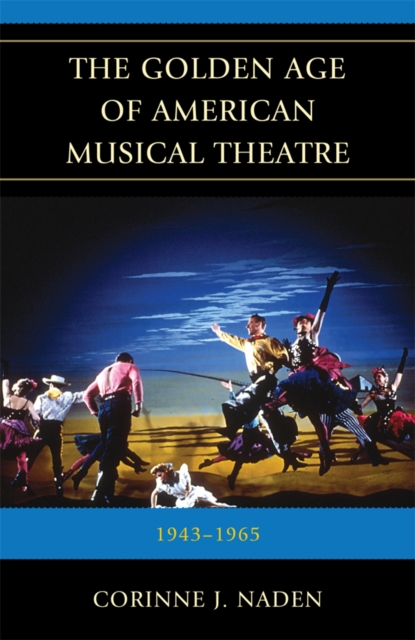
The golden age of American musical theatre
The Golden Age of American Musical Theatre: 1943-1965 provides synopses, cast and production credits, song titles, and other pertinent information for over 180 musicals from Oklahoma! to On A Clear Day You Can See Forever. Concentrating on a 22-year span, this book lists both commercial successes and flops of the Golden Age-when the musicals presented on Broadway showcased timeless, memorable tunes, sophisticated comedy, and the genius of creative artists like Richard Rodgers, Oscar Hammerstein, Jerome Robbins, Leonard Bernstein, George Abbott, Moss Hart, Angela Lansbury, Robert Preston, and many others. After an introduction and an overview of the history of Broadway, Naden offers a chronological timeline of the Golden Age musicals in America. She then presents details, in succeeding chapters, about the shows, the stars (on and off stage), the theatres, and the awards, beginning with an alphabetical listing of shows. Each show entry supplies the title, opening date, theatre, number of performances, primary cast and crew, and a plot synopsis, as well as other interesting data about the show, such as the awards won. Additional details about well-known actors, singers, composers, lyricists, directors, and choreographers of the period are provided, including birth and death dates, birth cities, born names, a brief biography, and award nominations and wins. Finishing with a bibliography and an index, this book is beneficial to anyone wanting to know more about one of the richest periods in Broadway history.
eBook

Broadway Goes to War
The American theater was not ignorant of the developments
brought on by World War II, and actively addressed and debated
timely, controversial topics for the duration of the war, including
neutrality and isolationism, racism and genocide, and heroism and
battle fatigue. Productions such as Watch on the Rhine
(1941), The Moon is Down (1942), Tomorrow the
World (1943), and A Bell for Adano (1944) encouraged
public discussion of the war's impact on daily life and raised
critical questions about the conflict well before other forms of
popular media.
American drama of the 1940s is frequently overlooked, but the
plays performed during this eventful decade provide a picture of
the rich and complex experience of living in the United States
during the war years. McLaughlin and Parry's work fills a
significant gap in the history of theater and popular culture,
showing that American society was more divided and less idealistic
than the received histories of the WWII home front and the
entertainment industry recognize.
eBook
Oscar Hammerstein II and the invention of the musical
A new look at artist Oscar Hammerstein II as a pivotal and underestimated force in the creation of modern American culture \"A charming . . . passion animates [Winer's] Oscar Hammerstein II and the Invention of the Musical.\"-Brad Leithauser, New York Times Book Review You know his work-Show Boat, Oklahoma!, Carousel, The King and I. But you don't really know Oscar Hammerstein II, the man who, more than anyone else, invented the American musical. Among the most commercially successful artists of his time, he was a fighter for social justice who constantly prodded his audiences to be better than they were. Diving deep into Hammerstein's life, examining his papers and his lyrics, critic Laurie Winer shows how he orchestrated a collective reimagining of America, urging it forward with a subtly progressive vision of the relationship between country and city, rich and poor, America and the rest of the world. His rejection of bitterness, his openness to strangers, and his optimistic humor shaped not only the musical but the American dream itself. His vision can continue to be a touchstone to this day.
eBook

Blue-Collar Broadway
Behind the scenes of New York City's Great White Way, virtuosos of stagecraft have built the scenery, costumes, lights, and other components of theatrical productions for more than a hundred years. But like a good magician who refuses to reveal secrets, they have left few clues about their work. Blue-Collar Broadway recovers the history of those people and the neighborhood in which their undersung labor occurred.Timothy R. White begins his history of the theater industry with the dispersed pre-Broadway era, when components such as costumes, lights, and scenery were built and stored nationwide. Subsequently, the majority of backstage operations and storage were consolidated in New York City during what is now known as the golden age of musical theater. Toward the latter half of the twentieth century, decentralization and deindustrialization brought the emergence of nationally distributed regional theaters and performing arts centers. The resulting collapse of New York's theater craft economy rocked the theater district, leaving abandoned buildings and criminal activity in place of studios and workshops. But new technologies ushered in a new age of tourism and business for the area. The Broadway we know today is a global destination and a glittering showroom for vetted products.Featuring case studies of iconic productions such as Oklahoma! (1943) and Evita (1979), and an exploration of the craftwork of radio, television, and film production around Times Square, Blue-Collar Broadway tells a rich story of the history of craft and industry in American theater nationwide. In addition, White examines the role of theater in urban deindustrialization and in the revival of downtowns throughout the Sunbelt.
eBook

“Ever to the Right”? The Political Life of 1776 in the Nixon Era
Harbert explores the political life of the Broadway musical and its film version during the Nixon era. She first delves into the musical's creative collaborators, their political stances, and their individual goals for the show. She then details the musical's reception by critics, politicians, and audiences across the political spectrum and shines a spotlight on the night Pres Nixon hosted a full performance of 1776 in the White House on George Washington's birthday in 1970. By examining this night and the political messages woven into two key songs Nixon wanted to censor, \"Cool, Cool, Considerate Men\" and \"Momma, Look Sharp,\" we can bring the musical's political versatility into focus. Finally, she documents how 1776's advertising campaign shifted following Nixon's public embrace of the show, asserting its independence from the conservative White House so that people of all political persuasions still felt that 1776 was for them.
Journal Article

Queen of Vaudeville
In her day, Eva Tanguay (1879-1947) was one of the most famous women in America. Widely known as the \"I Don't Care Girl\"-named after a song she popularized and her independent, even brazen persona-Tanguay established herself as a vaudeville and musical comedy star in 1904 with the New York City premiere of the show My Lady-and never looked back. Tanguay was, at the height of a long career that stretched until the early 1930s, a trend-setting performer who embodied the emerging ideal of the bold and sexual female entertainer. Whether suggestively singing songs with titles like \"It's All Been Done Before But Not the Way I Do It\" and \"Go As Far As You Like\" or wearing a daring dress made of pennies, she was a precursor to subsequent generations of performers, from Mae West to Madonna and Lady Gaga, who have been both idolized and condemned for simultaneously displaying and playing with blatant displays of female sexuality.
InQueen of Vaudeville, Andrew L. Erdman tells Eva Tanguay's remarkable life story with verve. Born into the family of a country doctor in rural Quebec and raised in a New England mill town, Tanguay found a home on the vaudeville stage. Erdman follows the course of her life as she amasses fame and wealth, marries (and divorces) twice, engages in affairs closely followed in the press, declares herself a Christian Scientist, becomes one of the first celebrities to get plastic surgery, loses her fortune following the Wall Street Crash of 1929, and receives her last notice, an obituary in Variety. The arc of Tanguay's career follows the history of American popular culture in the first half of the twentieth century. Tanguay's appeal, so dependent on her physical presence and personal charisma, did not come across in the new media of radio and motion pictures. With nineteen rare or previously unpublished images, Queen of Vaudeville is a dynamic portrait of a dazzling and unjustly forgotten show business star.
eBook
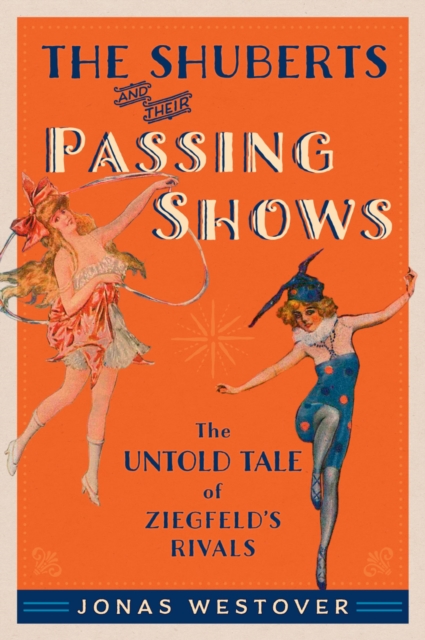
The Shuberts and Their Passing Shows
Starting in 1912, the Shubert brothers produced an extravagant series of revues called The Passing Shows. Each year, a new edition would be crafted, featuring new musical styles, the latest dance fads, and some of the biggest stars of the day. Including dozens of chorus women and men, these revues were hits both in New York’s Winter Garden Theater and on tour. This book examines these shows in depth, with a look at their creators and content. Challenging the notion that Ziegfeld and his Follies were the only important revues of the era, this work details the remarkable efforts put forth by a whole host of incredible personalities. Especially intriguing is the story of the relationship between the Shuberts and Ziegfeld, told using in-house memos, personal letters, and documents packed away for a century. And finally, when Ziegfeld died, the Shuberts were part of shaping their former rival’s legacy, in part using the amazing theatrical machine they had developed for their own revues. Fred and Adele Astaire, George Gershwin, Joan Crawford, and Ed Wynn are among the stars still remembered today who were a part of the series, but they performed alongside many others who have fallen out of the limelight. This book brings those stars, their songs, and stories back to life, making the Broadway of the 1910s and 1920s seem like yesterday.
eBook