
Catalogue Search | MBRL


Are you sure you want to remove the book from the shelf?

{{itemTitle}}
29
result(s) for
"Musicians Europe Biography."
Sort by:


Music at World's End
In Iceland in the 1930s, classical music was only beginning
to be seriously practiced, at the same time when musicians of
Jewish heritage were fleeing Nazi Germany and Austria. Despite
the country's strict immigration policy, three outstanding young
musicians were allowed to settle there: Robert Abraham, Heinz
Edelstein, and Victor Urbancic. Their influence on Iceland's
music scene as conductors, instrumentalists, teachers, and
scholars proved invaluable. In
Music at World's End , the first in-depth study of the
lives and careers of these three musicians, musicologist
Árni Ingólfsson examines their formative years in
Germany and Austria, their dramatic escapes from the Nazi regime,
and their triumphs and frustrating setbacks in their new
homeland, a country in which Jews were virtually unknown. This
fascinating case study is a valuable addition to studies of
musical exile during World War II and beyond.
eBook

Albert Schweitzer : a biography
This biography provides a versatile insight into the life, work, and thought of Albert Schweitzer (1875-1965). Nils Ole Oermann offers a detailed account of the multifaceted life of Albert Schweitzer who was a theologian, organist, philosopher, physician, and medical missionary. Schweitzer's life was not a straight path from the parsonage in Alsace to the University of Strasbourg, then on to the hospital in Lambarene, and ending with the Nobel Peace Prize in Oslo. In every life there are highs and lows, victories and defeats, and Schweitzer's life was no exception. These ups and downs, however, are barely discernible in Schweitzer's 1931 autobiography, Out of my Life and Thought, where he presents his life as an enormous, purposefully constructed edifice, the cornerstone of which was the principle of Reverence for Life, and the almost inevitable outcome of which was the Nobel Peace Prize. To date, biographers, journalists, and hagiographers have told and retold the story of Schweitzer following this basic pattern with relatively little critical modification. Their Schweitzer was a man whose demeanour and charisma set him apart from other intellectual giants of his time. But not everything Schweitzer records in his autobiography corresponds with what is found in the archives and in his unpublished writings. It is on the basis of these historical sources and more recent publications that Oermann attempts to sketch a more realistic picture of Albert Schweitzer. Oermann draws on newly uncovered personal papers which shed light on Schweitzer's dealings with the East German authorities and his role in the anti-nuclear movement. He also builds on a number of interviews from those associated with Schweitzer, most notably his daughter.
Book

Clara Schumann
This absorbing and award-winning biography tells the story of the tragedies and triumphs of Clara Wieck Schumann (1819-1896), a musician of remarkable achievements. At once artist, composer, editor, teacher, wife, and mother of eight children, she was an important force in the musical world of her time. To show how Schumann surmounted the obstacles facing female artists in the nineteenth century, Nancy B. Reich has drawn on previously unexplored primary sources: unpublished diaries, letters, and family papers, as well as concert programs. Going beyond the familiar legends of the Schumann literature, she applies the tools of musicological scholarship and the insights of psychology to provide a new, full-scale portrait.
The book is divided into two parts. In Part One, Reich follows Clara Schumann's life from her early years as a child prodigy through her marriage to Robert Schumann and into the forty years after his death, when she established and maintained an extraordinary European career while supporting and supervising a household and seven children. Part Two covers four major themes in Schumann's life: her relationship with Johannes Brahms and other friends and contemporaries; her creative work; her life on the concert stage; and her success as a teacher.
Throughout, excerpts from diaries and letters in Reich's own translations clear up misconceptions about her life and achievements and her partnership with Robert Schumann. Highlighting aspects of Clara Schumann's personality and character that have been neglected by earlier biographers, this candid and eminently readable account adds appreciably to our understanding of a fascinating artist and woman.
For this revised edition, Reich has added several photographs and updated the text to include recent discoveries. She has also prepared a Catalogue of Works that includes all of Clara Schumann's known published and unpublished compositions and works she edited, as well as descriptions of the autographs, the first editions, the modern editions, and recent literature on each piece. The Catalogue also notes Schumann's performances of her own music and provides pertinent quotations from letters, diaries, and contemporary reviews.
eBook

Mozart and Enlightenment semiotics
In this groundbreaking, historically-informed semiotic study of late eighteenth-century music, Stephen Rumph focuses on Mozart to explore musical meaning within the context of Enlightenment sign and language theory. Illuminating his discussion with French, British, German, and Italian writings on signs and language, Rumph analyzes movements from Mozart's symphonies, concertos, operas, and church music. He argues that Mozartian semiosis is best understood within the empiricist tradition of Condillac, Vico, Herder, or Adam Smith, which emphasized the constitutive role of signs within human cognition. Recognizing that the rationalist model of neoclassical rhetoric has guided much recent work on Mozart and his contemporaries, Rumph demonstrates how the dialogic tension between opposing paradigms enabled the composer to negotiate contradictions within Enlightenment thought.
eBook

Anton Rubinstein : a life in music
The first modern biography in English of Russian composer-pianist Anton
Rubinstein, this book places Rubinstein within the context of Russian and western
European musical culture during the late 19th century, exploring his rise to
international fame from humble origins in Bessarabia, as well as his subsequent
rapid decline and marginalization in later musical culture. Taylor provides a
balanced account of Rubinstein's life and his career as a piano virtuoso, conductor,
composer, and as the founder of Russia's first conservatory. Widely considered the
virtuosic heir to Liszt, and recognized internationally as an equivalent cultural
icon, he performed with most leading musicians of the day, including Liszt himself,
Joachim, Clara Schumann, Vieuxtemps, Wieniawski, Saint-Saens, and Ysaÿe.
eBook

Richard Wagner
All modern artists have had to market themselves in some way. Richard Wagner may just have done it better than anyone else. In a self-promotional effort that began around 1840 in Paris, and lasted for the remainder of his career, Wagner claimed convincingly that he was the most German composer ever and the true successor of Beethoven. More significantly, he was an opera composer who declared that he was not composing operas. Instead, during the 1850s, he mapped out a new direction, conceiving of works that would break with tradition and be literally 'brand new'. This is the first study to examine the innovative ways in which Wagner made himself a celebrity, promoting himself using every means available: autobiography, journal articles, short stories, newspaper announcements, letters, even his operas themselves. Vazsonyi reveals how Wagner created a niche for his works in the crowded opera market that continues to be unique.
eBook
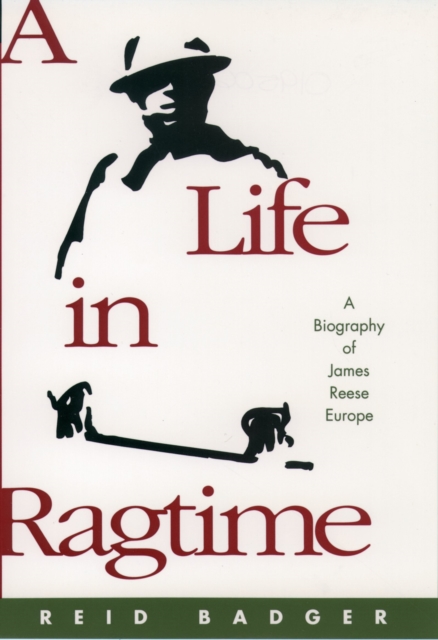
A life in ragtime : a biography of James Reese Europe
James Reese Europe is one of the most important transitional figures in American music. As a composer and band leader at the height of ragtime, he had a strong influence on the first generation of jazz musicians who were to follow. Europe's life reveals much about the role of black musicians in American culture in a period when it was presumed they had little place.
eBook

Tokio Hotel Fever
Tokio Hotel  twin brothers Bill (vocalist) and Tom (guitarist) Kaulitz, drummer Gustav Schäfer, and bassist Georg Listing  were already multi-platinum-selling superstars in their native Germany when they decided to take the rest of the world by storm. Tokio Hotel translated their two albums from German and found English-speaking audiences just as receptive to their alt-rock music, moving lyrics, and distinct visual style as European fans are, with Scream going platinum. In addition to a nomination for Best Pop Video for ÂReady Set Go!â the band won the MTV Video Music Award for Best New Artist in 2008 (beating Miley Cyrus, Katy Perry, and Taylor Swift) and hit the road, touring America and winning over the hearts of audiences. In October 2009, their third album, Humanoid (Universal), was released simultaneously in German and English. Already a bestselling book in Europe and available for the first time in English, Béatrice Nouveauâs Tokio Hotel Fever is a full-colour tribute to Bill, Tom, Gustav, and Georg, featuring stunning photos of the band  in performance, off stage, and as children  and all the details on their early days, their musical and style influences, their love for their devoted legions of fans, as well as updates on their new album and tour.
eBook

Acute-on-chronic subdural hematoma: the death of the famous XIX century soprano Maria Malibran—a study of the sources
Maria Malibran (1808–1836) is one of the most famous sopranos of the nineteenth century. In 1825, along with her father, the renowned tenor Manuel Garcia, she introduced the Italian opera in America for the first time. The European debut in Paris (1828) definitively crowned her as a star. Thus, she was requested by the most famous European theaters. In July 1836, during an equestrian excursion in London, she fell from her horse dashing her head against the ground, resulting in a state of insensibility. Since that accident, she had suffered from continual headache and nervous attacks, but she continued to work. In September 1836, she attended a music festival in Manchester, but her health rapidly worsened: episodes of nervous attacks, headache, and fainting occurred with higher frequency. At the end of a representation, she was attacked by violent convulsions. In the following days, she was laid in a kind of stupor. Afterward, she died at the age of 28. The hypothesis that prolonged efforts during her performance could have provoked a rebleeding of a pre-existent chronic subdural hematoma should be taken into account as a possible cause of death.
Journal Article