
Catalogue Search | MBRL


Are you sure you want to remove the book from the shelf?

{{itemTitle}}
35
result(s) for
"Musique et langage."
Sort by:

Economist video. Is music a language?
Is music a language? What are the qualities that define language?
Streaming Video

What's good : notes on rap and language
\"What's Good is a work of passionate lyrical analysis, a set of freewheeling liner notes, and a love letter to the most vital American art form of the last half century. Over a series of short chapters, each centered on a different lyric, Daniel Levin Becker considers how rap's use of language operates and evolves at levels ranging from the local (slang, rhyme) to the analytical (quotation, transcription) to the philosophical (morality, criticism, irony), celebrating the pleasures and perils of any attempt to decipher its meaning-making technologies. Ranging from Sugarhill Gang to UGK to Young M.A, Rakim to Rick Ross to Rae Sremmurd, Jay-Z to Drake to Snoop Dogg, What's Good reads with the momentum of a deftly curated mixtape, drawing you into the conversation and teaching you to read it as it goes. A book for committed hip-hop heads, curious neophytes, armchair linguists, and everyone in between\"-- Provided by publisher.
BOOK

English Rock and Pop Performances
This book addresses the phenomenon of non-American rock and pop singers emulating an Americanized singing style for performance purposes. By taking a novel approach to this pop cultural trend and drawing attention to the audience, British and American students' perceptions of English rock and pop performances were elicited.
eBook

Foundations of Musical Grammar
This volume makes a unique contribution to music theory by building on recent research in cognitive science and theoretical perspectives adopted from cognitive linguistics to present an account of the foundations of musical grammar. Musical grammar is conceived of as a species of construction grammar, in which grammatical elements are form-function pairs. In the case of music, basic constructions are sonic analogs for dynamic processes that are central to human cultures. This volume focuses on three such processes: those related to emotions, to gestures, and to dance. The first chapter introduces the volume and explains how this approach connects with previous work in music theory. The second chapter reviews research on analogy and shows how it provides a basis for analogical reference, which is fundamental to musical grammar. The third chapter describes the connection between music and the emotions facilitated by analogical reference. The fourth chapter explores connections between human gesture and musical utterances, and shows how both rely on the infrastructure for human communication that is also exploited by language. The fifth chapter demonstrates how music provides sonic analogs for the steps of social dances, and how music combined with dance has been used to structure social interactions. The sixth chapter focuses on the combination of language and music that occurs in songs, making clear how the different grammatical resources offered by music and language shape how meaning is constructed in songs. Detailed musical analyses are offered in each chapter, as well as summaries of the basic elements of musical grammar.
eBook

Musical Theatre, Realism and Entertainment
Beginning from the passion musical theatre performances arouse and their ubiquity in London's West End and on Broadway this book explores the ways in which musical theatre reaches out to and involves its audiences. It investigates how pleasure is stimulated by vocal, musical and spectacular performances. Early discussions centre on the construction of the composed text, but then attention is given to performance and audience response. In doing this, the book challenges the conception of musical theatre as 'only entertainment'.
eBook
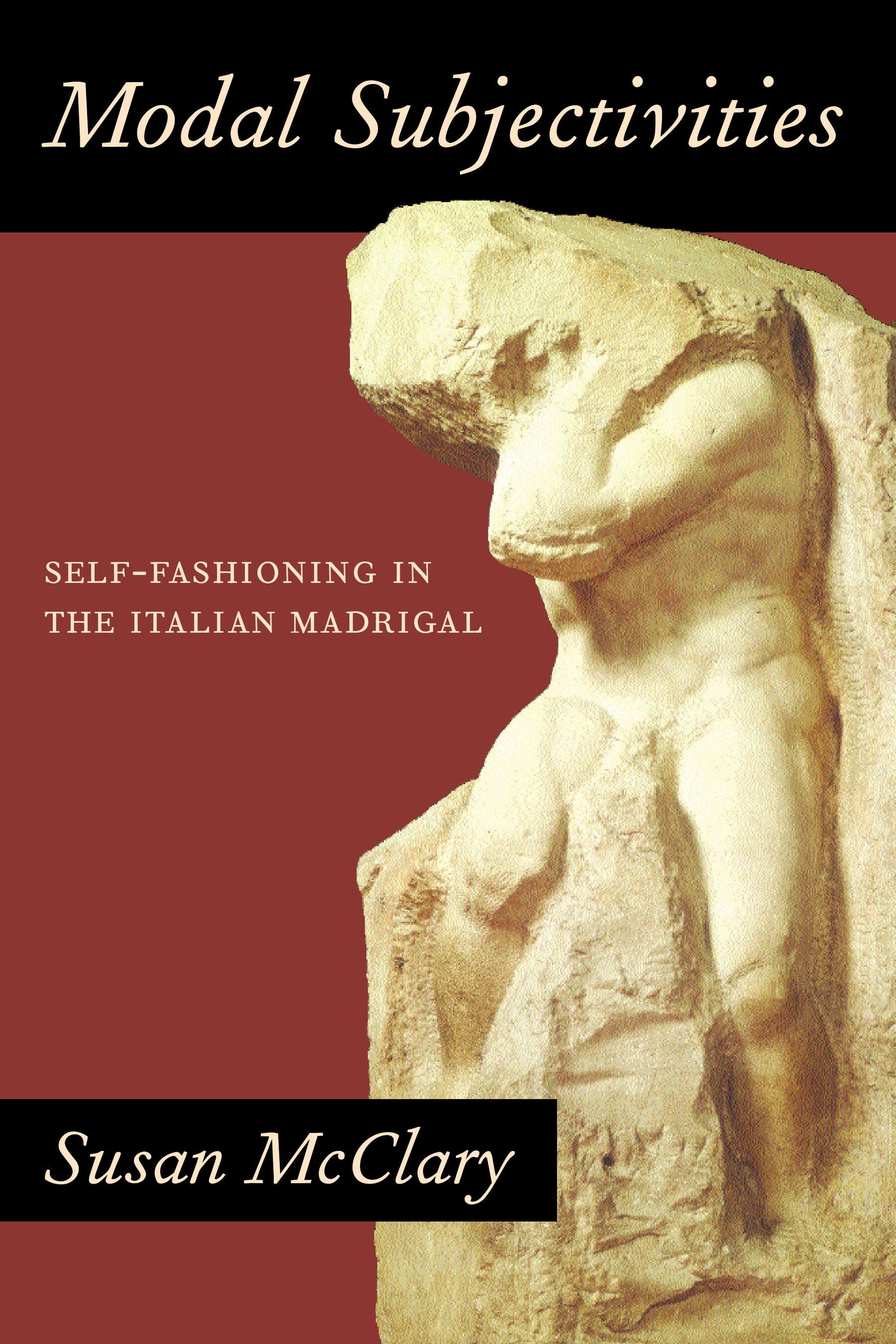
Modal Subjectivities
In this boldly innovative book, renowned musicologist Susan McClary presents an illuminating cultural interpretation of the Italian madrigal, one of the most influential repertories of the Renaissance. A genre that sought to produce simulations in sound of complex interiorities, the madrigal introduced into music a vast range of new signifying practices: musical representations of emotions, desire, gender stereotypes, reason, madness, tensions between mind and body, and much more. In doing so, it not only greatly expanded the expressive agendas of European music but also recorded certain assumptions of the time concerning selfhood, making it an invaluable resource for understanding the history of Western subjectivity.Modal Subjectivitiescovers the span of the sixteenth-century polyphonic madrigal, from its early manifestations in Philippe Verdelot's settings of Machiavelli in the 1520s through the tortured chromatic experiments of Carlo Gesualdo. Although McClary takes the lyrics into account in shaping her readings, she focuses particularly on the details of the music itself-the principal site of the genre's self-fashionings. In order to work effectively with musical meanings in this pretonal repertory, she also develops an analytical method that allows her to unravel the sophisticated allegorical structures characteristic of the madrigal. This pathbreaking book demonstrates how we might glean insights into a culture on the basis of its nonverbal artistic enterprises.
eBook
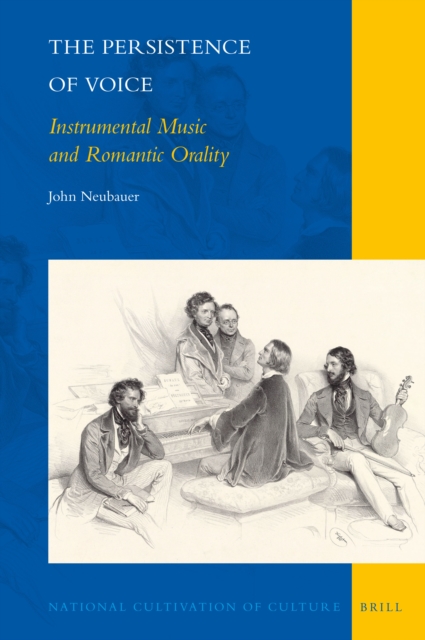
The Persistence of Voice
This work, completed by Neubauer on the very eve of his death in 2015, complements both his benchmark The Emancipation of Music from Language (Yale UP, 1986) and his History of the Literary Cultures of East-Central Europe (John Benjamins, 2004-10). It thematizes Romantic interest in oral speech, its poetical usage in music and musical discourse, and its political usage in the national-communitarian cult of the vernacular community. Subtly and with great erudition, Neubauer traces in different genres and fields the many transnational cross-currents around Romantic cultural criticism and writings on music and language, offering not only fresh analytical insights but also a rich account of the interaction between Romantic aesthetics and cultural nationalism.
eBook
The semantics of Chinese music : analysing selected Chinese musical concepts
Music is a widely enjoyed human experience. It is, therefore, natural that we have wanted to describe, document, analyse and, somehow, grasp it in language. This book surveys a representative selection of musical concepts in Chinese language, i.e. words that describe, or refer to, aspects of Chinese music. Important as these musical concepts are in the language, they have been in wide circulation since ancient times without being subjected to any serious semantic analysis. The current study is the first known attempt at analysing these Chinese musical concepts linguistically, adopting the Natural Semantic Metalanguage (NSM) approach to formulate semantically and cognitively rigorous explications. Readers will be able to better understand not only these musical concepts but also significant aspects of the Chinese culture which many of these musical concepts represent. This volume contributes to the fields of cognitive linguistics, semantics, music, musicology and Chinese studies, offering readers a fresh account of Chinese ways of thinking, not least Chinese ways of viewing or appreciating music. Ultimately, this study represents trailblazing research on the relationship between language, culture and cognition.
eBook
