
Catalogue Search | MBRL


Are you sure you want to remove the book from the shelf?

{{itemTitle}}
748
result(s) for
"Muslim martyrs"
Sort by:

The martyrs of Karbala : Shiʿi symbols and rituals in modern Iran
No detailed description available for \"The Martyrs of Karbala\".
eBook

The Martyrs of Karbala
This innovative study examines patterns of change in Shi'i symbols and rituals over the past two centuries to reveal how modernization has influenced the societal, political, and religious culture of Iran. Shi'is, who support the Prophet Mohammad's progeny as his successors in opposition to the Sunni caliphate tradition, make up 10 to 15 percent of the world's Muslim population, roughly half of whom live in Iran. Throughout the early history of the Islamic Middle East, the Sunnis have been associated with the state and the ruling elite, while Shi'is have most often represented the political opposition and have had broad appeal among the masses. Moharram symbols and rituals commemorate the Battle of Karbala in 680 CE, in which the Prophet Mohammad's grandson Hoseyn and most of his family and supporters were massacred by the troops of the Umayyad caliph Yazid.
Moharram symbols and rituals are among the most pervasive and popular aspects of Iranian culture and society. This book traces patterns of continuity and change of Moharran symbols and rituals in three aspects of Iranian life: the importance of these rituals in promoting social bonds, status, identities, and ideals; ways in which the three major successive regimes (Qujars, Pahlavis, and the Islamic Republic), have either used these rituals to promote their legitimacy, or have suppressed them because they viewed them as a potential political threat; and the uses of Moharram symbolism by opposition groups interested in overthrowing the regime.
While the patterns of government patronage have been radically discontinuous over the past two centuries, the roles of these rituals in popular society and culture have been relatively continuous or have evolved independently of the state. The political uses of modern-day rituals and the enduring symbolism of the Karbala narratives continue today.
eBook
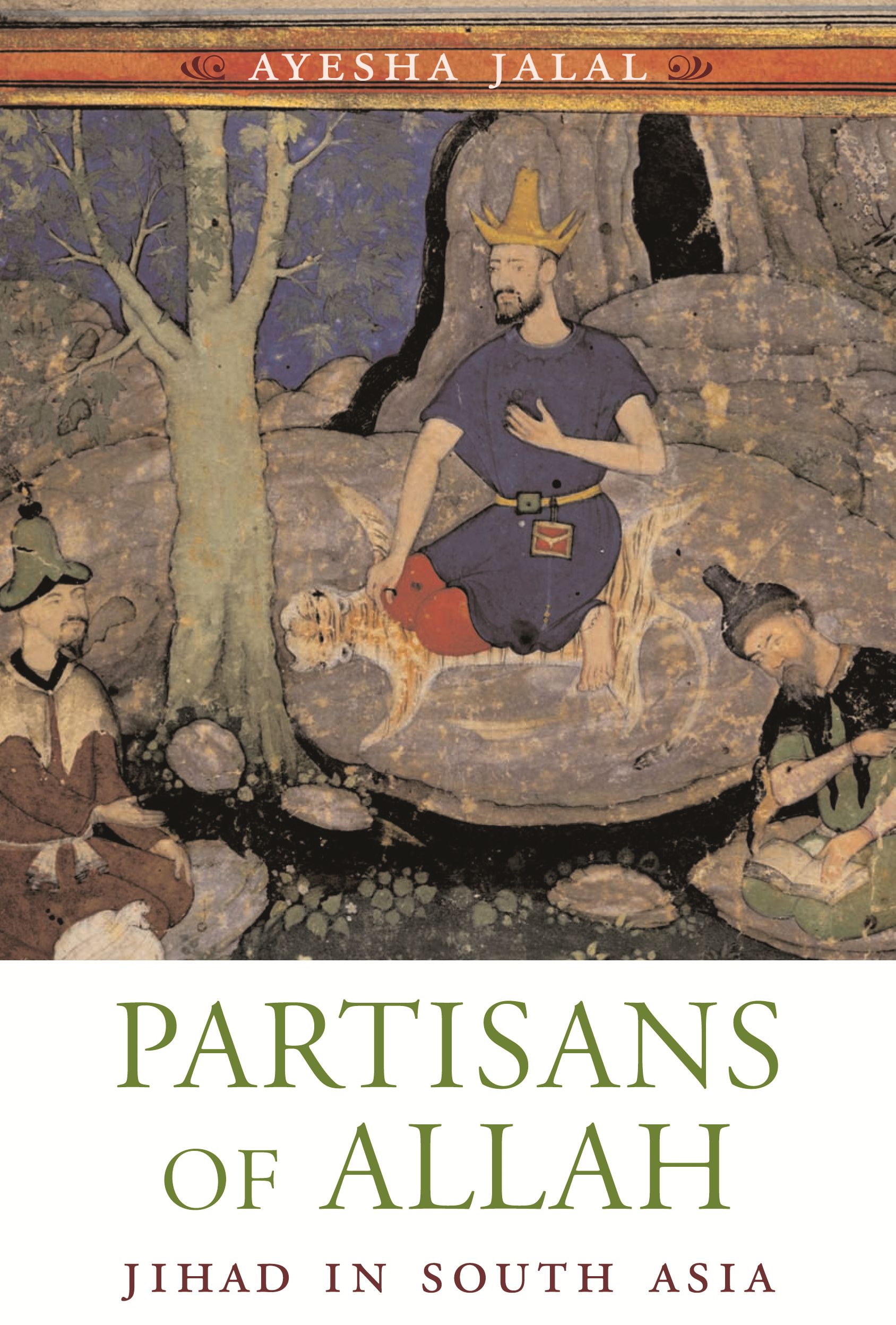
Partisans of Allah
Today, more than ever, jihad signifies the political opposition between Islam and the West. As the line drawn between Muslims and non-Muslims becomes more rigid, Jalal seeks to retrieve the ethical meanings of this core Islamic principle in South Asian history. Drawing on historical, legal, and literary sources, Jalal traces the intellectual itinerary of jihad through several centuries and across the territory connecting the Middle East with South Asia.
eBook

Violence and Belief in Late Antiquity
In Violence and Belief in Late Antiquity, Thomas Sizgorich seeks to understand why and how violent expressions of religious devotion became central to the self-understandings of both Christian and Muslim communities between the fourth and ninth centuries. Sizgorich argues that the cultivation of violent martyrdom as a path to holiness was in no way particular to Islam; rather, it emerged from a matrix put into place by the Christians of late antiquity. Paying close attention to the role of memory and narrative in the formation of individual and communal selves, Sizgorich identifies a common pool of late ancient narrative forms upon which both Christian and Muslim communities drew.In the process of recollecting the past, Sizgorich explains, Christian and Muslim communities alike elaborated iterations of Christianity or Islam that demanded of each believer a willingness to endure or inflict violence on God's behalf and thereby created militant local pieties that claimed to represent the one \"real\" Christianity or the only \"pure\" form of Islam. These militant communities used a shared system of signs, symbols, and stories, stories in which the faithful manifested their purity in conflict with the imperial powers of the world.
eBook

Islamikaze
Raphael Israeli's overview of Islamic martyrology focuses upon the situation that has developed worldwide since the World Trade Centre was destroyed. His thesis is that a sea-change has occurred in international terrorism that supersedes all other perspectives.
eBook

Manufacturing Human Bombs: The Making of Palestinian
\"What is the importance of Islam for understanding Muslim suicide attacks? At one extreme is the view that suicide attacks are the expression of a fanatic strain of Islam; at the other extreme is the argument that such attacks are the expression of desperate politics - the warfare of the weak. In the first view, Muslim suicide terrorism cannot be understood without understanding Islam in all the complexity of its competing sects and schools. In the second, Muslim suicide terrorism can be understood with the same concepts and mechanisms that make sense of Tamil Tiger terrorism in Sri Lanka or PKK terrorism in Turkey. The three books reviewed here offer a mix of political and religious analyses, with Hafez heavier on the politics than Cook and Allison...Taken together, the three books represent a strong second wave of research on suicide terrorism. All three recognize that the motives of suicide bombers can differ from the motives of the organizations that send them. All three emphasize the need to include personal, political, and cultural factors in order to understand suicide bombing. Compared with earlier books about suicide terrorism, all three studies profit from the authors' expertise in Arabic language and the religion and culture of Islam to enrich analysis with translations of original documents and websites. The result is a substantial improvement in our understanding of the phenomenon.\" (The Middle East Journal) Three books that examine the religious and political motivation and martyrdom culture behind suicide terrorism are reviewed.
Journal Article

The smarter bomb : women and children as suicide bombers
This compelling book offers a unique glimpse into the motivations of suicide bombers, especially women and children, and those who recruit and dispatch them. As a woman and a mother, Anat Berko was able to win the trust of imprisoned bombers and speak with them intimately. Entering Israel's most heavily secured cells, she met with female and adolescent would-be suicide bombers and their dispatchers, lawyers, and interrogators. The personal stories are greatly enriched by the inclusion of the sketches and letters many prisoners gave to the author. She explores vital questions: What leads individuals to place explosives on their bodies, kill and injure scores of civilians, and take their own lives? Do men really believe that death will transport them to paradise, where Allah, virgins, and wine await them? Are women victims of unbearable pressure to commit this act of terror? Can a woman be \"good\" according to the criteria of Arab/Palestinian society and a terrorist at the same time? Is involvement in terrorism a sign of the liberation of Palestinian women or another way of preserving their social inferiority, thus explaining their low status and the inferior rewards the families of female suicide bombers receive? Who are the dispatchers, and how do they manipulate and convince women and youngsters to go calmly to their death? The answers to these questions offer a rare and candid portrayal that will be essential reading for all those wanting to understand the interior world of suicide bombers and how to communicate with terrorists.
eBook

Jihad and Martyrdom in Classical and Contemporary Islam
This chapter contains sections titled:
The Importance of Jihad and Martyrdom in Islamic History
Shi‘ite Jihad and Martyrdom
Jihad in Muslim History
Contemporary Radical Islam
Conclusions
References
Book Chapter

Counting Muslim terrorists and coming up short
\"Global Islamist terrorists have managed to recruit fewer than 1 in 15,000 Muslims over the past quarter century and fewer than 1 in 100,000 Muslims since 9/11,\" he writes, citing estimates up to 2008 from the National Memorial Institute for the Prevention of Terrorism. Most opposition to Arab rule in the Muslim world, as has been amply demonstrated this spring, comes from the opposite side - from the liberal left rather than the reactionary right.
Newspaper Article

Pro-Violence Sermons of a Secular State: Turkey’s Diyanet on Islamist Militarism, Jihadism and Glorification of Martyrdom
The literature on martyrdom has not, so far, systematically analysed a constitutionally secular state’s extensive use of religion in propagating martyrdom narratives by using state-controlled religious institutions. This paper addresses this gap in martyrdom literature. In addition, even though some studies have analysed how martyrdom narratives have been used for political purposes in Turkey for mythmaking and building a collective memory, a religious institution’s active use by the state for the purposes of mythmaking and collective memory building has not been studied. This paper shows that the contents of the Friday sermons, that reach at least 50 percent of the country’s adult males every week, have moved from Turkish nationalist understanding of militarism and martyrdom to more radical, Islamist and pro-violence interpretations that actively promote dying for the nation, homeland, religion and God. The sermons also emphasise that new generations must be raised with this pro-violence religious spirit, which is also novel.
Journal Article