
Catalogue Search | MBRL


Are you sure you want to remove the book from the shelf?

{{itemTitle}}
560
result(s) for
"Muslim women Social conditions"
Sort by:

Women and the Fatimids in the World of Islam
This first full-length study of women and the Fatimids is a groundbreaking work investigating an unexplored area in the field of Islamic and medieval studies.The authors have unearthed a wealth of references to women, thus re-inscribing their role in the history of one of the most fascinating Islamic dynasties, the only one to be named after a woman. At last some light is thrown on the erstwhile silent and shadowy figures of women under the Fatimids which gives them a presence in the history of women in medieval and pre-modern dynasties.Basing their research on a variety of sources from historical works to chronicles, official correspondence, documentary sources and archaeological findings, the authors have provided a richly informative analysis of the status and influence of women in this period. Their contribution is explored first within the context of Isma‘ili and Fatimid genealogical history, and then within the courts in their roles as mothers, courtesans, wives and daughters, and as workers and servants. Throughout the book comparison is drawn with the status and roles of women in earlier, contemporary and subsequent Islamic as well as non-Islamic courts.
eBook

Muslim Families in Global Senegal
Senegalese Murid migrants have circulated cargo and currency through official and unofficial networks in Africa and the world. Muslim Families in Global Senegal focuses on trade and the transmission of enduring social value though cloth, videos of life-cycle rituals, and religious offerings. Highlighting women's participation in these networks and the financial strategies they rely on, Beth Buggenhagen reveals the deep connections between economic profits and ritual and social authority. Buggenhagen discovers that these strategies are not responses to a dispersed community in crisis, but rather produce new roles, wealth, and worth for Senegalese women in all parts of the globe.
eBook

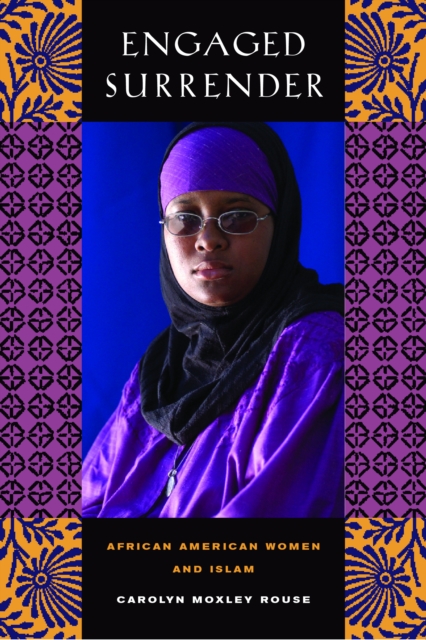
Engaged Surrender
Commonly portrayed in the media as holding women in strict subordination and deference to men, Islam is nonetheless attracting numerous converts among African American women. Are these women \"reproducing their oppression,\" as it might seem? Or does their adherence to the religion suggest unsuspected subtleties and complexities in the relation of women, especially black women, to Islam? Carolyn Rouse sought answers to these questions among the women of Sunni Muslim mosques in Los Angeles. Her richly textured study provides rare insight into the meaning of Islam for African American women; in particular, Rouse shows how the teachings of Islam give these women a sense of power and control over interpretations of gender, family, authority, and obligations. InEngaged Surrender,Islam becomes a unique prism for clarifying the role of faith in contemporary black women's experience. Through these women's stories, Rouse reveals how commitment to Islam refracts complex processes-urbanization, political and social radicalization, and deindustrialization-that shape black lives generally, and black women's lives in particular. Rather than focusing on traditional (and deeply male) ideas of autonomy and supremacy, the book-and the community of women it depicts-emphasizes more holistic notions of collective obligation, personal humility, and commitment to overarching codes of conduct and belief. A much-needed corrective to media portraits of Islam and the misconceptions they engender, this engaged and engaging work offers an intimate, in-depth look into the vexed and interlocking issues of Islam, gender, and race.
eBook


From Victims to Suspects
The so-called War on Terror, in its many incarnations, has always been a war with gender at its heart.
eBook

From victims to suspects : Muslim women since 9/11
Once regarded as passive victims waiting to be rescued, Muslim women are now widely regarded as arbiters of \"terror\" and a potential threat to be kept under control. Drawing on interviews and examples from around the world including Afghanistan, Pakistan, Europe, and North America, Shakira Hussein shows how this shift in attitude has taken place and how it impacts feminism, multiculturalism, race, and religion on a global scale. She argues that alongside the fear of Islamic terrorism is a growing fear of Islam as a cultural hazard that is undermining Western society from within. Muslim women, the transmitters of cultural practices, are frequently seen to play a key role in this. Hussein's work makes for a compelling read, offering a unique perspective on what it means to be a Muslim woman post-9/11.
Book

Women, Islam, and Identity
This pioneering ethnographic work centers on the dynamics of female authority within the religious life of a conservative Muslim community in the Fergana Valley of Uzbekistan. Peshkova draws upon several years of field research to chronicle the daily lives of women religious leaders, known as otinchalar, and the ways in which they exert a powerful influence in the religious life of the community. In this gender-segregated society, the Muslim women leaders have staked out a vibrant space in which they counsel and assist the women in their specific religious needs. Peshkova finds that otinchalar's religious leadership filters into other areas of society, producing social changes beyond the ritual realm and challenging stereotypical definitions of what it means to be a Muslim woman.Weaving together the stories of individuals' daily lives with her own journey to and from post-Soviet Central Asia, Peshkova provides a rich analysis of identity formation in Uzbekistan. She presents readers with a nuanced portrait of religion and social change that starts with an individual informed but not determined by the sociohistoric context of the region.
eBook