
Catalogue Search | MBRL


Are you sure you want to remove the book from the shelf?

{{itemTitle}}
772
result(s) for
"Muslims Fiction."
Sort by:


H. M. Naqvi’s Home Boy as a Response to Post-9/11 Islamophobia and as Implicit Critique of Mohsin Hamid’s The Reluctant Fundamentalist
Western fiction about the 9/11 attacks tends to center white American experiences and perspectives and reinforce dominant Western stereotypes and misconceptions about Muslims, especially Muslim men. Counter-discursive post-9/11 fiction from a Muslim cosmopolitan perspective that seeks to intervene in these modes of representation inevitably has to contend with globally dominant epistemological frameworks of suspicion. While Mohsin Hamid’s The Reluctant Fundamentalist (2007) is among the most well-known of such counter-discursive fictions, this article focuses on H. M. Naqvi’s less well-known novel Home Boy (2009) to argue that Home Boy constitutes a postcolonial response to 9/11, an explicit critique of the ensuing American response and Islamophobia, and a tactical alternative to and implicit critique of Hamid’s novel. The article highlights some problems created by the narrative strategies Hamid uses and shows how Naqvi takes a different approach, in particular by foregoing the temptations of ambiguity and gender stereotyping and highlighting the multiple traumas experienced by Muslims from 9/11 and its aftermath. In so doing, the article suggests how critical readers can recognize both the drawbacks of Hamid’s celebrated novel and the alternative possibilities of other strategies that Muslim writers can use to address the problems of neo-Orientalism and global Islamophobia.
Journal Article

My name is Bilal
When Bilal and his sister transfer to a school where they are the only Muslims, they must learn how to fit in while staying true to their beliefs and heritage.
Book

Culture, Diaspora, and Modernity in Muslim Writing
Fiction by writers of Muslim background forms one of the most diverse, vibrant and high-profile corpora of work being produced today - from the trail-blazing writing of Salman Rushdie and Hanif Kureishi, which challenged political and racial orthodoxies in the 1980s, to that of a new generation including Mohsin Hamid, Nadeem Aslam and Kamila Shamsie. This collection reflects the variety of those fictions. Experts in English, South Asian, and postcolonial literatures address the nature of Muslim identity: its response to political realignments since the 1980s, its tensions between religious and secular models of citizenship, and its manifestation of these tensions as conflict between generations. In considering the perceptions of Muslims, contributors also explore the roles of immigration, class, gender, and national identity, as well as the impact of 9/11.
This volume includes essays on contemporary fiction by writers of Muslim origin and non-Muslims writing about Muslims. It aims to push beyond the habitual populist 'framing' of Muslims as strangers or interlopers whose ways and beliefs are at odds with those of modernity, exposing the hide-bound, conservative assumptions that underpin such perspectives. While returning to themes that are of particular significance to diasporic Muslim cultures, such as secularism, modernity, multiculturalism and citizenship, the essays reveal that 'Muslim writing' grapples with the same big questions as serve to exercise all writers and intellectuals at the present time: How does one reconcile the impulses of the individual with the requirements of community? How can one 'belong' in the modern world? What is the role of art in making sense of chaotic contemporary experience?
Rehana Ahmed is Lecturer in English Studies at the University of Teesside, UK.
Peter Morey is Reader in English Literature, School of Social Sciences, Media and Cultural Studies, University of East London, UK.
Amina Yaqin is Lecturer in Urdu and Postcolonial Studies, Department of South Asia, SOAS, UK.
Selected Contents: Introduction Rehana Ahmed, Peter Morey and Amina Yaqin 1. Writing Muslims and the Global State of Exception Stephen Morton Part 1: Writing the Self 2. Bad Faith: The Construction of Muslim Extremism in Ed Husain’s The Islamist Anshuman A. Mondal 3. Reason to Believe? Two ‘British Muslim’ Memoirs Rehana Ahmed 4. Voyages Out and In: Two (British) Arab Muslim Women’s Bildungsromane Lindsey Moore Part 2. Migrant Islam 5. Infinite Hijra: Migrant Islam, Muslim American Literature, and the Anti-Mimesis of The Taqwacores Salah D. Hassan 6. Muslims as Multicultural Misfits in Nadeem Aslam’s Maps for Lost Lovers Amina Yaqin 7. ‘Sexy Identity-Assertion’: Choosing between Sacred and Secular Identities in Robin Yassin-Kassab’s The Road from Damascus Claire Chambers Part 3: (Mis)reading Muslims 8. Writing Islam in Post-9/11 America: John Updike’s Terrorist Anna Hartnell 9. Invading Ideologies and the Politics of Terror: Framing Afghanistan in The Kite Runner Kristy Butler 10. Representation and Realism: Monica Ali’s Brick Lane Sara Upstone Part 4: Culture, Politics and Religion 11. From ‘the Politics of Recognition’ to ‘the Policing of Recognition’: Writing Islam in Hanif Kureishi and Mohsin Hamid Bart Moore-Gilbert 12. Resistance and Religion in the Work of Kamila Shamsie Ruvani Ranasinha 13. Mourning Becomes Kashmira: Islam, Melancholia, and the Evacuation of Politics in Salman Rushdie’s Shalimar the Clown Peter Morey
eBook


Managing Ethnic Diversity after 9/11
America's approach to terrorism has focused on traditional national security methods, under the assumption that terrorism's roots are foreign and the solution to greater security lies in conventional practices. Europe offers a different model, with its response to internal terrorism relying on police procedures.Managing Ethnic Diversity after 9/11compares these two strategies and considers that both may have engendered greater radicalization--and a greater chance of home-grown terrorism. Essays address how transatlantic countries, including the United Kingdom, the United States, France, Germany, Spain, Italy, and the Netherlands have integrated ethnic minorities, especially Arabs and Muslims, since 9/11. Discussing the \"securitization of integration,\" contributors argue that the neglect of civil integration has challenged the rights of these minorities and has made greater security more remote.
eBook
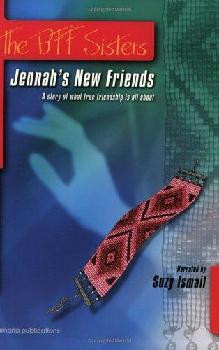
The BFF sisters : Jennah's new friends a story of what true friendship is all about
Forming a new club to study the \"hadeeth\" with her Muslim friends in Matawan, New Jersey, helps calm Jennah's anger when she believes a new girl is replacing her as Yasmeen's best friend.
Book

The “Islams” of Muslims in Post-9/11 Fiction
The attacks on the Twin Towers have politically categorized Muslims as “good,” “bad,” or “moderate” in post-9/11 United States. These categories are reductive when it comes to understanding complex Muslim formations in a post-9/11 world as they impose a politicized ideal of what it means to be a Muslim. The “ideal” American Muslim is supposedly an American first and a Muslim second. While there is significant scholarship against such reductive categorizations, what remains largely unnoticed is a Muslim’s subjectivity in relation to Islam in everyday life: the ways in which a Muslim interacts with Islam on a day-to-day basis are often idiosyncratic in nature. This paper introduces the concept of “everyday Islam” as a key tool to resist Muslim essentialism. Drawing on the works of Saba Mahmood, Santiago Sia, and Nadia Fadil among others, it analyzes Ayad Akhtar’s American Dervish (2013) and argues that the novel displays different sensibilities that Muslims bring to their interactions with Islam on a daily basis. By focusing on the character of Mina, Akhtar’s female protagonist, this paper examines how an interplay of moments, situations, and contexts shapes her day-to-day practices of Islam. In doing so, it challenges the reductive political categorizations of Muslims as “good,” “bad,” or “moderate,” and expands our understanding of the diverse ways in which Muslims make sense of Islam in often incongruous ways. (PG)
Journal Article

Amina Banana and the formula for friendship
After moving from Syria to Indiana, third-grade science enthusiast Amina tries to find the perfect formula to make friends at her new school.
BOOK

Veiled superheroes
Veiled Superheroes: Islam, Feminism, and Popular Culture focuses on female Muslim superheroes in graphic narratives such as the comic Ms. Marvel, the animated television series BurkaAvenger, and the webcomic Qahera.
eBook