
Catalogue Search | MBRL


Are you sure you want to remove the book from the shelf?

{{itemTitle}}
122
result(s) for
"Muslims Great Britain History."
Sort by:

Muslims in Britain : an introduction
\"Archaeological evidence shows there was contact between Muslims and the British Isles from the 8th century. Beginning with these historical roots, Sophie Gilliat-Ray traces the major points of encounter between Muslims and the British in subsequent centuries, and explores Muslim migration to Britain in recent times. Drawing upon sociology, anthropology, politics, and geography, this comprehensive survey provides an informed understanding of the daily lives of British Muslims. It portrays the dynamic of institutions such as families, mosques and religious leadership, and analyses their social and political significance in today's Britain. Through the study of the historical origins of major Islamic reform movements, it draws attention to the religious diversity within different Muslim communities, and sheds fresh light on contemporary issues such as the nature of religious authority and representation. It also considers British Muslim civic engagement and cultural life, particularly the work of journalists, artists, sports personalities, and business entrepreneurs\"-- Provided by publisher.
Book

Medina in Birmingham, Najaf in Brent : inside British Islam
Muslim intellectuals may try to define something called British Islam, but the truth is that as the Muslim community of Britain has grown in size and religiosity, so too has the opportunity to found and run mosques which divide along ethnic and sectarian lines. Just as most churches in Britain are affiliated to one of the main Christian denominations, the vast majority of Britain's 1600 mosques are linked to wider sectarian networks: the Deobandi and Tablighi Jamaat movements with their origins in colonial India; the Salafi groups inspired by an austere form of Islam widely practiced in Saudi Arabia; the Islamist movements with links to religious political parties in the Middle East and South Asia; the Sufi movements that tend to emphasise spirituality rather than religious and political militancy; and the diverse Shi'ite sects which range from the orthodox disciples of Grand Ayatollah Sistani in Iraq to the Ismaili followers of the pragmatic and modernising Aga Khan. These affiliations are usually not apparent to outsiders, but inside Britain's Muslim communities sectarian divides are often fiercely guarded by religious leaders. This book, of which no equivalent volume yet exists, is a definitive guide to the ideological differences, organisational structures and international links of the main Islamic groups active in Britain today.
eBook


Britain's first Muslims : portrait of an Arab community
Fear of the terrorist threat provoked by radical Islam has generated heated debates on multiculturalism and the integration of Muslim migrant communities in to Britain. Yet little is known about Britain's first Muslims, the Yemenis. Yemenis began settling in British port towns at the beginning of the 20th century, and afterwards became part of the immigrant labour force in Britain's industrial cities. Fred Halliday's groundbreaking research, based in Yemen and Britain, provides a fascinating case study for understanding the dynamics of immigrant cultures and the complexities of 'Muslim' identity in Britain. Telling the stories of sailor communities in Cardiff and industrial workers in Sheffield, Halliday tracks the evolution of community organizations and the impact of British government policy on their development. He analyses links between the diaspora and the homeland, and looks at how different migrant groups in Britain relate to each other under the 'Muslim' umbrella. In a fascinating new introduction to his classic study, Halliday explains how it can help us understand British Islam in an age which has produced both al Qaeda and the Yemeni-born boxer Prince Naseem.
eBook

Britain & Islam
An eye-opening history of Britain and the Islamic world-a thousand-year relationship that is closer, deeper, and more mutually beneficial than is often recognized. In this broad yet sympathetic survey-ranging from the Crusades to the modern day-Martin Pugh explores the social, political, and cultural encounters between Britain and Islam. He looks, for instance, at how reactions against the Crusades led to Anglo-Muslim collaboration under the Tudors, at how Britain posed as defender of Islam in the Victorian period, and at her role in rearranging the Muslim world after 1918. Pugh argues that, contrary to current assumptions, Islamic groups have often embraced Western ideas, including modernization and liberal democracy. He shows how the difficulties and Islamophobia that Muslims have experienced in Britain since the 1970s are largely caused by an acute crisis in British national identity. In truth, Muslims have become increasingly key participants in mainstream British society-in culture, sport, politics, and the economy.
Book
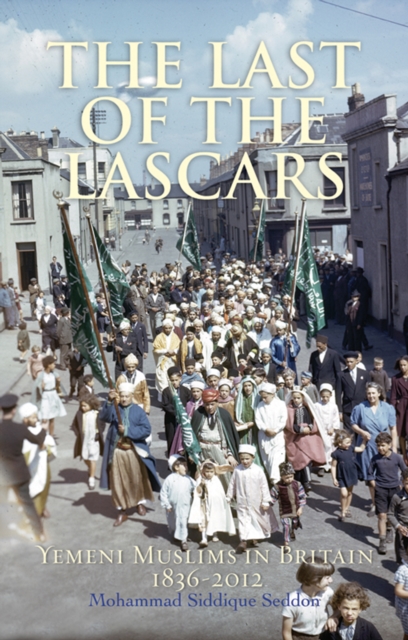
The Last of the Lascars
\"Dr. Seddon has contributed an important and fascinating chapter to the modern history of Britain.\"—David Waines, emeritus professor of Islamic Studies, Lancaster University, UK
Originally arriving as imperial oriental sailors and later as postcolonial labor migrants, Yemeni Muslims have lived in British ports and industrial cities from the mid-nineteenth century. They married local British wives, established a network of \"Arab-only\" boarding houses and cafes, and built Britain's first mosques and religious communities.
Mohammed Siddique Seddon is lecturer in religious and Islamic studies at the department of theology and religious studies, University of Chester, England.
eBook


Young British Muslims
Based on 216 in-depth interviews of Muslims in Britain, the book examines how British Muslim youths and young adults, 15-30 years old, define their identities, their values and their culture and whether these conflict either with those of their parents or with the dominant non-Muslim British culture.
eBook


Empire and Jihad : the Anglo-Arab wars of 1870-1920
A panoramic, provocative account of the clash between British imperialism and Arab jihadism in Africa between 1870 and 1920 The Ottoman Sultan called for a \"Great Jihad\" against the Entente powers at the start of the First World War. He was building on half a century of conflict between British colonialism and the people of the Middle East and North Africa. Resistance to Western violence increasingly took the form of radical Islamic insurgency. Ranging from the forests of Central Africa to the deserts of Egypt, Sudan, and Somaliland, Neil Faulkner explores a fatal collision between two forms of oppression, one rooted in the ancient slave trade, the other in modern \"coolie\" capitalism. He reveals the complex interactions between anti-slavery humanitarianism, British hostility to embryonic Arab nationalism, \"war on terror\" moral panics, and Islamist revolt. Far from being an enduring remnant of the medieval past, or an essential expression of Muslim identity, Faulkner argues that \"Holy War\" was a reactionary response to the violence of modern imperialism.
eBook