
Catalogue Search | MBRL


Are you sure you want to remove the book from the shelf?

{{itemTitle}}
21
result(s) for
"Muslims Islamic Empire Biography"
Sort by:
The noble men who met the messenger : taken from attainment of the Objective in distinguishing the companions by Ibn Hajar Asqalani & the lives of noble figures by Imam Adh-Dhahabi
The Noble Men Who Met the Messenger is an encyclopedia of more than 850 noble companions of the Messenger of Allah those from mankind and the jinn. This book was extracted from the classic history book Attainment of the Objective in Distinguishing the Companions by Hafidh Ibn Hajar Asqalani, with notes taken from The Lives of Noble Figures by Imam adh-Dhahabi.
BOOK
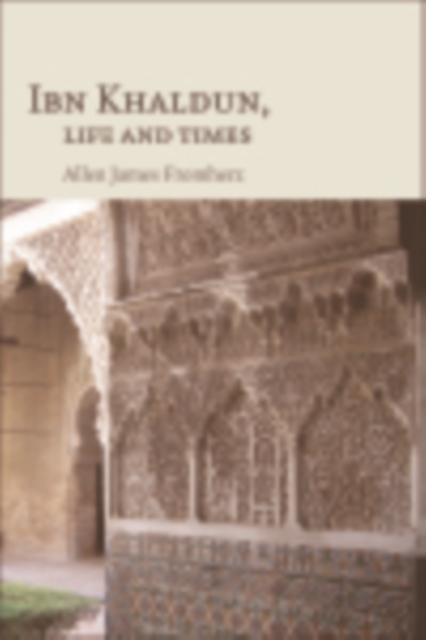
Ibn Khaldun
Ibn Khaldun (1332-1406) is one of the most influential and important Muslim thinkers in history. This biography of this famous historian, scholar, theologian and statesman also introduces readers to the politically tumultuous and religiously contentious 14th century Mediterranean world.
eBook

A Climate for Abduction, a Climate for Redemption: The Politics of Inclusion during and after the Armenian Genocide
This article explores a forcible, wartime transfer of women and minors from one ethnic group to another, and its partial reversal after the war. I analyze the historical conditions that enabled the original transfer, and then the circumstances that shaped the reverse transfer. The setting is Istanbul during and immediately after World War I, and the protagonists are various influential agents connected to the Ottoman Turkish state and to the Armenian Patriarchate. The absence and subsequent involvement of European Great Powers determines the broader, shifting context. The narrative follows the bodies of women and children, who were the subjects of the protagonists' discourses and the objects of their policies. This is the first in-depth study to connect these two processes involved: the wartime integration of Armenian women and children into Muslim settings, and postwar Armenian attempts to rescue, reintegrate, and redistribute them. I explain why and how the Armenian vorpahavak (gathering of orphans and widows) worked as it did, and situate it comparatively with similar events. I highlight its uniqueness, and the theoretical possibilities that it offers toward understanding why and how women, children, and reproduction matter to collectivities in crisis.
Journal Article

Islam's Loneliest Cosmopolitan: Badr Al-Din Hai Weiliang, the Lucknow–Cairo Connection, and the Circumscription of Islamic Transnationalism
Badr al-Din Hai Weiliang (1912–?), a Chinese Muslim from rural Hunan, led a deeply transnational life. Hai was the only Chinese Muslim known to have studied in both India and Egypt in the modern period, spending considerable time at both the Nadwat al-‘Ulama in Lucknow and al-Azhar in Cairo. After Chinese, he learned four more languages in two decades: Arabic, Urdu, English, and Persian. While the Second World War transformed him into a longtime Guomindang diplomat, his time at the Nadwa and al-Azhar in the 1930s was largely devoted to questions of Islamic unity. Hai first pursued these questions in a doctrinal mode informed by Salafi currents, then in a political mode influenced by his translation of Iqbal’s “Allahabad address.” His move to Cairo brought him closer to the network of al-Fath and its editor Muhibb al-Din al-Khatib, a strong voice on behalf of Islamic unity, but geopolitics soon intervened. Disillusioned by the failure of the East Turkistan Republic, Hai coped by turning toward a cultural-historical mode of imagining Islamic unity, one that did not require specific political action. The eventual result was his Arabic-language opus Relations between the Arabs and China. Overall, Hai’s story defies both Sino-centric and peripheralized characterizations of Chinese Islam, showing that early-twentieth-century Chinese Islam can be used to write a highly integrated history of the Islamic world. This article contrasts Hai’s numerous Arabic and Chinese writings to show how he embodied the tensions felt across the Islamic world during this period between the national and transnational community.
Journal Article

The adventures of Ibn Battuta, a Muslim traveler of the 14th century
Abu Abdallah ibn Battuta made a series of remarkable journeys, beginning with a pilgrimage from Morocco to Mecca when he was 21. In later years he reached India, China, the Volga River and East Africa, an extraordinary achievement during the 14th century.
eBook

FROM GENOCIDE TO POSTGENOCIDE: SURVIVAL, GENDER, AND POLITICS
On 31 July 2018, eighteen representatives of religious minority groups in Turkey, including the Armenians, Greeks, and Syriacs, issued a joint declaration saying: “As religious representatives and directors of different faiths and beliefs who have been residing in our country for centuries, we live out our faiths freely and practice our worship freely according to our traditions.” This state-orchestrated declaration contradicts a long history of discrimination suffered by minorities under different late Ottoman and Turkish political regimes. In the last two decades of the Ottoman Empire's rule, Ottoman Armenian, Greek, and Syriac subjects/citizens, among others, suffered extreme depredations and persecutions culminating in ethnic cleansing, genocide, and population exchange. The books under review deal with a grim phase in Ottoman and Turkish history: the Armenian Genocide during World War I and its repercussions during the subsequent republican period.
Journal Article
Arab-Islamic Biographical Index
The biographical indexes, part of the World Biographical Information System (WBIS) and used as indexes for the biographical archives, serve as an independent biographical research tool, with each index containing short biographical entries on individuals relating to a certain biographical or cultural region, and each entry including names.
eBook

Reflections on Justice: A Young Ottoman View of the Tanẓīmāt
This article deals with the Young Ottomans and their main publication Huriyyet (Freedom). The scope of investigation includes references to the former Grandvizier Reshad Pasha, the relevance of the Shari'a and the ambiguous attitude towards the Tanzimat laws as well as the question of equality. [PUBLICATION ABSTRACT]
Journal Article

Law and Empire in Late Tsarist Russia: Muslim Tatars Go to Court
This article combines an investigation of legal practice in late tsarist Russia with an analysis of imperial rule. The Judicial Reform of 1864 introduced new legal principles, institutions, and rules of court procedure into the empire. Focusing on legal interaction in the newly established circuit courts in Crimea and Kazan, this article explores the implications of Tatar legal involvement in state courts for both the empire's legal reform process and its policies toward ethnic and religious minorities. It discusses the courts as tools for the integration of these multiethnic regions with the imperial center and shows how legal unification developed in a context of dynamic, and locally specific, plural legal orders. It concludes that minority policies were characterized by the simultaneous pursuit of integration and the promotion of difference. The article draws mainly on court records from Kazan and Simferopol (Crimea), newspaper coverage, and on the reports and memoirs of jurists.
Journal Article