
Catalogue Search | MBRL


Are you sure you want to remove the book from the shelf?

{{itemTitle}}
3
result(s) for
"Muslims. fast (OCoLC)fst01031029"
Sort by:
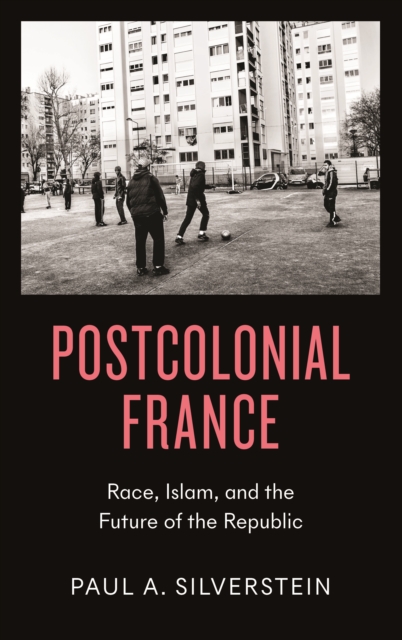
Postcolonial france : the question of race and the future of the republic
France is a bellwether for the postcolonial anxieties and populist politics emerging across the world today. This book explores the dynamics and dilemmas of the present moment of crisis and hope in France, through an exploration of recent moral panics. Taking stock of the tensions as they have emerged over the last quarter of a century, Paul Silverstein looks at urban racial violence, female Islamic dress and male public prayer, anti-system gangster rap, and sporting performances in and around which debates over France's multicultural future have arisen. It traces these conflicts to the unresolved tensions of an imperial project, the present-day effects of which are still felt by many. Despite the barriers, which include neo-nationalist racism and Islamophobia, French citizens of various backgrounds have found ways to build flourishing lives. Silverstein shows how they have responded to urban marginalisation, police violence and institutional discrimination in remarkably creative ways.
eBook

Muslims and Citizens
A groundbreaking study of the role of Muslims in eighteenth†'century France From the beginning, French revolutionaries imagined their transformation as a universal one that must include Muslims, Europe's most immediate neighbors. They believed in a world in which Muslims could and would be French citizens, but they disagreed violently about how to implement their visions of universalism and accommodate religious and social difference. Muslims, too, saw an opportunity, particularly as European powers turned against the new French Republic, leaving the Muslim polities of the Middle East and North Africa as France's only friends in the region. InMuslims and Citizens, Coller examines how Muslims came to participate in the political struggles of the revolution and how revolutionaries used Muslims in France and beyond as a test case for their ideals. In his final chapter, Coller reveals how the French Revolution's fascination with the Muslim world paved the way to Napoleon's disastrous invasion of Egypt in 1798.
eBook

Forbidden Passages
During the sixteenth and seventeenth centuries, Spanish authorities restricted emigration to the Americas to those who could prove they had been Catholic for at least three generations. In doing so, they hoped to instill religious orthodoxy in the colonies and believed Muslim converts, or Moriscos, would hamper efforts to convert indigenous people to Catholicism. Nevertheless, Moriscos secretly made the treacherous journey across the ocean, settling in the forbidden territories and influencing the nature of Spanish colonialism. Once landed, Morisco men and women struggled to define and practice their religion or pursue their trades, all while experiencing increasing anxiety about their place in the emerging Spanish empire. Many Moriscos were accused by authorities of descending from Muslims or practicing Islam in secret and turned to the courts to assert their legitimacy.
Forbidden Passagesis the first book to document and evaluate the impact of Moriscos in the early modern Americas. Through close examination of sources that few historians have used-some one hundred cases of individuals brought before the secular, ecclesiastical, and inquisitorial courts-Karoline P. Cook shows how legislation and attitudes toward Moriscos in Spain assumed new forms and meanings in colonial Spanish America. Moriscos became not simply individuals struggling to join a community that was increasingly hostile to them but also symbols that sparked authorities' fears about maintaining religious purity in the face of territorial expansion. Cook reveals how Morisco emigrants shined a light on the complicated question of what it meant to be Spanish in the New World.
eBook