
Catalogue Search | MBRL


Are you sure you want to remove the book from the shelf?

{{itemTitle}}
7,432
result(s) for
"Mussolini, Benito"
Sort by:


Racial Theories in Fascist Italy
Racial Theories in Fascist Italy examines the role played by race and racism in the development of Italian identity during the fascist period. The book examines the struggle between Mussolini, the fascist hierarchy, scientists and others in formulating a racial persona that would gain wide acceptance in Italy.This book will be of interest to historians, political scientists concerned with the development of fascism and scholars of race and racism.
eBook


Mussolini, Architect
During the fascist years in Italy, architecture and politics enjoyed a close alliance. Benito Mussolini used architecture to educate the masses, exploiting its symbolic prowess as a powerful tool for achieving political consensus.
Mussolini, Architect examines Mussolini in Italy from 1922 to 1943 and expands the traditional interpretations of fascism, advancing the claim that Mussolini devised and implemented architecture as a tool capable of determining public behaviour and influencing opinion. Paolo Nicoloso challenges the assertion that Mussolini was of minimal influence on Italian architecture and argues that in fact the fascist leader played a strong role in encouraging civic architectural development in order to reflect the totalitarian values of the period. Drawing on archival documents, Nicoloso lists the architects who gave Mussolini ideas and describes the times when the dictator himself sometimes picked up a pencil and suggested changes.
Examining the political, social, and architectural history of the fascist period, Mussolini, Architect gives careful attention to the final years of fascist rule in order to demonstrate the extent to which Mussolini was intent on shaping Italy and its citizens through architectural projects.
eBook
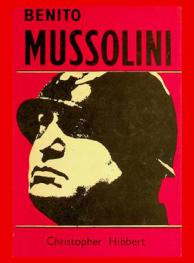
Benito Mussolini : a biography
Benito Mussolini, the son of a peasant, held absolute rule over the Italian nation for the best part of a generation, and played a leading role in high world drama. What happened to Italy was therefore in the fullest sense his personal responsibly, and by this history whose ultimate verdict was his constant self-conscious preoccupation must judge him. The clue to his character as revealed in this remarkable detailed biography is to be found in a web almost pathological contradictions.

Fascist voices : an intimate history of Mussolini's Italy
A history of fascist Italy draws on private diaries, letters, and memoirs to show how ordinary people lived and experienced Mussolini's regime leading up to World War II.
eBook
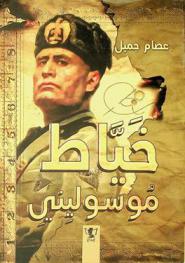
خياط موسوليني وقصص أخرى
تتناول هذه المجموعة القصصية مواضيع شتى التقطتها عين كاتب عربي يعيش مغتربا في استراليا منذ ما يزيد عن عشرين عاما خبر فيها طبيعة ذلك المجتمع، وبعضا من خباياه ومنه اختار ما اجتذبته ذائقته من ثيمات تستحق الوقوف عندها ؛ فتم تسليط الضوء عليها بطريقة سردية روعي فيها الحكاية المشوقة والشخصيات المثيرة للإنتباه صبت جميعها في حبكة قصصية نحن إلى أدب أنطون تشيخوف وموباسان ويوسف إدريس. إن ما يجمع القصص اللاتي يضمها هذا الكتاب هو محاولة الوصول بالمتلقي إلى متعة القراءة من خلال أسلوب سردي بسيط.
Book

Mussolini
Benito Mussolini was a brilliant Socialist journalist who in 1914 declared war, put himself at the head if the anti-Socialist movement in Italy, manoeuvred himself into power by 1933 and ruled the country until overthrown in 1943. He was a dynamic but insecure personality, who appeared dictatorial but always had to share power with the military and bureaucratic establishment. Mussolini founded an Empire in Africa and tried to 'make Italians' in his own heroic, war like image, but in fact failed to even control his own family! In June 1940, when France fell, he could not resist joining in the Second World War on the German side, although Italy was not equipped for serious fighting. His rule ended in Military disaster and personal humiliation.This new biography focuses both on Mussolini's personality and on the way he exercised power, and regards these two issues as closely linked. It sees him as a man with all the talents needed to attain power but few of those needed to exercise it well. This book primarily focuses on how Mussolini had absolutely the wrong personality for a successful political leader.
eBook

Recensão a Cristóbal Villalobos Salas. \Futebol e Fascismo\
Neste trabalho apresenta-se uma recensão à obra \"Futebol e Fascismo\" de Cristóval Villalobos Salas, livro originalmente publicado em Espanha, pela Altamareca Ediciones com o título \"Fútbol y Fascismo\". A leitura assentou na versão portuguesa, editada pelas Edições 70 (Edições Almedina) que contou com a tradução de Manuela Parada Ramos e Revisão de Ana Breda. O autor é professor de História, escritor e colunista de imprensa com colaboração em vários títulos de diversos países. This work presents a review of the work \"Football and Fascism\" by Cristóval Villalobos Salas, book originally published in Spain, by Altamareca Ediciones with the title \"Fútbol y Fascismo\". The reading was based on the Portuguese version, published by Ediçöes 70 (Ediçöes Almedina) and translated by Manuela Parada Ramos and revised by Ana Breda. The author is a professor of History, writer and press columnist with collaboration in various titles in several countries.
Journal Article