
Catalogue Search | MBRL


Are you sure you want to remove the book from the shelf?

{{itemTitle}}
2,153
result(s) for
"NATURE / Plants / Trees."
Sort by:

Twilight of the Hemlocks and Beeches
In this magnificently illustrated book, conservationist and
celebrated outdoors photographer Tim Palmer launches us on a
revealing journey among the hemlock and beech trees that have for
millennia towered over America's eastern woodlands.
The eastern hemlock and North American beech once thrived from
Maine to Georgia, casting shade on trout streams, nourishing
wildlife large and small, and gracing uncounted valleys,
mountainsides, parks, and backyards. These trees now face tragic
decimation by exotic insects and pathogens. Palmer's photos record
the splendor of the cherished hemlock and beech in the same way
that pictures of iconic, historic buildings commemorate classic
landmarks gone the way of the wrecking ball. And yet, as Palmer
underscores in his final chapter, the lessons learned as we address
the fate of these trees can help us chart a better course for all
wooded landscapes in the years ahead. This story of loss,
scientific inquiry, and prospective recovery is vital to
understanding nature in our time.
As an act of artistic preservation, a report on the science
vital to the survival of these trees, and a call to action,
Twilight of the Hemlocks and Beeches assures a lasting
legacy for this irreplaceable forest community. With more than one
hundred exquisite full-color photographs, this book is a must-have
for outdoor enthusiasts, natural historians, ecologists, and all
lovers of nature.
eBook

The Long, Long Life of Trees
A lyrical tribute to the diversity of trees, their physical beauty, their special characteristics and uses, and their ever-evolving meanings Since the beginnings of history trees have served humankind in countless useful ways, but our relationship with trees has many dimensions beyond mere practicality. Trees are so entwined with human experience that diverse species have inspired their own stories, myths, songs, poems, paintings, and spiritual meanings. Some have achieved status as religious, cultural, or national symbols. In this beautifully illustrated volume Fiona Stafford offers intimate, detailed explorations of seventeen common trees, from ash and apple to pine, oak, cypress, and willow. The author also pays homage to particular trees, such as the fabled Ankerwyke Yew, under which Henry VIII courted Anne Boleyn, and the spectacular cherry trees of Washington, D.C. Stafford discusses practical uses of wood past and present, tree diseases and environmental threats, and trees' potential contributions toward slowing global climate change. Brimming with unusual topics and intriguing facts, this book celebrates trees and their long, long lives as our inspiring and beloved natural companions.
eBook

Tree by Tree
Tree by Tree is a warning and a toolkit for the future of forest recovery. Scott J. Meiners investigates the critical biological threats endangering tree species native to the forests of eastern North America, providing a needed focus on this plight. Meiners suggests that if we are to save our forests, the first step is to recognize the threats in front of us.
Meiners focuses on five familiar trees—the American elm, the American chestnut, the eastern hemlock, the white ash, and the sugar maple—and shares why they matter economically, ecologically, and culturally. From outbreaks of Dutch elm disease to infestations of emerald ash borers, Meiners highlights the challenges that have led or will lead to the disappearance of these trees from forests. In doing so, he shows us how diversity loss often disrupts intricately balanced ecosystems and how vital it is that we pay more attention to massive changes in forest composition.
With practical steps for the conservation of native tree species, Tree by Tree offers the inspiration and insights we need to begin saving our forests.
eBook

Trees of Western North America
Covering 630 species, more than any comparable field guide,Trees of Western North Americais the most comprehensive, best illustrated, and easiest-to-use book of its kind. Presenting all the native and naturalized trees of the western United States and Canada as far east as the Great Plains, the book features superior descriptions; thousands of meticulous color paintings by David More that illustrate important visual details; range maps that provide a thumbnail view of distribution for each native species; \"Quick ID\" summaries; a user-friendly layout; scientific and common names; the latest taxonomy; information on the most recently naturalized species; a key to leaves; and an introduction to tree identification, forest ecology, and plant classification and structure. The easy-to-read descriptions present details of size, shape, growth habit, bark, leaves, flowers, fruit, flowering and fruiting times, habitat, and range. Using a broad definition of a tree, the book covers many small, overlooked species normally thought of as shrubs, as well as treelike forms of cacti and yuccas. With its unmatched combination of breadth and depth, this is an essential guide for every tree lover.
The most comprehensive, best illustrated, and easiest-to-use field guide to the trees of western North AmericaCovers 630 species, more than any comparable guide, including all the native and naturalized trees of the United States and Canada as far east as the Great PlainsFeatures specially commissioned artwork, detailed descriptions, range maps for native species, up-to-date taxonomy and names, and much, much moreAn essential guide for every tree lover
eBook
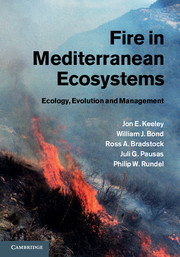
Fire in Mediterranean Ecosystems
Exploring the role of fire in each of the five Mediterranean-type climate ecosystems, this book offers a unique view of the evolution of fire-adapted traits and the role of fire in shaping Earth's ecosystems. Analyzing these geographically separate but ecologically convergent ecosystems provides key tools for understanding fire regime diversity and its role in the assembly and evolutionary convergence of ecosystems. Topics covered include regional patterns, the ecological role of wildfires, the evolution of species within those systems, and the ways in which societies have adapted to living in fire-prone environments. Outlining complex processes clearly and methodically, the discussion challenges the belief that climate and soils alone can explain the global distribution and assembly of plant communities. An ideal research tool for graduates and researchers, this study provides valuable insights into fire management and the requirements for regionally tailored approaches to fire management across the globe.
eBook
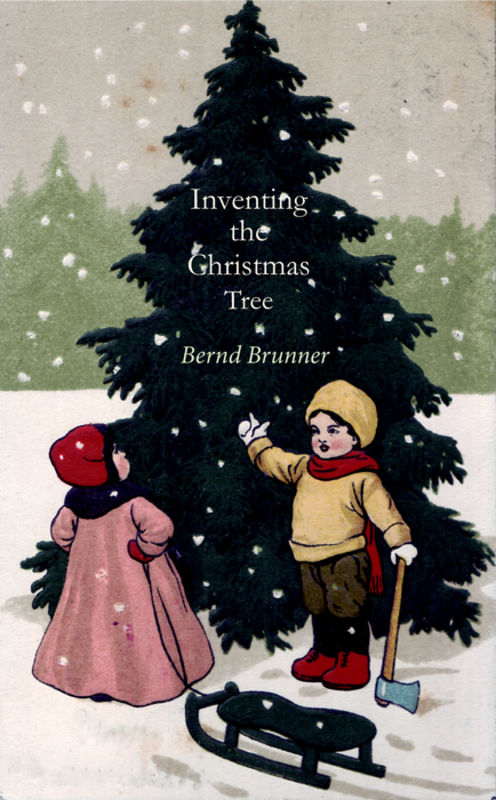
Inventing the Christmas Tree
A colorfully decorated Christmas tree, lit with twinkling lights, provokes awe and delight. We understand the lighted tree as a central symbol of the Christmas season, but what are the roots of the tradition? Who first thought to bedeck a tree, to bring it inside? How and where did the local activity grow into a widespread tradition, and how has the Christmas tree traveled across time and continents? Bernd Brunner's brief history-enriched by a selection of delightful and unusual historical illustrations-spans many centuries and cultures to illuminate the mysteries of the Christmas tree and its enduring hold on the human imagination.
Tracing various European traditions from the Middle Ages forward, Brunner finds that only in the nineteenth century did Christmas trees become common in European family homes. In North America, the imported custom soon fascinated, though some found the tree not quite compatible with a Puritan mindset. Brunner explores how the Christmas tree entered mainstream American culture and how in recent times it has become globally popular. He introduces Jacqueline Kennedy's Nutcracker Tree in the White House, trees used to celebrate the New Year in Turkey, and the world's most expensive Christmas tree, erected in Abu Dhabi. The author also considers the place of the artificial tree and the ecological dimensions of the Christmas tree trade. A book rich with anecdote and insight,Inventing the Christmas Treewill enchant a wide audience.
eBook

White Pine
America was built on white pine. From the 1600s through the Civil War and beyond, it was used to build the nation’s ships and houses, barns, and bridges. It became a symbol of independence, adorning the Americans’ flag at Bunker Hill, and an economic engine, generating three times more wealth than the California gold rush. Yet this popularity came at a cost: by the end of the 19th century, clear cutting had decimated much of America’s white pine forests. In White Pine: The Natural and Human History of a Foundational American Tree , ecologist and writer John Pastor takes readers on walk through history, connecting the white pine forests that remain today to a legacy of destruction and renewal.
Since the clear-cutting era, naturalists, foresters, and scientists have taken up the quest to restore the great white pine forests. White Pine follows this centuries-long endeavor, illuminating how the efforts shaped Americans’ understanding of key scientific ideas, from forest succession to the importance of fire. With his keen naturalist’s eye, Pastor shows us why restoring the vitality of these forests has not been simple: a host of other creatures depend on white pine and white pine depends on them. In weaving together cultural and natural history, White Pine celebrates the way humans are connected to the forest—and to the larger natural world.
Today, white pine forests have begun to recover, but face the growing threat of climate change. White Pine shows us that hope for healthy forests lies in understanding the lessons of history, so that iconic species survive as a touchstone for future generations.
eBook

Cottonwood and the River of Time
Cottonwood and the River of Time looks at some of the approaches scientists have used to unravel the puzzles of the natural world. With a lifetime of work in forestry and genetics to guide him, Reinhard Stettler celebrates both what has been learned and what still remains a mystery as he examines not only cottonwoods but also trees more generally, their evolution, and their relationship to society.
Cottonwoods flourish on the verge, near streams and rivers. Their life cycle is closely attuned to the river's natural dynamics. An ever-changing floodplain keeps generating new opportunities for these pioneers to settle and prepare the ground for new species. Perpetual change is the story of cottonwoods -- but in a broader sense, the story of all trees and all kinds of life. Through the long parade of generation after generation, as rivers meander and glaciers advance and retreat, trees have adapted and persisted, some for thousands of years. How do they do this? And more urgently, what lessons can we learn from the study of trees to preserve and manage our forests for an uncertain future?
In his search for answers, Stettler moves from the floodplain of a West Cascade river, where seedlings compete for a foothold, to mountain slopes, where aspens reveal their genetic differences in colorful displays; from the workshops of Renaissance artists who painted their masterpieces on poplar to labs where geneticists have recently succeeded in sequencing a cottonwood's genome; from the intensively cultivated tree plantations along the Columbia to old-growth forests challenged by global warming.
Natural selection and adaptation, the comparable advantages and disadvantages of sexual versus asexual reproduction, the history of plant domestication, and the purposes, risks, and potential benefits of genetic engineering are a few of the many chapters in this story. By offering lessons in how nature works, as well as how science can help us understand it, Cottonwood and the River of Time illuminates connections between the physical, biological, and social worlds.
eBook

Biodiversity in Dead Wood
Fossils document the existence of trees and wood-associated organisms from almost 400 million years ago, and today there are between 400,000 and 1 million wood-inhabiting species in the world. This is the first book to synthesise the natural history and conservation needs of wood-inhabiting organisms. Presenting a thorough introduction to biodiversity in decaying wood, the book studies the rich diversity of fungi, insects and vertebrates that depend upon dead wood. It describes the functional diversity of these organisms and their specific habitat requirements in terms of host trees, decay phases, tree dimensions, microhabitats and the surrounding environment. Recognising the threats posed by timber extraction and forest management, the authors also present management options for protecting and maintaining the diversity of these species in forests as well as in agricultural landscapes and urban parks.
eBook
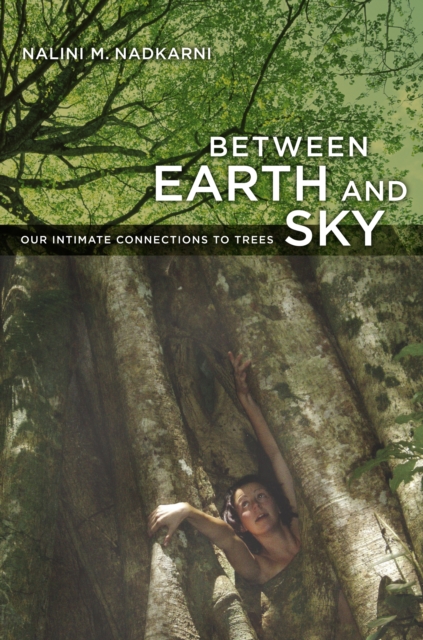
Between earth and sky
World-renowned canopy biologist Nalini Nadkarni has climbed trees on four continents with scientists, students, artists, clergymen, musicians, activists, loggers, legislators, and Inuits, gathering diverse perspectives. In Between Earth and Sky, a rich tapestry of personal stories, information, art, and photography, she becomes our captivating guide to the leafy wilderness above our heads. Through her luminous narrative, we embark on a multifaceted exploration of trees that illuminates the profound connections we have with them, the dazzling array of goods and services they provide, and the powerful lessons they hold for us. Nadkarni describes trees' intricate root systems, their highly evolved and still not completely understood canopies, their role in commerce and medicine, their existence in city centers and in extreme habitats of mountaintops and deserts, and their important place in folklore and the arts. She explains tree fundamentals and considers the symbolic role they have assumed in culture and religion. In a book that reawakens our sense of wonder at the fascinating world of trees, we ultimately find entry to the entire natural world and rediscover our own place in it.
eBook