
Catalogue Search | MBRL


Are you sure you want to remove the book from the shelf?

{{itemTitle}}
6
result(s) for
"NATURE / Seashells."
Sort by:

Encyclopedia of Texas seashells
An essential reference book for every collector and researcher of American seashells, Encyclopedia of Texas Seashells is a complete sourcebook and up-to-date identification guide, covering an unprecedented nine hundred species of seashells and mollusks that reside in the marine habitats of the Gulf of Mexico.
eBook

Shells
Shells have captivated humans from the dawn of time: the earliest known artwork was made on a shell. As well as containers for food, shells have been used as tools, jewellery and decorations for dwellings, and to bring good luck or to ward off spirits. Many indigenous peoples have used shells as currency, and in a few places they still do. This beautifully illustrated book looks at the scientific and cultural history of shells, showing how their diverse colourful forms take shape. It examines pearls, the only gems of animal origin, as well as how shells have inspired artists throughout history. The book looks at shells used in architecture and ritual, but also how shells are indicators of changing environmental conditions. Also including two essays by shell expert M. G. Harasewych, emeritus curator of gastropods in the Smithsonian's Department of Invertebrate Zoology, Shells is an authoritative exploration of the deep human connection to these molluscan exoskeletons of sea, lake, land, and stream.
eBook

Stabilization of Amol fat clay using seashell ash
One of the methods used to improve the physical and mechanical properties of problematic soils is chemical stabilization. This study appraises the eventuality of using seashell ash (SSA), to enhance engineering properties of the fat clay. For this purpose, samples were prepared at five different contents of SSA (i.e., 0, 3, 6, 9, and 12% by dry weight of the soil) and four various curing periods (i.e., 1, 7, 14, and 28 days). Compaction, unconfined compressive strength (UCS), and unconsolidated-undrained triaxial tests, X-ray fluorescene, and scanning electron microscopy analyses were performed to determine the compaction characteristics, compressive strength and durability, shear strength parameters, and mineralogical and microstructural variations in stabilized samples. Based on the results and considering the energy-saving and time, it was recognized that the appropriate time and temperature for the incineration of SSA in this study were set to 1 h and 900 °C, respectively. Results showed that SSA can considerably enhance the strength and durability of the fat clay. The highest UCS enhancement is obtained with 9% SSA and then decreased. Furthermore, with increasing moisture content, the UCS increased in the SSA-stabilized samples, unlike in the case of unstabilized clay. The shear strength parameters increase with increasing SSA contents. Microstructural analyses indicated that the addition of SSA had a major impact on the structure of stabilized samples. Adding SSA by covering the particles and filling the pores between them causes a stiffer and denser structure. Finally, the results of this study corroborate the effectiveness of SSA as a nontraditional additive for soil stabilization.
Journal Article

Conus of the Southeastern United States and Caribbean
Conusis the largest genus of animals in the sea, occurring throughout the world's tropical and subtropical oceans and contributing significantly to marine biodiversity. The shells of these marine mollusks are prized for their amazing variety and extraordinary beauty. The neurotoxic venoms they produce-injected by a hollow, harpoon-like tooth into prey animals that are then paralyzed and swallowed whole-have a range of pharmaceutical applications, from painkillers to antidepressants. This beautifully illustrated book identifies 53 valid species of the southeastern United States and the Caribbean, a region that supports a diverse but taxonomically challenging group ofConus. Introductory chapters cover the evolution and phylogeny of the genus, and notes on methodology are provided. Detailed species accounts describe key identification features, taxonomy, distribution, ecology, toxicology, life history, and evolutionary relationships. The book includes more than 2,100 photos of shells on 109 splendid color plates; more than 100 additional photos, many depicting live animals in color; and 35 color distribution maps.
Identifies 53 valid species-the first reassessment of western AtlanticConusin more than seventy yearsFeatures more than 2,100 photos of shells on 109 color platesBlends the traditional shell-character approach to identification with cutting-edge shell and radular tooth morphometrics and molecular genetic analysesIncludes color images of live animals as well as color distribution maps
eBook

Death, gender, and sea shells in Carthage
Sea shells were typical offerings in Carthaginian burials, yet archaeologists have rarely paid any attention to them and have therefore written very little about them. Given the Phoenician adoption of various Egyptian funerary customs and motifs, moreover, sea shells in Carthaginian burials are typically attributed the same meaning as those in Egyptian burials. Given our understanding of the Phoenician association with the sea and our understanding about specifically Carthaginian funerary customs and offerings, however, it is likely that there are distinctively Carthaginian reasons for the inclusion of sea shells in their burials.
Journal Article
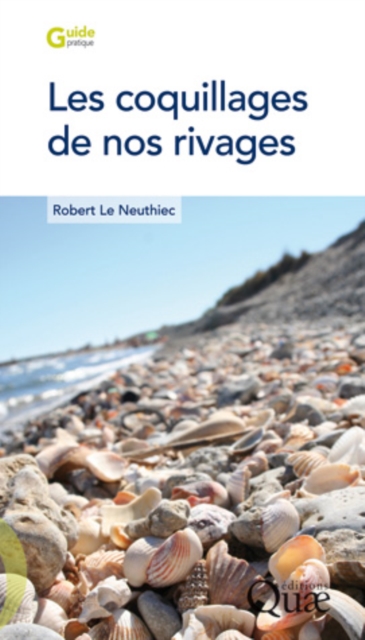
Les coquillages de nos rivages
Cet ouvrage est destiné aussi bien à l'amateur débutant qu'au spécialiste. Il permet de répondre à la question : « Comment s'appelle ce coquillage? ». Grâce aux clés d'identification, le lecteur pourra trouver le nom de l'animal récolté, en progressant pas à pas en fonction des particularités de chaque coquille. Les 400 photographies et 100 schémas originaux faciliteront sa recherche. Il s'agit ici des jolis coquillages (ni minuscules, ni rarissimes) que l'on trouve sur les côtes de France et des pays voisins baignés par la Manche, l'océan Atlantique et la mer Méditerranée.
eBook