
Catalogue Search | MBRL


Are you sure you want to remove the book from the shelf?

{{itemTitle}}
15,799
result(s) for
"NATURE General."
Sort by:

National Geographic angry birds : 50 true stories of the fed up, feathered, and furious /
\"This hilariously eye-popping book showcases real-world angry birds and 50 fantastic stories peppered with tips to avoid them, as well as fascinating facts about angry bird behavior. In addition to the funny and light-hearted real-life angry bird stories, National Geographic Angry Birds: Fed up, Feathered, and Furious will tell, for the first time ever, the story of the Angry Birds we all know and love from the hit game. Angry Bird fans will finally get to learn the personality, name, and all the details of each of the iconic Angry Birds.\"--Provided by publisher.
Book

Illustrations of bamboos in China
This book abounds with high-definition, informative photos, accurately demonstrating the taxonomical characteristics of bamboo's organs, particularly those of culm sheaths. Photos are supplemented with descriptions and a dozen hand-drawn, colored diagrams.
eBook

Tracks and shadows : field biology as art
\"Intellectually rich, intensely personal, and beautifully written, Tracks and Shadows is both an absorbing autobiography of a celebrated field biologist and a celebration of beauty in nature. Harry W. Greene, award-winning author of Snakes: The Evolution of Mystery in Nature delves into the poetry of field biology, showing how nature eases our existential quandaries. More than a memoir, the book is about the wonder of snakes, the beauty of studying and understanding natural history, and the importance of sharing the love of nature with humanity. Greene begins with his youthful curiosity about the natural world and moves to his stints as a mortician's assistant, ambulance driver, and army medic. In detailing his academic career, he describes how his work led him to believe that nature's most profound lessons lurk in hard-won details. He discusses the nuts and bolts of field research and teaching, contrasts the emotional impact of hot dry habitats with hot wet ones, imparts the basics of snake biology, and introduces the great explorers Charles Darwin and Alfred Russel Wallace. He reflects on friendship and happiness, tackles notions like anthropomorphism and wilderness, and argues that organisms remain the core of biology, science plays key roles in conservation, and natural history offers an enlightened form of contentment. \"-- Provided by publisher.
Book

Dirt
Dirt, soil, call it what you want-it's everywhere we go. It is the root of our existence, supporting our feet, our farms, our cities. This fascinating yet disquieting book finds, however, that we are running out of dirt, and it's no laughing matter. An engaging natural and cultural history of soil that sweeps from ancient civilizations to modern times,Dirt: The Erosion of Civilizationsexplores the compelling idea that we are-and have long been-using up Earth's soil. Once bare of protective vegetation and exposed to wind and rain, cultivated soils erode bit by bit, slowly enough to be ignored in a single lifetime but fast enough over centuries to limit the lifespan of civilizations. A rich mix of history, archaeology and geology,Dirttraces the role of soil use and abuse in the history of Mesopotamia, Ancient Greece, the Roman Empire, China, European colonialism, Central America, and the American push westward. We see how soil has shaped us and we have shaped soil-as society after society has risen, prospered, and plowed through a natural endowment of fertile dirt. David R. Montgomery sees in the recent rise of organic and no-till farming the hope for a new agricultural revolution that might help us avoid the fate of previous civilizations.
eBook

The nature-nurture debate : bridging the gap
\"It's really incredible when you think about it. Here we are well into the 21st century and we are still fighting over the role of nature and nurture in human development. And it isn't even a new fight, it's not even a twentieth century fight, it actually goes back to the nineteenth century and probably even before that. So why is it that we can't get this question answered and move on to a new one? Is it because we haven't yet gotten the necessary data to make a conclusion one way or the other? Do we not yet have a powerful enough computer to sort everything out? Have we not identified the best method and statistics to collect and analysis the relevant data? One answer to these questions is of course \"yes\" to all these possibilities but there is also another possibility. It may also be that we are having trouble coming up with the answer because we continue to ask the wrong question\"-- Provided by publisher.
Book
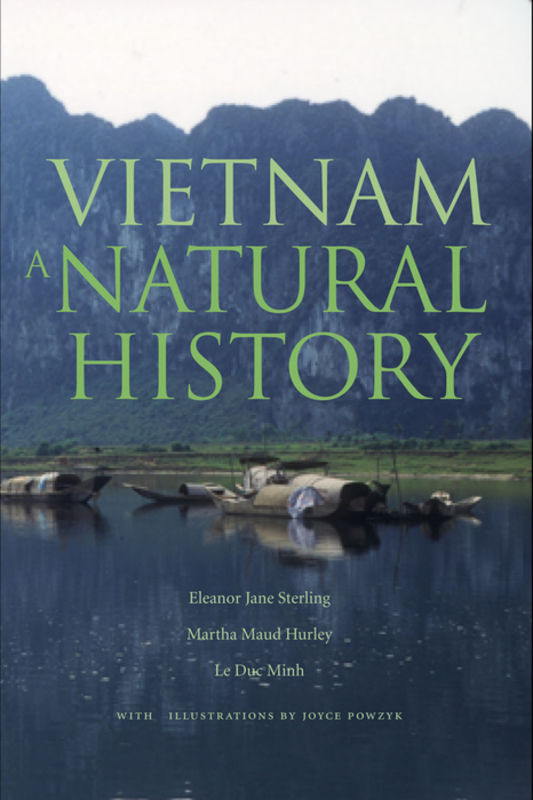
Vietnam: A Natural History
A country uncommonly rich in plants, animals, and natural habitats, the Socialist Republic of Vietnam shelters a significant portion of the world's biological diversity, including rare and unique organisms and an unusual mixture of tropical and temperate species. This book is the first comprehensive account of Vietnam's natural history in English. Illustrated with maps, photographs, and thirty-five original watercolor illustrations, the book offers a complete tour of the country's plants and animals along with a full discussion of the factors shaping their evolution and distribution.
Separate chapters focus on northern, central, and southern Vietnam, regions that encompass tropics, subtropics, mountains, lowlands, wetland and river regions, delta and coastal areas, and offshore islands. The authors provide detailed descriptions of key natural areas to visit, where a traveler might explore limestone caves or glimpse some of the country's twenty-seven monkey and ape species and more than 850 bird species. The book also explores the long history of humans in the country, including the impact of the Vietnam-American War on plants and animals, and describes current efforts to conserve Vietnam's complex, fragile, and widely threatened biodiversity.
eBook

My presentation today is about the anaconda
Who needs another book by humans? All they do is make us animals super boring. They only look at things through their own eyes. Every, single, time. Human after human. Kid after kid. Class after class. YAWN! This is a book of oral presentations given by us animals, for us animals, and about us animals. The cleaner fish will talk about his friend the shark and his sharp teeth. The zebra will get to tell you about all the black-and-white animals in the world. The mole knows everything there is to know about the daddy longlegs. The southern cassowa-yes, fox? What is it? Yes, you'll get to talk about geese. Huh? Yes, you'll get to talk about how delicious they are. Anyway, there's about twenty of us giving talks on twenty more. With a lot else packed in. -- jacket flap.
CHILDBOOK

California Indians and their environment
Capturing the vitality of California's unique indigenous cultures, this major new introduction incorporates the extensive research of the past thirty years into an illuminating, comprehensive synthesis for a wide audience. Based in part on new archaeological findings, it tells how the California Indians lived in vibrant polities, each boasting a rich village life including chiefs, religious specialists, master craftspeople, dances, feasts, and ceremonies. Throughout, the book emphasizes how these diverse communities interacted with the state's varied landscape, enhancing its already bountiful natural resources through various practices centered around prescribed burning. A handy reference section, illustrated with more than one hundred color photographs, describes the plants, animals, and minerals the California Indians used for food, basketry and cordage, medicine, and more. At a time when we are grappling with the problems of maintaining habitat diversity and sustainable economies, we find that these native peoples and their traditions have much to teach us about the future, as well as the past, of California.
eBook

The big, bad book of beasts : the world's most curious creatures /
\"A one-of-a-kind treasury of the most strange and fascinating knowledge and lore about animals. Largo tells us their most fascinating secrets and reveals fact after astonishing--and often hilarious--fact about their oddest behavior. Largo also looks at the beasts we created with our imaginations, as well as ones long gone\"-- Provided by publisher.
Book
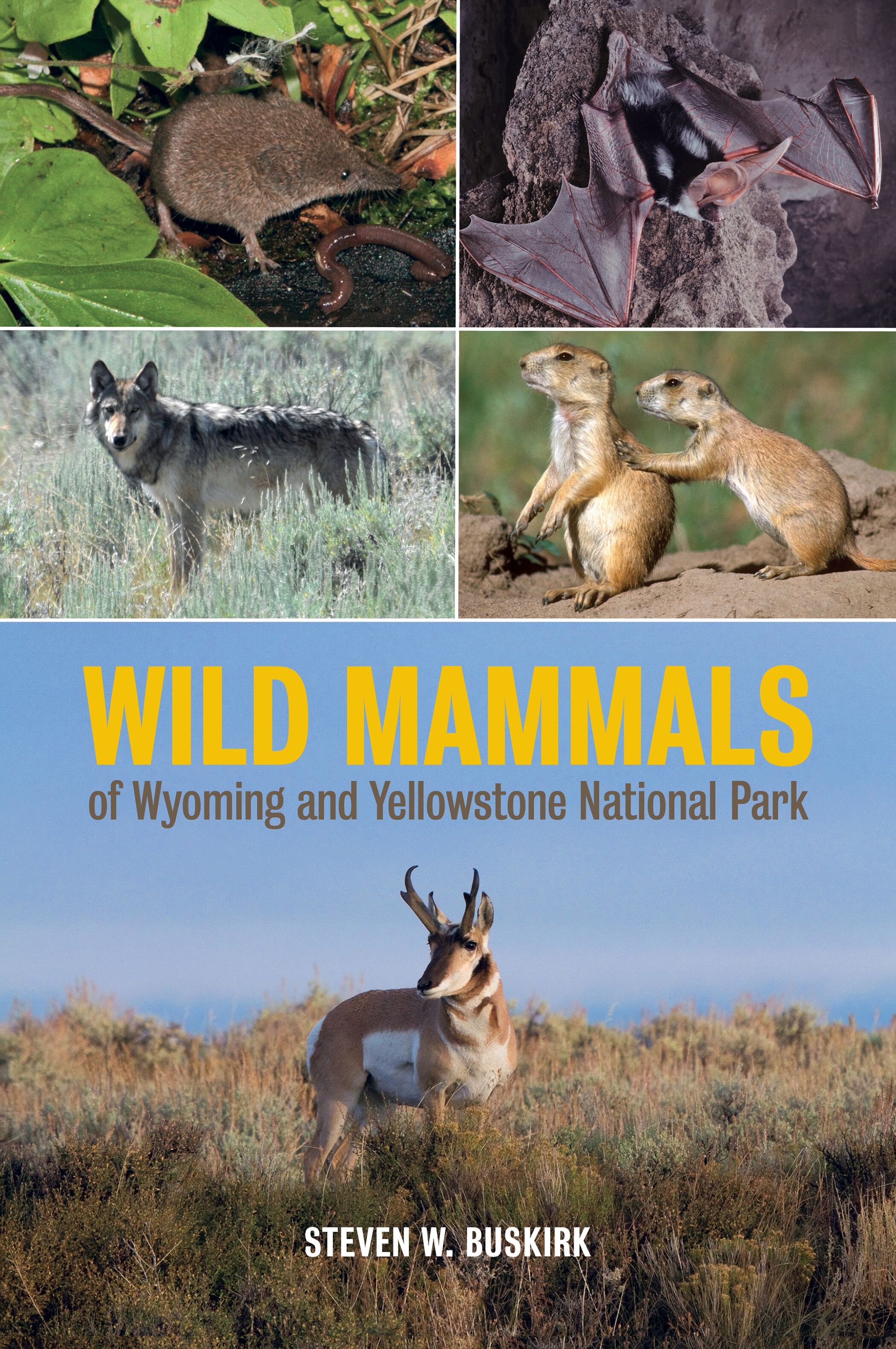
Wild mammals of Wyoming and Yellowstone National Park
Wild Mammals of Wyoming and Yellowstone National Park provides the scholar, conservationist, and interested lay reader with information on the state's 117 wild mammalian species from grizzly bears to pygmy shrews. It describes the history of mammalogy in Wyoming, the zoogeography of Wyoming mammals, and the prehistoric mammals of Wyoming. It also characterizes the habitats of Wyoming mammals and addresses the conservation and management of mammals in the region. Expanding beyond the traditional field guide, Steven W. Buskirk emphasizes taxonomic classification, geographic range, and conservation status for mammalian species. Introductory sections are provided for each order and family, and individual species accounts organize a wealth of data ranging from habitat associations to field measurements in an easy-to-use format. Featuring color species photos, continental and state-scale distribution maps, and a comprehensive bibliography with nearly 1,000 references, Wild Mammals of Wyoming and Yellowstone National Park is an indispensable resource for wildlife and conservation biologists and mammalogists working in this region.
eBook