
Catalogue Search | MBRL


Are you sure you want to remove the book from the shelf?

{{itemTitle}}
50,311
result(s) for
"NEW ZEALAND"
Sort by:


Soldiers, Scouts and Spies
As interest in the New Zealand Wars grows, Soldiers, Scouts and Spies offers a unique insight into the major campaigns fought between 1845 and 1864 by British troops, their militia and Maori allies, and Maori iwi and coalitions.
It was a time of rapid technological change. Maori were quick to adopt western weaponry and evolve their tactics — and even political structures — as they looked for ways to confront the might of the Imperial war machine. And Britain, despite being a military and economic super power, was challenged by a capable enemy in a difficult environment.
This detailed examination of the Wars from a military perspective focuses on the period of relatively conventional warfare before the increasingly 'irregular' fighting of the late 1860s. It explains how and where the battles were fought, and their outcomes. Importantly, it also analyses the intelligence-gathering skills and processes of both British and Maori forces as each sought to understand and overcome their enemy.
eBook


A policy travelogue
An ethnography of the development and travel of the New Zealand model of neoliberal welfare reform, this study explores the social life of policy, which is one of process, motion, and change. Different actors, including not only policy elites but also providers and recipients, engage with it in light of their own resources and knowledge. Drawing on two analytic frameworks of the contemporary anthropology of policy-translation and assemblage-Kingfisher situates policy as an artifact and architect of cultural meaning, as well as a site of power struggles. All points of engagement with policy are approached as sites of policy production that serve to transform it as well as reproduce it. As such,
A Policy Travelogueprovides an antidote to theorizations of policy as a-cultural, rational, and straightforwardly technical.
eBook

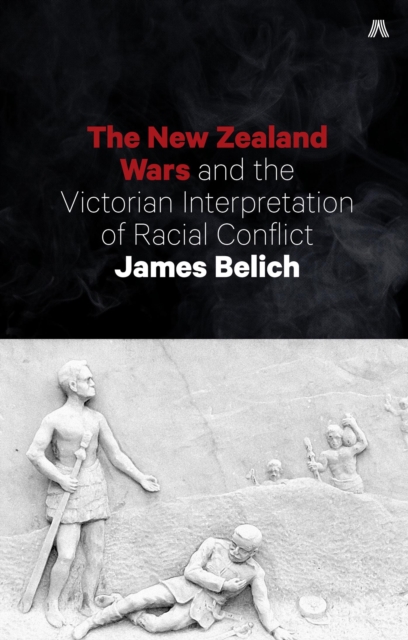
New Zealand Wars and the Victorian Interpretation of Racial Conflict
The New Zealand Wars is a powerful revisionist history. Revealing the enormous tactical and military skill of Maori, and the inability of the 'Victorian interpretation of racial conflict' to acknowledge those qualities, this account of the New Zealand Wars changed how the country's history was understood. Belich undertakes a complete reinterpretation of the crucial episode in New Zealand history and the result is a very different picture from the one previously given in historical works. Maori, in this new view, won the Northern War and stalemated the British in the Taranaki War of 186061 only to be defeated by 18,000 British troops in the Waikato War of 186364. The secret of effective Maori resistance was an innovative military system, the modern pa, a trench-and-bunker fortification of a sophistication not achieved in Europe until 1915. According to the author: 'The degree of Maori success in all four major wars is still underestimated even to the point where, in the case of one war, the wrong side is said to have won.' Here, Belich sets out to show how historical distortions have arisen over time and revises our understanding of New Zealand history by using fresh evidence and a systematic re-analysis of old evidence.
eBook


Tears of Rangi : experiments across worlds
Six centuries ago Polynesian explorers, who inhabited a cosmos in which islands sailed across the sea and stars across the sky, arrived in Aotearoa New Zealand where they rapidly adapted to new plants, animals, landscapes and climatic conditions.
eBook