
Catalogue Search | MBRL


Are you sure you want to remove the book from the shelf?

{{itemTitle}}
361
result(s) for
"NEWLY-INDEPENDENT STATES"
Sort by:

State-formation and democratization : a new classification
This book examines the connection between two major developments in the world: state-formation and democratization. Since 1946, the number of states has increased from 66 to almost 200 independent states, but our knowledge of these state-formation processes is limited. The authors present a new database on state-formation and democratization, which enables novel classifications and analyses of these processes on the global level. They argue that the form of state-formation affects the probability for democratization in new states and that the initial regime that state-formation establishes at the time of independence has long-term effects on new states' democratization.
Book

Alternative Globalizations
Globalization has become synonymous with the seemingly unfettered spread of capitalist multinationals, but this focus on the West and western economies ignores the wide variety of globalizing projects that sprang up in the socialist world as a consequence of the end of the European empires. This collection is the first to explore alternative forms of globalization across the socialist world during the Cold War. Gathering the work of established and upcoming scholars of the Soviet Union, Eastern Europe, and China,Alternative Globalizations addresses the new relationships and interconnections which emerged between a decolonizing world in the postwar period and an increasingly internationalist eastern bloc after the death of Stalin. In many cases, the legacies of these former globalizing impulses from the socialist world still exist today. Divided into four sections, the works gathered examine the economic, political, developmental, and cultural aspects of this exchange. In doing so, the authors break new ground in exploring this understudied history of globalization and provide a multifaceted study of an increasing postwar interconnectedness across a socialist world.
eBook
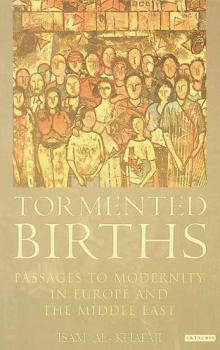
Tormented births : passages to modernity in Europe and the Middle East
Using an interdisciplinary approach, Al-Khafaji offers an exploration of political, economic and social development in the Middle East. He discourages an approach that over-emphasises the importance of the colonial experience and cultural differences with Europe.
Book

The United States, Israel, and the Search for International Order
How do emerging states become full, functioning members of the international system? In this book, Cameron G. Thies argues that new and emerging states are subject to socialization efforts by current member states, which guide them in locating their position in the international system.
Thies develops a theoretical approach to understanding how states socialize each other into and out of different roles in the international system, such as regional power, ally, and peacekeeper. The concept of state socialization is developed using role theory, a middle-range theory developed in the interdisciplinary field of social psychology. This middle-range theory helps to flesh out the theoretical mechanisms often missing in grand theories like neorealism and constructivism. The result is a structural theory of international politics that also allows for the explanation of actual foreign policy behavior by states. The foreign policy histories of the U.S. and Israel are analyzed using this theoretical approach to show how international social pressure has affected the kinds of roles they have adopted throughout their histories, as well as the kinds of roles that they have not been allowed to adopt. By considering the effects of international socialization attempts on their foreign policy behavior, Thies shows the well-known cases of the U.S. and Israel in a new light.
The United States, Israel, and the Search for International Order argues that the process by which states learn their appropriate roles and behaviors in the international social order is crucial to understanding international conflict and cooperation, which will be significant for those studying both theory and method in international relations, foreign policy, and diplomatic history.
eBook


The Afro-Asian States and their Problems
This reissue of Sandar Panikkar's 1959 book is based upon a series of lectures given at the Institut d'Etude de Development Economique et Social, which spotlights the problems faced by the multitude of African and Asian states which achieved independence between 1945 and 1957. From Asia, the author discusses the plight of India, Pakistan, Burma, Indonesia, Ceylon, Vietnam, Cambodia, laos, Syria and Lebanon whilst in Africa he assesses the independence of the Sudan, Tunisia, Morroco and Ghana. The problems faced by these countries have many similarities, not least the need to develop systems of political organisation, administrative services necessary for a modern government and the need to completely reorganise their economy.
eBook


What we owe Iraq
America is up to its neck in nation building--but the public debate, focused on getting the troops home, devotes little attention to why we are building a new Iraqi nation, what success would look like, or what principles should guide us. What We Owe Iraq sets out to shift the terms of the debate, acknowledging that we are nation building to protect ourselves while demanding that we put the interests of the people being governed--whether in Iraq, Afghanistan, Kosovo, or elsewhere--ahead of our own when we exercise power over them. Noah Feldman argues that to prevent nation building from turning into a paternalistic, colonialist charade, we urgently need a new, humbler approach. Nation builders should focus on providing security, without arrogantly claiming any special expertise in how successful nation-states should be made. Drawing on his personal experiences in Iraq as a constitutional adviser, Feldman offers enduring insights into the power dynamics between the American occupiers and the Iraqis, and tackles issues such as Iraqi elections, the prospect of successful democratization, and the way home.
eBook

Consider Somaliland
Can 'traditional' leaders and institutions help to build more legitimate, accountable and effective governments in polities or 'states' under (re)construction? This book investigates the fascinating case of \"Somaliland\", the 20-year old non-recognized state which emerged from Somalia's conflict and state collapse.
eBook

After independence
The majority of the existing work on nationalism has centered on its role in the creation of new states. After Independence breaks new ground by examining the changes to nationalism after independence in seven new states. This innovative volume challenges scholars and specialists to rethink conventional views of ethnic and civic nationalism and the division between primordial and constructivist understandings of national identity.
eBook