
Catalogue Search | MBRL


Are you sure you want to remove the book from the shelf?

{{itemTitle}}
153,403
result(s) for
"NOBEL PRIZES"
Sort by:


Large teams develop and small teams disrupt science and technology
One of the most universal trends in science and technology today is the growth of large teams in all areas, as solitary researchers and small teams diminish in prevalence
1
–
3
. Increases in team size have been attributed to the specialization of scientific activities
3
, improvements in communication technology
4
,
5
, or the complexity of modern problems that require interdisciplinary solutions
6
–
8
. This shift in team size raises the question of whether and how the character of the science and technology produced by large teams differs from that of small teams. Here we analyse more than 65 million papers, patents and software products that span the period 1954–2014, and demonstrate that across this period smaller teams have tended to disrupt science and technology with new ideas and opportunities, whereas larger teams have tended to develop existing ones. Work from larger teams builds on more-recent and popular developments, and attention to their work comes immediately. By contrast, contributions by smaller teams search more deeply into the past, are viewed as disruptive to science and technology and succeed further into the future—if at all. Observed differences between small and large teams are magnified for higher-impact work, with small teams known for disruptive work and large teams for developing work. Differences in topic and research design account for a small part of the relationship between team size and disruption; most of the effect occurs at the level of the individual, as people move between smaller and larger teams. These results demonstrate that both small and large teams are essential to a flourishing ecology of science and technology, and suggest that, to achieve this, science policies should aim to support a diversity of team sizes.
Analyses of the output produced by large versus small teams of researchers and innovators demonstrate that their work differs systematically in the extent to which it disrupts or develops existing science and technology.
Journal Article

The Nobel Prize : the story of Alfred Nobel and the most famous prize in the world
Information about the Nobel prize, its history, its winners and its namesake.
BOOK

The 2018 Nobel Prize in Chemistry: phage display of peptides and antibodies
One-half of the 2018 Nobel Prize in Chemistry was awarded jointly to George P. Smith and Sir Gregory P. Winter “for the phage display of peptides and antibodies”. This feature article summarizes significant achievements leading to the development of phage display of peptides and antibodies, where a bacteriophage is genetically modified to display peptides and proteins, with the primary aim of producing new biopharmaceuticals. These significant achievements are proven to be useful for the development of phage-based bioassays and biosensors.
Journal Article


Collective credit allocation in science
Collaboration among researchers is an essential component of the modern scientific enterprise, playing a particularly important role in multidisciplinary research. However, we continue to wrestle with allocating credit to the coauthors of publications with multiple authors, because the relative contribution of each author is difficult to determine. At the same time, the scientific community runs an informal field-dependent credit allocation process that assigns credit in a collective fashion to each work. Here we develop a credit allocation algorithm that captures the coauthors’ contribution to a publication as perceived by the scientific community, reproducing the informal collective credit allocation of science. We validate the method by identifying the authors of Nobel-winning papers that are credited for the discovery, independent of their positions in the author list. The method can also compare the relative impact of researchers working in the same field, even if they did not publish together. The ability to accurately measure the relative credit of researchers could affect many aspects of credit allocation in science, potentially impacting hiring, funding, and promotion decisions.
Journal Article

'The world's most prestigious prize' : the inside story of the Nobel Peace Prize
An insider account of the Nobel Peace Prize drawing on access to the Norwegian Nobel Institute's vast archive, this book examines the founding of the prize, as well as its highs and lows, triumphs and disasters, over the last one-hundred-and-twenty years. But more than that, the book also draws on the author's unique insight during his twenty-five years as Director of the Norwegian Nobel Institute and Secretary of the Norwegian Nobel Committee, revealing the real story of all the laureates of that period--some of them among the most controversial in the history of the prize (Gorbachev, Arafat, Peres and Rabin, Mandela and De Klerk, Obama, and Liu Xiaobo)--and exactly why they came to receive the prize.
Book
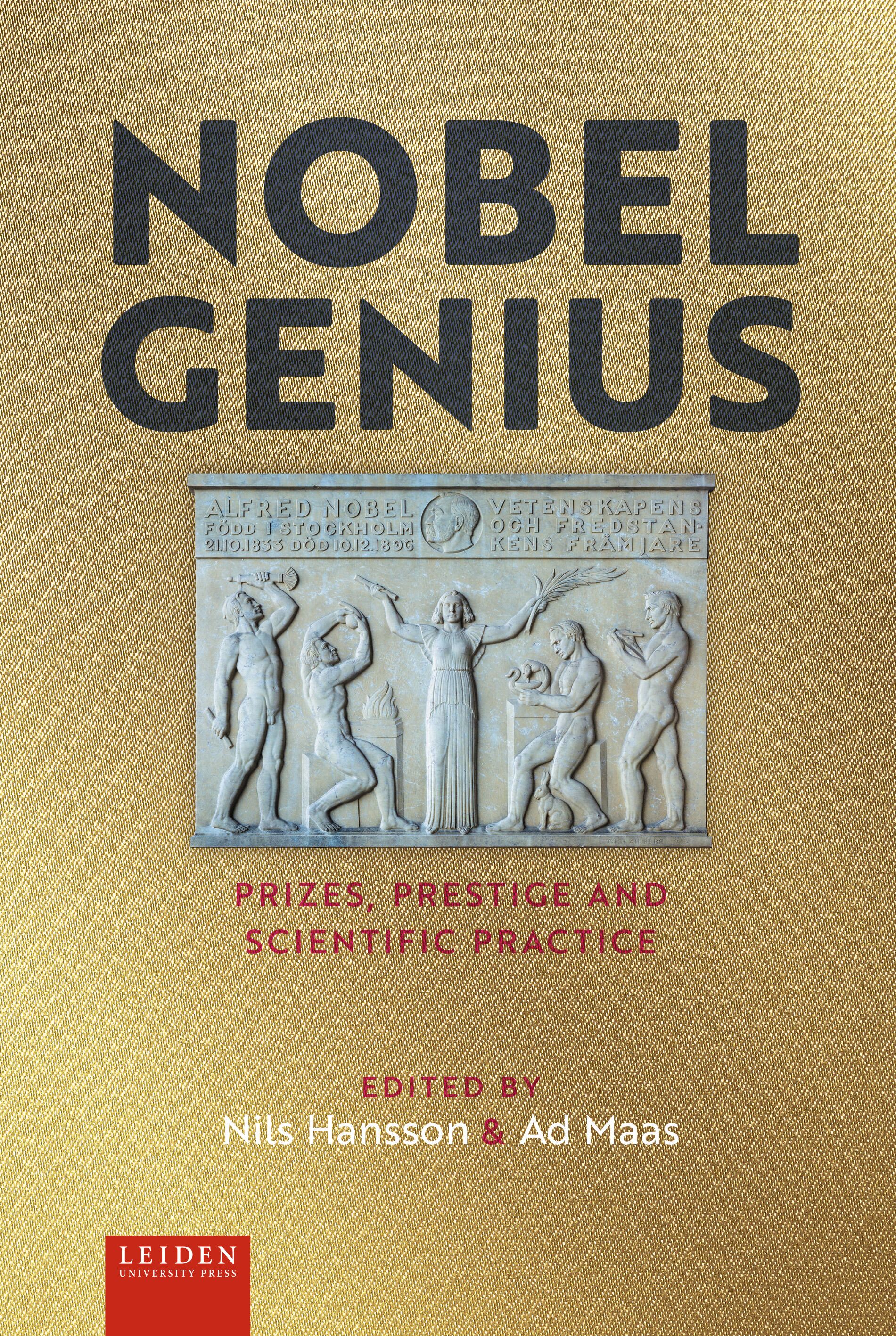
Nobel Genius
Awards shape careers, make research visible, and create role models. They provide evidence of prestige and credit and play a key role in evaluating individual scientists. Nevertheless, the understanding of prize cultures in science has remained surprisingly superficial. This book explores the prize cultures of the most famous scientific award worldwide: the Nobel Prize. It contributes to modern approaches in history and sociology of science that focus on the social context of scientific practices and gives new insights into the role of status and impact in academia.
eBook

Nobel prizes that changed medicine
This book brings together in one volume fifteen Nobel Prize-winning discoveries that have had the greatest impact upon medical science and the practice of medicine during the 20th century and up to the present time. Its overall aim is to enlighten, entertain and stimulate. This is especially so for those who are involved in or contemplating a career in medical research. Anyone interested in the particulars of a specific award or Laureate can obtain detailed information on the topic by accessing the Nobel Foundation's website. In contrast, this book aims to provide a less formal and more personal view of the science and scientists involved, by having prominent academics write a chapter each about a Nobel Prize-winning discovery in their own areas of interest and expertise.
Book
Cancer immunologists scoop medicine Nobel prize
James Allison and Tasuku Honjo pioneered treatments that unleash the body’s own immune system to attack cancer cells.
James Allison and Tasuku Honjo pioneered unleashing the body's own immune system to attack cancer cells.
James Allison and Tasuku Honjo pioneered treatments that unleash the body’s own immune system to attack cancer cells.
Left: James Allison, Right: Tasuku Honjo
Journal Article