
Catalogue Search | MBRL


Are you sure you want to remove the book from the shelf?

{{itemTitle}}
134
result(s) for
"NOUVELLE TECHNOLOGIE"
Sort by:

Handbook on the digital creative economy
Digital technologies have transformed the way many creative works are generated, disseminated and used. They have made cultural products more accessible, challenged established business models and the copyright system, and blurred the boundary between producers and consumers. This unique resource presents an up-to-date overview of academic research on the impact of digitization in the creative sector of the economy.
Book

Adapting for Inertia
Despite much learning and research over many decades, large ICT software projects have continued to experience poor outcomes or fallen short of original expectations—some spectacularly so. This is the case in the Australian and New Zealand public sectors, even though these projects operate within historically developed institutional frameworks that provide the rules, guidelines and controls, and aim to consistently improve outcomes. Something is amiss. In Adapting for Inertia, Grant Douglas questions the effectiveness of these institutional frameworks in governing large ICT software projects in the Australian and New Zealand public sectors. He also gauges the perspectives of a large number of actors in projects in both sectors and examines two case studies in detail. The main narrative to emerge is that the institutional frameworks are in a state of inertia: they are failing to adapt, owing to various institutional factors—all of which have public policy implications. Sadly, Douglas finds, this inertia is likely to continue. If there is difficulty in changing the capacity to govern, he proposes, policymakers should look to change the nature of what is to be governed.
eBook

Moving Cultures
André Caron and Letizia Caronia look at teenagers' use of text messaging to chat, flirt, and gossip. They find that messaging among teens has little to do with sending shorthand information quickly. Instead, it is a verbal performance through which young people create culture. Moving Cultures argues that teenagers have domesticated and reinterpreted this technology.
eBook

Save and Grow: Cassava. A guide to sustainable production intensification
\"This guide is the first on the practical application of FAO's \"Save and Grow\" model of agriculture to specific smallholder crops and farming systems. It comes as cassava production intensifies worldwide, and growers shift from traditional cultivation practices to monocropping, higher-yielding genotypes, and greater us of agrochemicals. Intensification carries great risks, including soils nutrient depletion and upsurges in pests and diseases. The guide shows how ecosystem-based \"Save and Grow\" approaches and practices can help tropical developing countries to avoid the risks of unsustainable intensification, while realizing cassava's potential for producing higher yields, alleviating hunger and rural poverty, and contributing to national economic development.\"--Publisher description.
eBook

Global Networks, Linked Cities
First published in 2002. Routledge is an imprint of Taylor & Francis, an informa company.
Saskia Sassen , Professor of Sociology at the University of Chicago, is a leading expert on cities and globalizaiton. She has published numerous books, including The Global City (1991, 2000) Cities in a World Economy (1994), Globalization and its Discontents (1998), Losing Control? (1996), Guests and Aliens (1999), and The Mobility of Labor and Capital (1988).
eBook
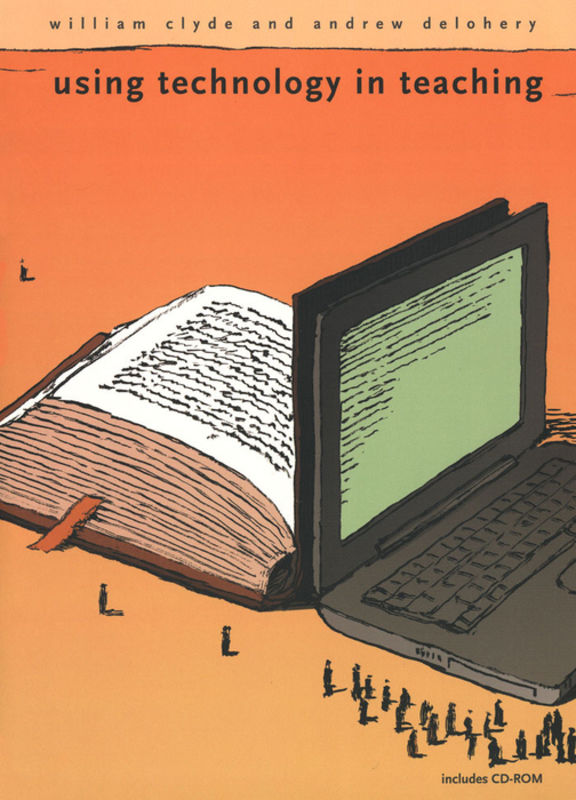
Using Technology in Teaching
Computers can help teachers accomplish many of their tasks more efficiently and effectively, but how can a time-strapped teacher determine which pieces of technology are likely to be most helpful? This easy-to-read book offers useful guidance for real-world situations. Organized around specific instructional goals (improving student writing, promoting collaborative learning) and commonly encountered tasks (communicating with students between class, distributing course materials), the book shows teachers at all instructional levels when and how technology can help them meet everyday challenges.Written in an anecdotal, non-technical style, the book and its accompanying CD-ROM cover how to use technology to:
communicate with students
distribute course materials
promote collaborative learning
learn through experience
clarify course objectives
improve student writing
develop student research skills
use assessment and feedback
collect course materials
identify plagiarism
and moreTeachers looking for tools to help them work better and more quickly will welcome this invaluable guide to the technology that will expedite their search.
eBook

Possibilities of heat pump integration for the renovation of dwelling houses
The technical solutions for the installation of heat pumps in individual houses are well known, but its integration in the existing systems in dwelling houses is not common. Heat pump technology is referred to as renewable but would have technical, economic and environmental impact on the whole existing heat supply system in a dwelling house. The aim of this article is to investigate the possibility of using heat pumps for supplying heat to the existing residential buildings. This article examines the possibilities to supplement the engineering systems with additional heat pumps. The smallest heat pump end-user group is the dwelling stairwell. The possibility to use heat pumps in a separate apartment has not been analysed. This article analyses the integration of heat pumps for residential heat supply in the building. The primary heat source is the exhaust air or wastewater. All calculations have been made for several real existing dwelling houses in Birštonas town (Lithuania) within the framework of the CONCERTO Eco-Life project. The analysis also provides economic and environmental assessment of the alternatives. This research was supported by EC FP7 CONCERTO program (‘‘Sustainable Zero Carbon ECO-Town Developments Improving Quality of Life across EU - ECO-Life’’ (ECO-Life Project) Contract No. TREN/FP7EN/239497/\"ECOLIFE\").
Tehniskie risinājumi siltuma sūkņu uzstādīšanai privātmājās ir labi pazīstami, bet to integrācija jau esošās sistēmās daudzdzīvokļu ēkās notiek diezgan reti. Siltuma sūkņa tehnoloģiju bieži sauc par atjaunojamo, bet to integrācija daudzdzīvokļu ēkas esošajā siltumapgādes sistēmā sekmē tehnisko, ekonomisko un ekoloģisko izaugsmi kopumā. Darba mērķis ir siltuma sūkņu integrācijas iespēju izpēte esošajās siltuma/sanitārajās sistēmās daudzstāvu dzīvojamās ēkās. Vismazākā telpa, kurā iespējams integrēt siltuma sūkni, ir daudzstāvu ēkas kāpņu telpa. Siltuma sūkņu izmantošanas iespējas atsevišķā dzīvoklī netika aplūkotas. Detalizēti tika analizētas trīs alternatīvas: HP_R1 – siltuma sūknī saražotā gaisa siltuma izmantošana karstā ūdens sagatavošanai; HP_R2 – siltuma sūknī saražotā gaisa siltuma izmantošana telpu apsildei, pieslēdzoties rekuperatora vai mehāniskās ventilācijas sistēmai; HP_R3 – ēkas notekūdeņu siltuma izmantošana siltuma sūknī karstā ūdens sagatavošanai. Alternatīvu analīze un aprēķini tika veikti reālām daudzdzīvokļu ēkām Brištonas pilsētā (Lietuva) projekta CONCERTO Eco-Life ietvaros. Analīzē iekļauti arī alternatīvu ekonomiskie un ekoloģiskie novērtējumi.
Journal Article


Report of the Global Conference on Aquaculture 2010-Farming the waters for people and food, Phuket, Thailand, 20-25 September 2010
Organized by FAO and NACA and hosted by the Government of the Kingdom of Thailand, the Global Conference on Aquaculture 2010 - Farming the waters for people and food (Phuket Conference on Aquaculture) was held from 22 to 25 September 2010 in Phuket, Thailand. Its purpose was to review the present status and trends in aquaculture development, evaluate the progress made in the implementation of the Bangkok Declaration and Strategy on Aquaculture Development Beyond 2000, address emerging issues in aquaculture development, assess opportunities and challenges for future aquaculture development, and build consensus on advancing aquaculture as a global, sustainable and competitive food production sector. A main outcome of the Phuket Conference on Aquaculture is the 'Phuket Consensus'. This 'Consensus' reaffirms commitment to the principles laid out in the Bangkok Declaration and Strategy adopted in the Global Conference on Aquaculture in 2000 and recommends additional actions to address contemporary priorities. These recommendations consist in: (i) increasing the effectiveness of governance of the aquaculture sector; (ii) encouraging and facilitating greater investments in scientific, technical and social innovations; (iii) conducting accurate assessments of the progress and contributions of aquaculture (including aquatic plants) to national, regional and global economies, poverty alleviation and food security; (iv) intensifying assistance to the small farmers; (v) supporting gender sensitive policies and implement programmes that facilitate economic and political empowerment of women through their active participation in aquaculture; (vi) increasing and strengthening collaboration and partnerships; and (vii) giving special emphasis on sub-Saharan Africa and the least aquaculturally developed countries and areas in order to allow them to develop their aquatic resource potentials.
Journal Article
