
Catalogue Search | MBRL


Are you sure you want to remove the book from the shelf?

{{itemTitle}}
506
result(s) for
"NUEVO MEXICO"
Sort by:

Delirio : the fantastic, the demonic, and the réel : the buried history of Nuevo León
Striking, inexplicable stories circulate among the people of Nuevo León in northern Mexico. Stories of conversos (converted Jews) who fled the Inquisition in Spain and became fabulously wealthy in Mexico. Stories of women and children buried in walls and under houses. Stories of an entire, secret city hidden under modern-day Monterrey. All these stories have no place or corroboration in the official histories of Nuevo León. In this pioneering ethnography, Marie Theresa Hernández explores how the folktales of Nuevo León encode aspects of Nuevolenese identity that have been lost, repressed, or fetishized in legitimate histories of the region. She focuses particularly on stories regarding three groups: the Sephardic Jews said to be the original settlers of the region, the disappeared indigenous population, and the supposed barbaric society that persists in modern Nuevo León. Hernández’s explorations into these stories uncover the region’s complicated history, as well as the problematic and often fascinating relationship between history and folklore, between officially accepted facts and fictions that many Nuevoleneses believe as truth.
eBook
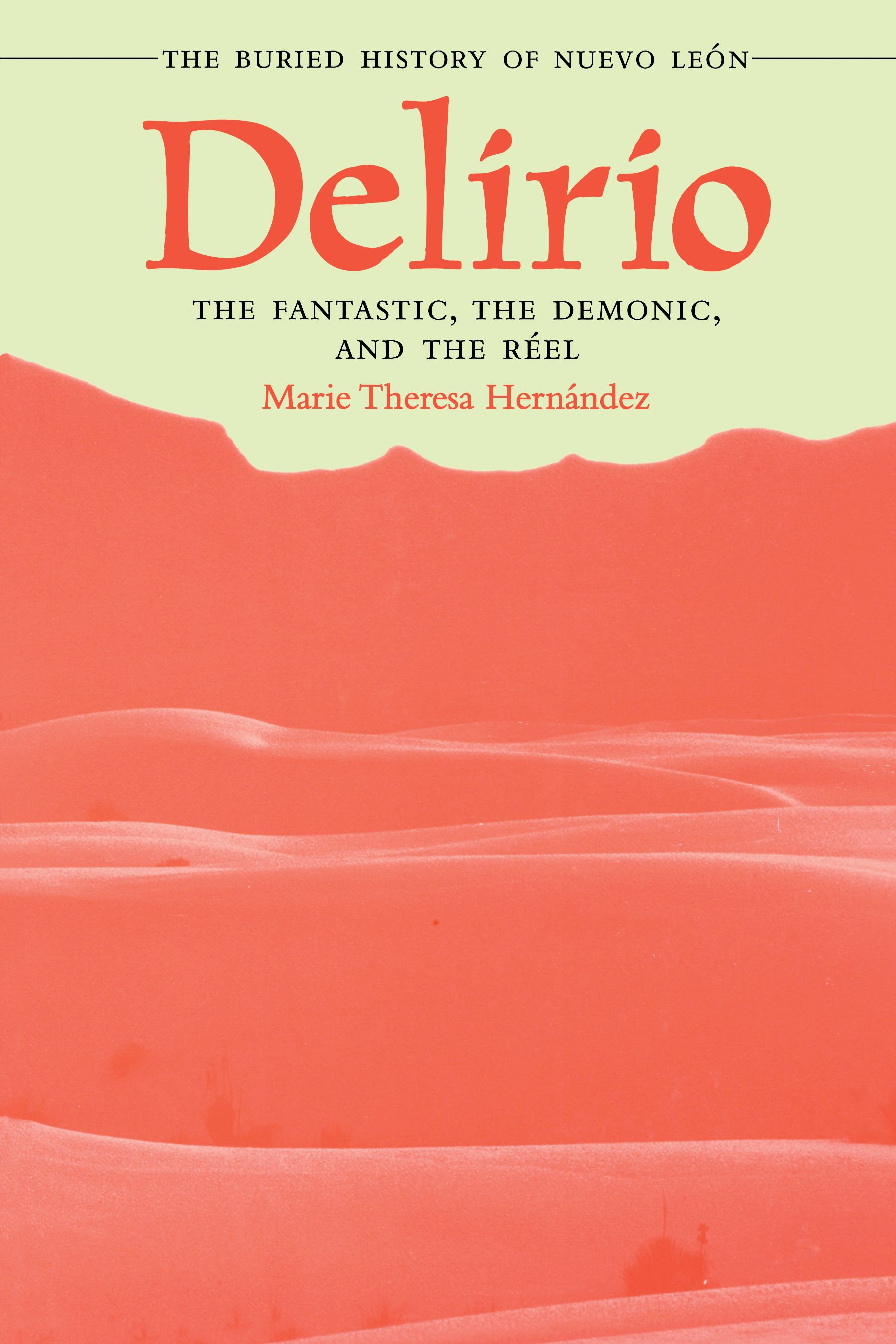
Delirio—The Fantastic, the Demonic, and the Réel
Striking, inexplicable stories circulate among the people of Nuevo León in northern Mexico. Stories of conversos (converted Jews) who fled the Inquisition in Spain and became fabulously wealthy in Mexico. Stories of women and children buried in walls and under houses. Stories of an entire, secret city hidden under modern-day Monterrey. All these stories have no place or corroboration in the official histories of Nuevo León. In this pioneering ethnography, Marie Theresa Hernández explores how the folktales of Nuevo León encode aspects of Nuevolenese identity that have been lost, repressed, or fetishized in \"legitimate\" histories of the region. She focuses particularly on stories regarding three groups: the Sephardic Jews said to be the \"original\" settlers of the region, the \"disappeared\" indigenous population, and the supposed \"barbaric\" society that persists in modern Nuevo León. Hernández's explorations into these stories uncover the region's complicated history, as well as the problematic and often fascinating relationship between history and folklore, between officially accepted \"facts\" and \"fictions\" that many Nuevoleneses believe as truth.
eBook
From Colony to Nationhood in Mexico
In an age of revolution, Mexico's creole leaders held aloft the Virgin of Guadalupe and brandished an Aztec eagle perched upon a European tricolor. Their new constitution proclaimed 'the Mexican nation is forever free and independent'. Yet the genealogy of this new nation is not easy to trace. Colonial Mexico was a patchwork state whose new-world vassals served the crown, extended the empire's frontiers and lived out their civic lives in parallel Spanish and Indian republics. Theirs was a world of complex intercultural alliances, interlocking corporate structures and shared spiritual and temporal ambitions. Sean F. McEnroe describes this history at the greatest and smallest geographical scales, reconsidering what it meant to be an Indian vassal, nobleman, soldier or citizen over three centuries in northeastern Mexico. He argues that the Mexican municipality, state and citizen were not so much the sudden creations of a revolutionary age as the progeny of a mature multiethnic empire.
eBook
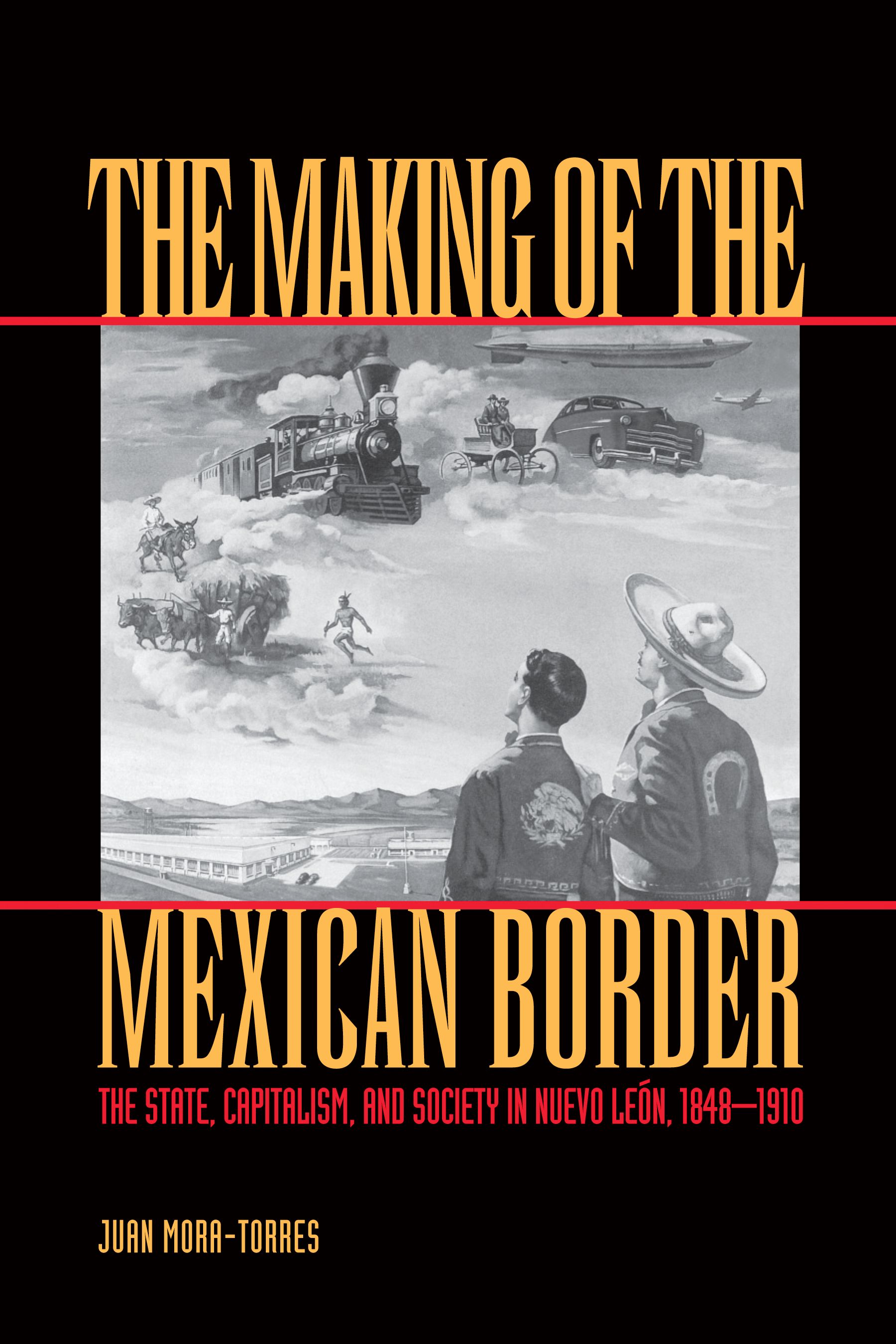
The Making of the Mexican Border
The issues that dominate U.S.-Mexico border relations today—integration of economies, policing of boundaries, and the flow of workers from south to north and of capital from north to south—are not recent developments. In this insightful history of the state of Nuevo León, Juan Mora-Torres explores how these processes transformed northern Mexico into a region with distinct economic, political, social, and cultural features that set it apart from the interior of Mexico. Mora-Torres argues that the years between the establishment of the U.S.-Mexico boundary in 1848 and the outbreak of the Mexican Revolution in 1910 constitute a critical period in Mexican history. The processes of state-building, emergent capitalism, and growing linkages to the United States transformed localities and identities and shaped class formations and struggles in Nuevo León. Monterrey emerged as the leading industrial center and home of the most powerful business elite, while the countryside deteriorated economically, politically, and demographically. By 1910, Mora-Torres concludes, the border states had already assumed much of their modern character: an advanced capitalist economy, some of Mexico's most powerful business groups, and a labor market dependent on massive migrations from central Mexico.
eBook

The Making of the Mexican Border
In this insightful history of the state of Nuevo León, Juan Mora-Torres explores how these processes transformed northern Mexico into a region with distinct economic, political, social, and cultural features that set it apart from the interior of Mexico.
eBook


Cultural Construction of Empire
From 1866 through 1886, the U.S. Army occupied southern Arizona and New Mexico in an attempt to claim it for settlement by Americans. Through a postcolonial lens, Janne Lahti examines the army, its officers, their wives, and the enlisted men as agents of an American empire whose mission was to serve as a group of colonizers engaged in ideological as well as military, conquest.
Cultural Construction of Empireexplores the cultural and social representations of Native Americans, Hispanics, and frontiersmen constructed by the officers, enlisted men, and their dependents. By differentiating themselves from these \"less civilized\" groups, white military settlers engaged various cultural processes and practices to accrue and exercise power over colonized peoples and places for the sake of creating a more \"civilized\" environment for other settlers. Considering issues of class, place, and white ethnicity, Lahti shows that the army's construction of empire took place not on the battlefield alone but also in representations of and social interactions in and among colonial places, peoples, settlements, and events, and in the domestic realm and daily life inside the army villages.
eBook

Debating American Identity
In the early 1900s, Teddy Roosevelt, New Mexico governors Miguel Antonio Otero and Octaviano Larrazolo, and Arizona legislator Carl Hayden-along with the voices of less well-known American women and men-promoted very different views on what being an American meant. Their writings and speeches contributed to definitions of American national identity during a tumultuous and dynamic era. At stake in these heated debates was the very meaning of what constituted an American, the political boundaries for the United States, and the legitimacy of cultural diversity in modern America.In Debating American Identity, Linda C. Noel examines several nation-defining events-the proposed statehood of Arizona and New Mexico, the creation of a temporary worker program during the First World War, immigration restriction in the 1920s, and the repatriation of immigrants in the early 1930s. Noel uncovers the differing ways in which Americans argued about how newcomers could fit within the nation-state, in terms of assimilation, pluralism, or marginalization, and the significance of class status, race, and culture in determining American identity.Noel shows not only how the definition of American was contested, but also how the economic and political power of people of Mexican descent, their desire to incorporate as Americans or not, and the demand for their territory or labor by other Americans played an important part in shaping decisions about statehood and national immigration policies. Debating American Identity skillfully shows how early twentieth century debates over statehood influenced later ones concerning immigration; in doing so, it resonates with current discussions, resulting in a well-timed look at twentieth century citizenship.
eBook

Nación Genízara
Nación Genízara examines the history, cultural evolution, and survival of the Genízaro people. The contributors to this volume cover topics including ethnogenesis, slavery, settlements, poetics, religion, gender, family history, and mestizo genetics. Fray Angélico Chávez defined Genízaro as the ethnic term given to indigenous people of mixed tribal origins living among the Hispano population in Spanish fashion. They entered colonial society as captives taken during wars with Utes, Apaches, Comanches, Kiowas, Navajos, and Pawnees. Genízaros comprised a third of the population by 1800. Many assimilated into Hispano and Pueblo society, but others in the land-grant communities maintained their identity through ritual, self-government, and kinship.
Today the persistence of Genízaro identity blurs the lines of distinction between Native and Hispanic frameworks of race and cultural affiliation. This is the first study to focus exclusively on the detribalized Native experience of the Genízaro in New Mexico.
eBook

Recognizing Heritage
In 2006 Congress established the Northern Rio Grande National Heritage Area to recognize the four-hundred-year \"coexistence\" of Spanish and Indian peoples in New Mexico and their place in the United States. National heritage areas enable local communities to partner with the federal government to promote historic preservation, cultural conservation, and economic development.Recognizing Heritageexplores the social, political, and historical context of this and other public efforts to interpret and preserve Native American and Hispanic heritage in northern New Mexico.
The federal government's recognition of New Mexico's cultural distinctiveness contrasts sharply with its earlier efforts to wipe out Indian and Hispanic cultures. Yet even celebrations of cultural difference can reinforce colonial hierarchies. Multiculturalism and colonialism have overlapped in New Mexico since the nineteenth century, when Anglo-American colonists began promoting the region's unique cultures and exotic images to tourists. Thomas H. Guthrie analyzes the relationship between heritage preservation and ongoing struggles over land, water, and identity resulting from American colonization. He uses four sites within the heritage area to illustrate the unintentional colonial effects of multiculturalism: a history and anthropology museum, an Indian art market, a \"tricultural\" commemorative plaza, and a mountain village famous for its adobe architecture.Recognizing Heritagecritiques the politics of recognition and suggests steps toward a more just multiculturalism that fundamentally challenges colonial inequalities.
eBook