
Catalogue Search | MBRL


Are you sure you want to remove the book from the shelf?

{{itemTitle}}
461
result(s) for
"NUMBER OF MIGRANTS"
Sort by:
Contemporary migration to South Africa : a regional development issue
This book is a call to rethink migration regimes in Southern Africa in ways that are more explicitly developmental and focused on poverty. Current policy debates are devoted almost exclusively to border control and policing; they pay only lip service to local and regional developmental strategies. This volume takes a different approach. Its contributors are scholars who are convinced that empirically based policy making stands a better chance of succeeding than untested preconceptions that risk reproducing recipes that have failed elsewhere. The book is therefore strong on empirics, providing a wealth of original data. It also reframes existing approaches and reexamines secondary data from fresh perspectives. Although the focus remains South Africa, the book reflects South Africa's regional role and draws on data from across the Southern African Development Community (SADC). This book broadens the 'migration' agenda beyond the boundaries of migration studies and migration policy silos. This book is intended to become a resource for a range of audiences in Southern Africa and the continent.
eBook
Leveraging migration for Africa : remittances, skills, and investments
A joint effort led by the African Development Bank and the World Bank, 'Leveraging Migration for Africa' is the first comprehensive publication on harnessing migration, remittances, and other diaspora resources for the development of Africa. It comes at a time when countries in Africa and elsewhere are grappling with difficult choices on how to manage migration.Policy makers can help leverage the contributions of migrants to the development of Africa, reduceremittance costs, improve the efficiency of remittance markets in both origin and destination countries, and address the needs of the origin countries without restricting the emigration of high-skilled professionals. Innovative financing mechanisms such as issuance of diaspora bonds and securitization of future remittance flows can help finance big-ticket projects, such as railways, roads, power plants, and institutions of higher learning that will, step by step, help to transform Africa. This volume contributes to a greater understanding of migration and its potential role in Africa?s development.
eBook

Genetic admixing of two evergreen oaks, Quercus acuta and Q. sessilifolia (subgenus Cyclobalanopsis), is the result of interspecific introgressive hybridization
In forests worldwide, Quercus is a major genus; however, the boundaries between the constituent species are relatively weak, and hybridization is reported frequently. In this study, we examined Quercus acuta and Quercus sessilifolia (subgenus Cyclobalanopsis), which have a putative hybrid—Q. x takaoyamensis. We investigated leaf morphological traits and microsatellites of Q. acuta and Q. sessilifolia in the area where the two species are both found. Although the leaf traits overlapped, the two species could be distinguished morphologically as demonstrated by principal component analysis based on a range of these traits. They were also genetically differentiated, with F ST = 0.104. However, they shared most of the alleles at all eight loci examined, and considerable genetic admixing was detected. Admixture analysis demonstrated that Q. acuta and Q. sessilifolia, respectively, contained 11 and 24 % of individuals with a probability of less than 0.9 of being correctly assigned to their species. Model-based testing showed that this admixing was created by not only shared ancestral polymorphism but also by hybridization. Effective population size and migration rate were estimated using the coalescent approach. We estimated 8.843 and 71.98 effective numbers of migrants per generation to Q. acuta and Q. sessilifolia, respectively. Theoretically, one to ten migrants per generation are required to prevent complete genetic differentiation. Based on the results of this study, it appears that genetic admixing, with sharing of most alleles, is probably common in the two species and is maintained by interspecific introgressive hybridization.
Journal Article
Migration and Remittances Factbook 2011
There are more than 215 million international migrants in the world. Recorded remittances received by developing countries, estimated to be US$325 billion in 2010, far exceed the volume of official aid flows and constitute more than 10 percent of gross domestic product (GDP) in many developing countries. Migration and remittances factbook 2011 provides a comprehensive picture of emigration, skilled emigration, immigration, and remittance flows for 210 countries and 15 country groups, drawing on authoritative, publicly available data. The current edition of the factbook updates the information in the popular 2008 edition with additional data for 71 countries collected from various sources, including national censuses, labor force surveys, population registers, and other national sources. In addition, it provides selected socioeconomic characteristics such as population, labor force, age dependency ratio, gross national income (GNI) per capita, and poverty headcount for each country and regional grouping. More frequent and timely monitoring of migration and remittance trends can provide policy makers, researchers, and the development community with the tools to make informed decisions. The factbook makes an important contribution to this effort by providing the latest available data and facts on migration and remittance trends worldwide in a comprehensive and readily accessible format.
eBook

International migration, economic development & policy
This book provides new thinking on the nexus between migration and different development indicators, such as education and fertility, as well as analyses on the impact of host country policies on migration flows.
eBook

What Explains the Price of Remittances? An Examination Across 119 Country Corridors
Remittances are a substantial source of external financing for developing countries that influence many aspects of their development. Though research has shown that remittances are both expensive and price sensitive, little is known about what explains their price. Newly gathered data across 119 country pairs or corridors are used to explore the factors associated with the price of remittances. Corridors with larger numbers of migrants and more competition among providers are found to exhibit lower prices for remittances, when average prices across all types of remittance service providers are considered. Corridors with lower barriers to access banking services and broader regulation of remittance service providers also have lower prices. Remittance prices are higher in richer corridors and in corridors with greater bank participation in the remittance market. Few significant differences emerge when results are compared across banks and, separately, across money transfer operators. However, estimations for Western Union, a leading player in the remittances business, suggest that its prices are less sensitive to competition.
Journal Article

Migration and remittances during the global financial crisis and beyond
Immigrants tend to be more negatively affected by economic crisis than natives, particularly when governments apply strict immigration controls. With the onset of the financial crisis in the latter half of 2008, there were widespread concerns: would migrants return to sending countries and communities in large numbers, adding further economic woes to countries already facing difficulties? Would remittance flows slow and potentially cease? The literature offers little guidance on these questions. It is always a challenge to collect data, analyze, interpret, and make recommendations as the phenomenon under study is still unfolding to reveal new turns and twists. The most recent financial crisis and its repercussions are yet to be completed, and scholars have only begun processing the event. This volume is an effort to bring together in one place fresh thinking and evidence from around the world on the outcomes of mobility in the context of global financial crisis. This book is perhaps the first comprehensive study of remittances during the financial crisis and is a timely addition to the literature. It comes at a time when countries are grappling with the global financial crisis and it's after effects. The resilience of remittances is good news for developing countries, but leveraging remittances for socioeconomic development remains a key challenge. The studies in this book identify and discuss key patterns observed in remittance practices across the world and possibilities for the future.
eBook

Migration and remittances : Eastern Europe and the former Soviet Union
Migration in Eastern Europe and Central Asia is relatively large by international standars, driven both by political factors (the 1990 collapse of the Soviet system, ensuing emergence of conflicts and new states, and opening of borders with Europe) and economic factors (abrupt economic deterioration and corresponding search for better employment and living conditions). The report anlayzes the different kinds of migration as well as the policies on both sides of the equation to limit negative side effects (like emargination, criminal activities, and brain drain) and maximize positive ones (increased labor pool for services, remittances, return migration with improved human and financial capital).
eBook

How Big Is the Brain Drain?
The brain drain from developing countries has been lamented for many years, but knowledge of the empirical magnitude of the phenomenon is scant owing to the lack of systematic data sources. This paper presents estimates of emigration rates from 61 developing countries to OECD countries for three educational categories constructed using 1990 U.S. Census data, Barro and Lee's data set on educational attainment, and OECD migration data. Although still tentative in many respects, these estimates reveal a substantial brain drain from the Caribbean, Central America, and some African and Asian countries.
Journal Article
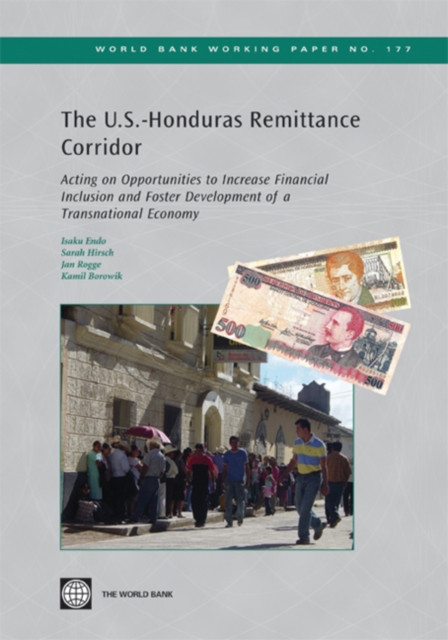
The U.S.-Honduras remittance corridor : acting on opportunities to increase financial inclusion and foster development of a transnational economy
This report on the U.S.- Honduras remittance corridor describes the remittance regulatory and market environment, financial inclusion strategies by financial institutions, transnational economic activities, and the impacts of remittances on the Honduran economy. Six areas provide the focus of this report: (i) regulatory reforms for the remittance market are urgent in order to improve clarity in regulations as well as to include money transfer companies in the regulatory framework; (ii) money service businesses will benefit from an examination of state regulation and their subsequent harmonization and coordination; (iii) rural areas need to improve distributive infrastructure to better reap the benefits of the remittance flows; (iv) financial education and awareness for Honduran migrant communities are critical components with the overall remittance flow equation; (v) the regulatory environment of remittance flows would be greatly enhanced through the promotion, inclusion, and expansion of proper identification; and (vi) public policies can be directed to building an environment for diaspora investments in the community and local business developments for exports to Honduran communities abroad.
eBook