
Catalogue Search | MBRL


Are you sure you want to remove the book from the shelf?

{{itemTitle}}
1,966
result(s) for
"Nails (Anatomy)"
Sort by:

Designer nails : create art at your fingertips
Offers step-by-step, illustrated instructions for fifty nail art designs, including geometric shapes, lace patterns, and animal prints, with advice on maintaining healthy nails and building a nail art tool kit for home use.
Book
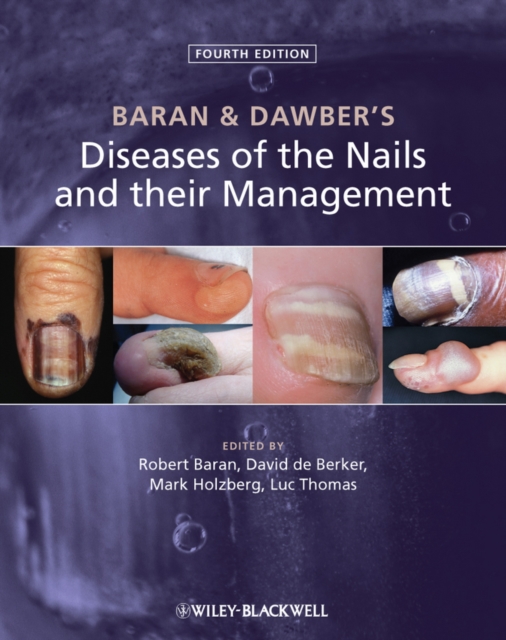
Baran & Dawber's diseases of the nails and their management
The human nail provides a complex structure that supports fine manipulation of objects while protecting the extremities. Diseases of the nail disrupt this function. They can cause pain and discomfort, cause disfigurement and are often unsightly with a profound effect on the sufferer's self confidence. Baran & Dawber's Diseases of the Nails and their Management has long been recognized as the preeminent authority on nail disease. New to this edition is a superb guide to differential diagnosis by color, shape and location within the nail unit to provide rapid clinical information on nail disorders. All thirteen chapters have been thoroughly updated.
eBook

Here we grow : the secrets of hair and nails
\"Provides comprehensive information on the role hair and nails play in the body science of humans and animals\"--Provided by the publisher.
Book

Leukonychia: What Can White Nails Tell Us?
Changes in nail color can provide important clues of underlying systemic and skin disease. In particular, white discoloration (leukonychia) has a high prevalence with a wide array of potential relevant causes, from simple manicure habits to life-threatening liver or kidney failure. Therefore, a reliable assessment of the patient with leukonychia is essential. In the past, two classifications for leukonychia have been presented. The morphological classifies the nail according to the distribution of the white lines: total, partial, transversal, and longitudinal leukonychia. Mees’ and Muehrcke’s lines are examples of transversal leukonychia, while Terry’s and Lindsay’s nails are examples of total and partial leukonychia. The anatomical classifies according to the structure responsible for the white color: the nail plate in true leukonychia, the nail bed in apparent leukonychia, and the surface only in pseudoleukonychia. In this review, both morphological and anatomical features have been combined in an algorithm that enables clinicians to approach leukonychia efficiently and effectively.
Journal Article

How do hair and nails grow?
\"Did you know that hair and nails are actually forms of skin? In this book, readers will learn this and many other intriguing facts about our nails and hair.\"-- Publisher's website.
BOOK

Long-pulsed nd: YAG laser treatment of nail psoriasis: clinical and ultrasonographic assessment
Nail psoriasis is a chronic, inflammatory condition which is difficult to treat, linked with greater psoriasis severity, and may be associated with anxiety and significant functional impairment of the quality of life. The 1064 nm Nd: YAG laser was reported to yield satisfactory results in the treatment of nail psoriasis.
The aim of the study was to assess the clinical and ultrasonographic efficacy of long-pulsed 1064 nm Nd: YAG laser in the treatment of fingernail psoriasis and compare its effect to control fingernails.
This intra-patient randomized controlled trial analyzed 86 fingernails collected from 13 patients suffering from cutaneous and nail psoriasis. The nails were randomized into two groups. Group A was treated with Nd: YAG laser once monthly for three sessions while group B served as control. Assessment took place at baseline, 1 and 3 months after the last treatment session. For scoring, the 32-points target NAPSI scoring systems was used. Additionally, two blinded dermatologists’ score of improvement, patients’ pain assessment by visual analogue score and ultrasonographic assessment were all performed.
At the end of follow up, the medians of tNAPSI score, plate definition, matrix thickness, bed thickness and bed vascularity decreased significantly in the Nd: YAG laser treated group in comparison to baseline (
p = 0.001
,
0.006
,
0.039
,
< 0.001
and
0.010
, respectively). While, there was a non-significant reduction in median tNAPSI score in the control group at last follow up, however, ultrasonography recorded a significant reduction in the medians of plate definition, bed thickness and vascularity (
p = 0.002
,
0.011
and
0.033
, respectively) from the baseline. Comparison of the Nd: YAG laser and the control groups showed no significant difference from baseline regarding the medians of tNAPSI, tNAPSI percentile improvement, pits count, blinded evaluation of photographs and ultrasonographic assessments.
In conclusion, Nd: YAG laser showed clinical and ultrasonographic improvement in fingernail psoriasis. Ultrasonography is a useful noninvasive tool in diagnosing and monitoring the clinical and even the subclinical changes in nail psoriasis. Nail psoriasis although difficult to treat, may show spontaneous improvement.
Journal Article


Associations of a Metal Mixture Measured in Multiple Biomarkers with IQ: Evidence from Italian Adolescents Living near Ferroalloy Industry
Research on the health effects of chemical mixtures has focused mainly on early life rather than adolescence, a potentially important developmental life stage.
We examined associations of a metal mixture with general cognition in a cross-sectional study of adolescents residing near ferromanganese industry, a source of airborne metals emissions.
We measured manganese (Mn), lead (Pb), copper (Cu), and chromium (Cr) in hair, blood, urine, nails, and saliva from 635 Italian adolescents 10-14 years of age. Full-scale, verbal, and performance intelligence quotient (FSIQ, VIQ, PIQ) scores were assessed using the Wechsler Intelligence Scale for Children-III. Multivariable linear regression and Bayesian kernel machine regression (BKMR) were used to estimate associations of the metal mixture with IQ. In secondary analyses, we used BKMR's hierarchical variable selection option to inform biomarker selection for Mn, Cu, and Cr.
Median metal concentrations were as follows: hair Mn,
; hair Cu,
; hair Cr,
; and blood Pb,
. Adjusted models revealed an inverted U-shaped association between hair Cu and VIQ, consistent with Cu as an essential nutrient that is neurotoxic in excess. At low levels of hair Cu (10th percentile,
), higher concentrations (90th percentiles) of the mixture of Mn, Pb, and Cr (
,
, and
, respectively) were associated with a 2.9 (95% CI:
,
)-point decrease in VIQ score, compared with median concentrations of the mixture. There was suggestive evidence of interaction between Mn and Cu. In secondary analyses, saliva Mn, hair Cu, and saliva Cr were selected as the biomarkers most strongly associated with VIQ score.
Higher adolescent levels of Mn, Pb, and Cr were associated with lower IQ scores, especially at low Cu levels. Findings also support further investigation into Cu as both beneficial and toxic for neurobehavioral outcomes. https://doi.org/10.1289/EHP6803.
Journal Article


DeepNAPSI multi-reader nail psoriasis prediction using deep learning
Nail psoriasis occurs in about every second psoriasis patient. Both, finger and toe nails can be affected and also severely destroyed. Furthermore, nail psoriasis is associated with a more severe course of the disease and the development of psoriatic arthritis. User independent quantification of nail psoriasis, however, is challenging due to the heterogeneous involvement of matrix and nail bed. For this purpose, the nail psoriasis severity index (NAPSI) has been developed. Experts grade pathological changes of each nail of the patient leading to a maximum score of 80 for all nails of the hands. Application in clinical practice, however, is not feasible due to the time-intensive manual grading process especially if more nails are involved. In this work we aimed to automatically quantify the modified NAPSI (mNAPSI) of patients using neuronal networks retrospectively. First, we performed photographs of the hands of patients with psoriasis, psoriatic arthritis, and rheumatoid arthritis. In a second step, we collected and annotated the mNAPSI scores of 1154 nail photos. Followingly, we extracted each nail automatically using an automatic key-point-detection system. The agreement among the three readers with a Cronbach’s alpha of 94% was very high. With the nail images individually available, we trained a transformer-based neural network (BEiT) to predict the mNAPSI score. The network reached a good performance with an area-under-receiver-operator-curve of 88% and an area-under precision-recall-curve (PR-AUC) of 63%. We could compare the results with the human annotations and achieved a very high positive Pearson correlation of 90% by aggregating the predictions of the network on the test set to the patient-level. Lastly, we provided open access to the whole system enabling the use of the mNAPSI in clinical practice.
Journal Article