
Catalogue Search | MBRL


Are you sure you want to remove the book from the shelf?

{{itemTitle}}
716,422
result(s) for
"Names"
Sort by:


A dictionary of first names
This Dictionary is part of the 'Oxford Reference Collection': using sustainable print-on-demand technology to make the acclaimed backlist of the Oxford Reference programme perennially available in hardback format. The fascinating and informative Dictionary of First Names covers over 6,000 names in common use in English, including the very newest names as well as traditional names. From Alice to Zanna and Adam to Zola this book will answer all your questions: it will tell you the age, origin, and meaning of the name, as well as how it has fared in terms of popularity, and who the famous fictional or historical bearers for the name have been. It covers alternative spellings, short forms and pet forms, and masculine and feminine forms, as well as help with pronunciation. The book includes extensive appendices covering names from languages including Scottish, Irish, French, German, Italian, Arabic, and Chinese names. Tables of the most popular names by year and by region are also included. From the traditional to the rare and unconventional, this book will tell you everything you need to know about names.
Book



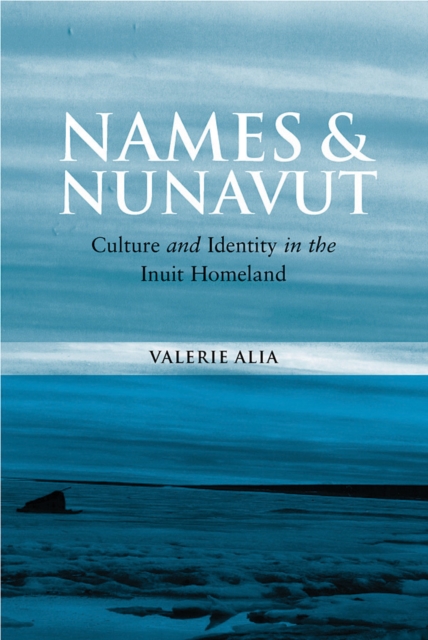
Names and Nunavut
On the surface, naming is simply a way to classify people and their environments. The premise of this study is that it is much more — a form of social control, a political activity, a key to identity maintenance and transformation. Governments legislate and regulate naming; people fight to take, keep, or change their names. A name change can indicate subjugation or liberation, depending on the circumstances. But it always signifies a change in power relations. Since the late 1970s, the author has looked at naming and renaming, cross-culturally and internationally, with particular attention to the effects of colonisation and liberation. The experience of Inuit in Canada is an example of both. Colonisation is only part of the Nunavut experience. Contrary to the dire predictions of cultural genocide theorists, Inuit culture — particularly traditional naming — has remained extremely strong, and is in the midst of a renaissance. Here is a ground-breaking study by the founder of the discipline of political onomastics.
eBook


IMA–CNMNC approved mineral symbols
Several text symbol lists for common rock-forming minerals have been published over the last 40 years, but no internationally agreed standard has yet been established. This contribution presents the first International Mineralogical Association (IMA) Commission on New Minerals, Nomenclature and Classification (CNMNC) approved collection of 5744 mineral name abbreviations by combining four methods of nomenclature based on the Kretz symbol approach. The collection incorporates 991 previously defined abbreviations for mineral groups and species and presents a further 4753 new symbols that cover all currently listed IMA minerals. Adopting IMA–CNMNC approved symbols is considered a necessary step in standardising abbreviations by employing a system compatible with that used for symbolising the chemical elements.
Journal Article