
Catalogue Search | MBRL


Are you sure you want to remove the book from the shelf?

{{itemTitle}}
5,294
result(s) for
"Namibia"
Sort by:

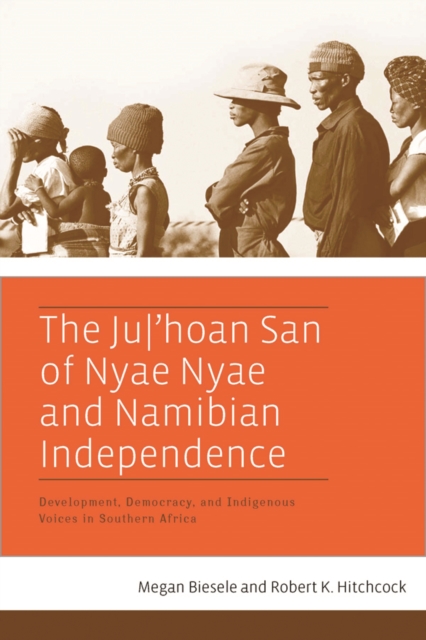
The Ju/'hoan San of Nyae Nyae and Namibian Independence
The Ju/'hoan San, or Ju/'hoansi, of Namibia and Botswana are perhaps the most fully described indigenous people in all of anthropology. This is the story of how this group of former hunter-gatherers, speaking an exotic click language, formed a grassroots movement that led them to become a dynamic part of the new nation that grew from the ashes of apartheid South West Africa. While coverage of this group in the writings of Richard Lee, Lorna Marshall, Elizabeth Marshall Thomas, and films by John Marshall includes extensive information on their traditional ways of life, this book continues the story as it has unfolded since 1990. Peopled with accounts of and from contemporary Ju>/'hoan people, the book gives newly-literate Ju/'hoansi the chance to address the world with their own voices. In doing so, the images and myths of the Ju/'hoan and other San (previously called \"Bushmen\") as either noble savages or helpless victims are discredited. This important book demonstrates the responsiveness of current anthropological advocacy to the aspirations of one of the best-known indigenous societies.
eBook


A Decade of Namibia
The terms in office of Namibia's president Pohamba are the focus of this political and economic history for the years 2004 to 2015. It summarizes the developments, which motivated to award him the Mo Ibrahim Prize for good governance.
eBook


Traders and Trade in Colonial Ovamboland, 1925-1990
Taking the history of trade and of traders as its subject matter, this book offers the first economic history of northern Namibia during the twentieth century. It traces Namibia's way from a rural, largely self-relying society into a globalised economy of consumption. This transformation built on colonial economic activities, but it was crucially shaped by local traders, a new social elite emerging during the 1950s and 1960s. Becoming a trader was one of the few possibilities for black Namibians to gain monetary income at home. It was a pathway out of migrant labour, to new status in the local society and often to prosperity. Politically, most traders occupied a middle ground: content of their own social position, but intent on political emancipation from colonial rule. Economically, their energy and business acumen transformed northern Namibia into an increasingly urban consumer society. The development path they chose, however, depended too much on the colonial reserve economy to remain sustainable after 1990. Their legacy still shapes spatial and social structures in northern Namibia, but most traders' businesses have today closed down. By telling the history of the rise and decline of traders and trade in northern Namibia, this book is thus also a reflection on the conundrums of economic development under conditions of structural inequality.
eBook

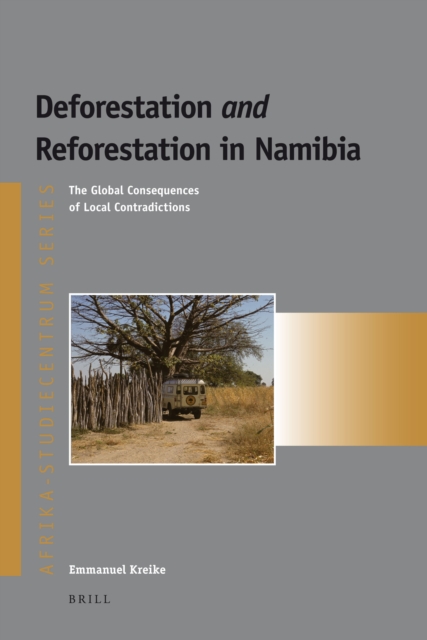
Deforestation and Reforestation in Namibia
North-central Namibia's history demonstrates how global models of environmental change give rise to contradictory interpretations that are not simply misreadings of the same process. The area experienced both dramatic deforestation and reforestation, suggesting the need for new and pluralistic approaches.
eBook


Mukwahepo
In 1963 Mukwahepo left her home in Namibia and followed her fiance across the border into Angola. They survived hunger and war and eventually made their way to Tanzania. There, Mukwahepo became the first woman to undergo military training with SWAPO. For nine years she was the only woman in SWAPO's Kongwa camp. She was then thrust into a more traditional women's role - taking care of children in the SWAPO camps in Zambia and Angola. At Independence, Mukwahepo returned to Namibia with five children. One by one their parents came to reclaim them, until she was left alone. Already in her fifties, and with little education, Mukwahepo could not get employment. She survived on handouts until the Government introduced a pension and other benefits for veterans. Through a series of interviews, Ellen Ndeshi Namhila recorded and translated Mukwahepo's remarkable story. This book preserves the oral history of not only the 'dominant male voice' among the colonised people of Namibia, but brings to light the hidden voice, the untold and forgotten story of an ordinary woman and the outstanding role she played during the struggle.
eBook