
Catalogue Search | MBRL


Are you sure you want to remove the book from the shelf?

{{itemTitle}}
15,885
result(s) for
"Napoleon"
Sort by:

Napoleon Bonaparte—A Possible Case of Trench Fever
In 1789, Napoleon Bonaparte reported having a recurrent febrile illness that initially subsided for 4 days and then had multiple relapses of similar duration. A speculative diagnosis of trench fever would be supported by poor hygiene conditions, prolonged exposure to cold, and the presence of lice in Napoleon's barracks environment.
Journal Article

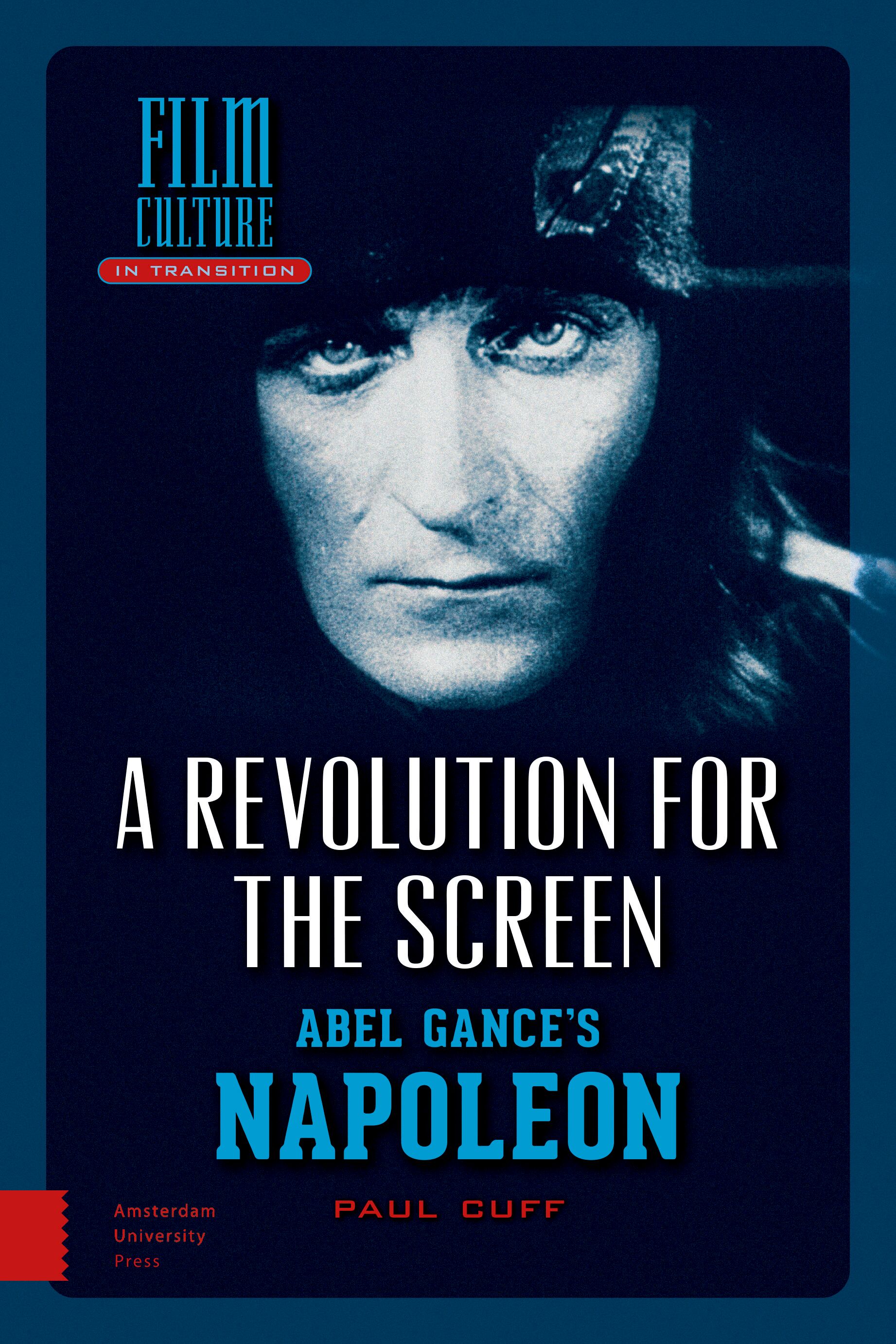
A Revolution for the Screen
Abel Gance's silent masterpiece,Napoleon, was given a limited run on its debut in 1927, but soon afterwards distributors in France and America, unwilling to deal with its nine-hour running time, subjected it to savage cuts-with devastating results for the movie and for film history. The struggle across ensuing decades to restore and reintegrate Gance's film has formed a backdrop to an array of formal, contextual, and ideological battles. In this book, Paul Cuff takes account of those battles and challenges received opinion on Gance's view of both his film and its subject.
eBook


The Napoleonic empire in Italy, 1796-1814 : cultural imperialism in a European context?
In The Napoleonic Empire in Italy, 1796-1814 , Michael Broers brings to bear on the Napoleonic Empire many of the conceptual tools deployed in the study of the great extra-European colonial empires. Cultural imperialism and acculturation find close counterparts in many of the policies and attitudes of French administrators in their Italian provinces, explored here from the rich archival sources of the Parisian and Italian archives, long neglected by scholars. Broers repositions the context in which the Napoleonic empire can be studied, and reconfigures the political and historical geography of Italy, in the century before its Unification in 1859. The Napoleonic Empire in Italy marks a fresh departure in the study of both modern Italy and Napoleonic Europe, based on primary sources.
eBook

The hundred days
\"Napoleon's return to the throne in Paris, as imagined by the incomparable Joseph Roth. Set during the infamous period between Napoleon's escape from Elba and his second defeat and recapture at Waterloo, The Hundred Days describes the great Emperor's last shot at glory and his final transformation from a godlike ruler into an ordinary, humble man. Roth frames the novel through the perspectives of Napoleon himself as well as his devoted Corsican laundress Angelina, to show the demise of their seemingly intertwined fates. The Hundred Days is enriched with Roth's signature lyrical elegance and haunting atmospheric details\" -- Provided by publisher.
BOOK

Forging Napoleon's Grande Armée : motivation, military culture, and masculinity in the French army, 1800-1808
The men who fought in Napoleons Grande Arme built a new empire that changed the world. Remarkably, the same men raised arms during the French Revolution for libert, galit, and fraternit. In just over a decade, these freedom fighters, who had once struggled to overthrow tyrants, rallied to the side of a man who wanted to dominate Europe. What was behind this drastic change of heart? In this ground-breaking study, Michael J. Hughes shows how Napoleonic military culture shaped the motivation of Napoleons soldiers. Relying on extensive archival research and blending cultural and military history, Hughes demonstrates that the Napoleonic regime incorporated elements from both the Old Regime and French Revolutionary military culture to craft a new military culture, characterized by loyalty to both Napoleon and the preservation of French hegemony in Europe. Underscoring this new, hybrid military culture were five sources of motivation: honor, patriotism, a martial and virile masculinity, devotion to Napoleon, and coercion. Forging Napoleon's Grande Arme vividly illustrates how this many-pronged culture gave Napoleons soldiers reasons to fight.
eBook


Napoleon and the \u2028Operational Art of War
In Napoleon and the Operational Art of War, the leading scholars of Napoleonic military history provide the most authoritative analysis of Napoleon's battlefield success and ultimate failure in a work that features the very best of campaign military history.
eBook