
Catalogue Search | MBRL


Are you sure you want to remove the book from the shelf?

{{itemTitle}}
495
result(s) for
"Narrative inquiry (Research method)"
Sort by:

Narrative constellations : exploring lived experience in education
Narrative research in contemporary times can free social scientists from the rhetorical forms (Emihovich, 1995) that alienate children and families from their own traditions. Through the use of narrative we are able to recognise the power of subjectivity in allowing open dialogue and co-construction of meaning. Becoming comfortable with narrative research also means accepting ideas that the world has no fixed rules for assigning behaviour (Emihovich, 1995). This means that open dialogue is required to build consensus around shared meaning and to ensure the inclusion of multiple voices. The book begins with a theoretical overview of narrative genre before focusing on narrative constellations. Three constellations are then shared with the reader. The final chapter provides ideas about the future of narrative constellation in research and the impact constellations can have for future policy and practice. It is hoped that the reader develops a better understanding of narrative ways and begins to see the potential of narrative constellations in the research genre. Dr Susanne Garvis is a professor of child and youth studies at the University of Gothenburg, Sweden. She has previously worked in Australian universities and is an adjunct academic with Griffith University, Australia. Professor Garvis has experience with narrative approaches in early childhood education and care. She has researched the lives of teachers, families and children. She is particularly interested in representations of lived experience and the power of stories in research.
Book

The right to research : historical narratives by refugee and Global South researchers
Refugees and displaced people rarely figure as historical actors, and almost never as historical narrators and historians. The Right to Research offers a critical reflection on what history means, who narrates it, and what happens when those long excluded from authorship bring their knowledge and perspectives to bear.
eBook

Using narrative inquiry as a research method : an introduction to critical event narrative analysis in research, teaching and professional practice
\"This fully updated new edition provides the reader with the ideal introduction to narrative inquiry. Guiding the reader through a full and accessible description of the theory as well as how to begin using the narrative inquiry method, it presents a selection of case studies of research on quality in higher education, internationalisation and quality in cross-cultural contexts. Providing a rich framework through which researchers can investigate the ways humans experience the world depicted through their stories, this book is the ideal introduction to anyone looking to learn more about the theory as well as how to undertake research using narrative inquiry\"-- Provided by publisher.
BOOK
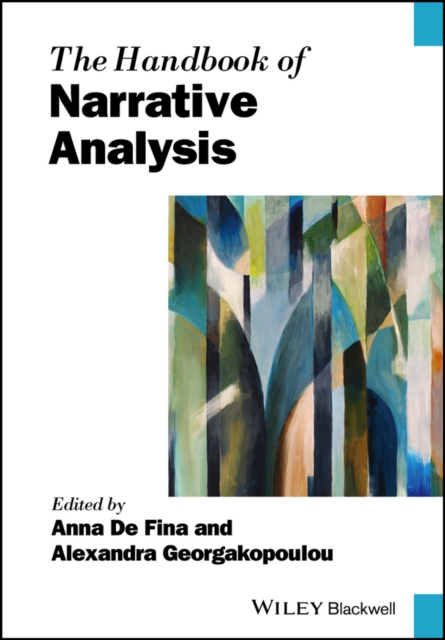
The handbook of narrative analysis
Featuring contributions from leading scholars in the field, The Handbook of Narrative Analysis is the first comprehensive collection of sociolinguistic scholarship on narrative analysis to be published.
* Organized thematically to provide an accessible guide for how to engage with narrative without prescribing a rigid analytic framework
* Represents established modes of narrative analysis juxtaposed with innovative new methods for conducting narrative research
* Includes coverage of the latest advances in narrative analysis, from work on social media to small stories research
* Introduces and exemplifies a practice-based approach to narrative analysis that separates narrative from text so as to broaden the field beyond the printed page
eBook


Contextualising Narrative Inquiry
Narrative inquiry is growing in popularity as a research methodology in the social sciences, medicine and the humanities. In narrative inquiry, the transparency of interactions between researcher and research participants, together with rich, contextual descriptions, help to shape and structure research texts rendering them engaging and readable.
Contextualising Narrative Inquiry argues that all researchers should foreground the importance of the context in which research takes place and develop methodological approaches that are grounded in their local contexts. To do so, they need to pay attention to how knowledge is constructed, shared and understood in those contexts. This is particularly important when contexts have been subjugated historically through colonialism and when local, indigenous ways of knowing have been ignored or dismissed.
The contributors to this edited collection have all used narrative inquiry for a range of topics and in a range of contexts, including:
Leadership styles of Asian women
The Deaf community in the UK
Voluntary celibacy in Malta
Administrators in Ghanaian higher education
Multiculturalism in primary education in Cyprus
Teacher identities in Hong Kong
The reflective practitioner in higher education in Malaysia.
The diversity of the topics illuminates the potential for narrative inquiry to be used to investigate a broad range of issues in many contexts by people with a wide range of backgrounds. A common thread throughout is a reflexive discussion of how each contributor used narrative inquiry as a methodological approach; highlighting not only its affordances, but also the complexities of using it in specific cultural, social and historical contexts.
eBook


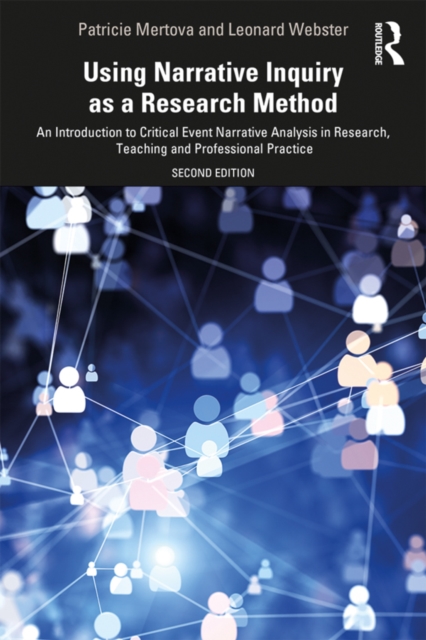
Using Narrative Inquiry as a Research Method
Using Narrative Inquiry as a Research Method is the ideal introduction to a growing field of study. A full and accessible guide that covers the theory and practical applications of this qualitative method, it provides researchers with a rich framework through which they can investigate the ways people experience the world depicted through their stories. Looking at how this method can effectively be applied in a range of contexts, it demonstrates the value and utility of employing narrative as a research tool in a range of teaching and learning settings.
Connecting with the broader academic debate on the value of narrative as an alternative or addition to quantitative and other qualitative methods and updated to reflect changes in the field, this book
explores how to use narrative inquiry and gives tested and applied examples;
builds on theory to consider practical applications;
explores the narrative cross-boundaries between research and practice; and
presents a selection of case studies of research on quality in higher education, internationalisation and quality in cross-cultural contexts.
Using Narrative Inquiry as a Research Method provides the ideal grounding for all students and researchers looking to learn more about narrative inquiry or use this method within their research.
eBook