
Catalogue Search | MBRL


Are you sure you want to remove the book from the shelf?

{{itemTitle}}
3,627
result(s) for
"Nasser, Gamal Abdel"
Sort by:

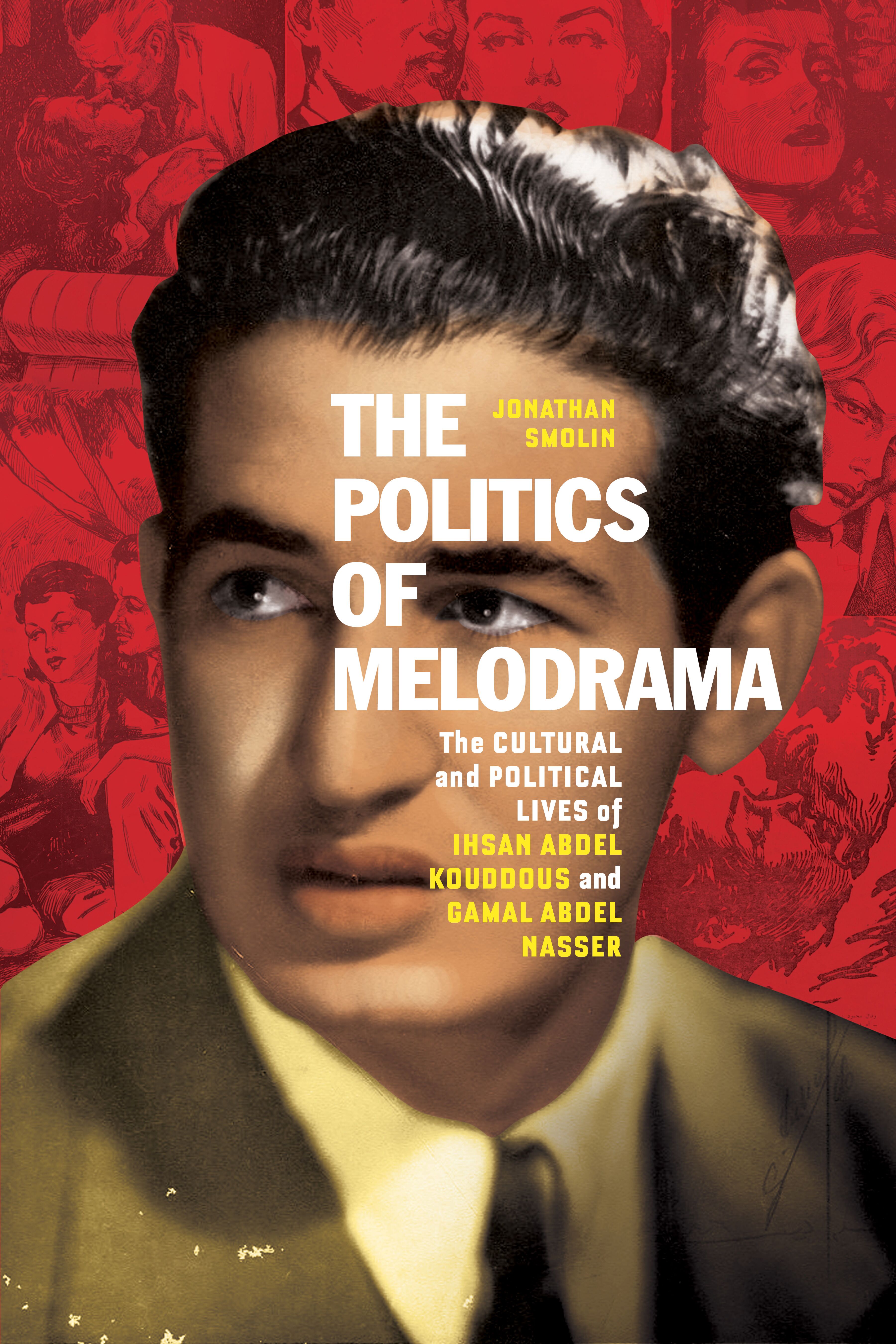
The Politics of Melodrama
Ihsan Abdel Kouddous (1919–1990) is the most popular and prolific writer of Arabic fiction in the twentieth century. The Politics of Melodrama is the first book to take on this giant of Arabic fiction and consider both his outsized cultural influence and consequential position in Egyptian politics. Jonathan Smolin frames the work of Abdel Kouddous not only as romantic melodrama, but as an entirely new model of Arabic fiction as dissent—contesting the fate of the 1952 revolution, condemning Nasser's betrayal of democracy, and grappling with depths of guilt at what Egypt had become. Smolin reveals the surprisingly close relationship between the famed writer and Nasser. He offers a new reading of fiction during the Nasser era that inserts the importance of non-elite culture in the history of the period and reevaluates the production of Nasserism. Unearthing Nasser's repeated interventions both to shape the work of Abdel Kouddous and to discipline him personally, this book demonstrates how the media and popular fiction became spaces of negotiation between the intellectual and the state, contesting Nasser and his politics during a period that has been widely assumed to be devoid of dissent.
eBook

We are your soldiers : how Egypt's Gamal Abdel Nasser remade the Arab world
A searing exploration of authoritarianism in the Middle East through the legacy of Gamal Abdel Nasser's reign in Cold War-era Egypt.
BOOK

Nasser's Gamble
Nasser's Gambledraws on declassified documents from six countries and original material in Arabic, German, Hebrew, and Russian to present a new understanding of Egypt's disastrous five-year intervention in Yemen, which Egyptian president Gamal Abdel Nasser later referred to as \"my Vietnam.\" Jesse Ferris argues that Nasser's attempt to export the Egyptian revolution to Yemen played a decisive role in destabilizing Egypt's relations with the Cold War powers, tarnishing its image in the Arab world, ruining its economy, and driving its rulers to instigate the fatal series of missteps that led to war with Israel in 1967.
Viewing the Six Day War as an unintended consequence of the Saudi-Egyptian struggle over Yemen, Ferris demonstrates that the most important Cold War conflict in the Middle East was not the clash between Israel and its neighbors. It was the inter-Arab struggle between monarchies and republics over power and legitimacy. Egypt's defeat in the \"Arab Cold War\" set the stage for the rise of Saudi Arabia and political Islam.
Bold and provocative,Nasser's Gamblebrings to life a critical phase in the modern history of the Middle East. Its compelling analysis of Egypt's fall from power in the 1960s offers new insights into the decline of Arab nationalism, exposing the deep historical roots of the Arab Spring of 2011.
eBook

Making the Arab world : Nasser, Qutb, and the clash that shaped the Middle East
How the conflict between political Islamists and secular nationalists has shaped the history of the modern Middle East In 2013, just two years after the popular overthrow of Hosni Mubarak, the Egyptian military ousted the country's first democratically elected president--Mohamed Morsi of the Muslim Brotherhood--and subsequently led a brutal repression of the Islamist group. These bloody events echoed an older political rift in Egypt and the Middle East: the splitting of nationalists and Islamists during the rule of Egyptian president and Arab nationalist leader Gamal Abdel Nasser. In Making the Arab World, Fawaz Gerges, one of the world's leading authorities on the Middle East, tells how the clash between pan-Arab nationalism and pan-Islamism has shaped the history of the region from the 1920s to the present. Gerges tells this story through an unprecedented dual biography of Nasser and another of the twentieth-century Arab world's most influential figures--Sayyid Qutb, a leading member of the Muslim Brotherhood and the father of many branches of radical political Islam. Their deeply intertwined lives embody and dramatize the divide between Arabism and Islamism. Yet, as Gerges shows, beyond the ideological and existential rhetoric, this is a struggle over the state, its role, and its power. Based on a decade of research, including in-depth interviews with many leading figures in the story, Making the Arab World is essential reading for anyone who wants to understand the roots of the turmoil engulfing the Middle East, from civil wars to the rise of Al-Qaeda and ISIS.
Book

Rewriting Histories: The Experiences of Pioneering Egyptian Women Architects in the Socio-Political Context of the Nasser Era
The history of modern architecture has particularly emphasized the roles of male architects with little mention of women architects. Since women's contributions have often been overlooked, feminist scholars worldwide have aimed to showcase women's history in the architectural profession over the past several years. However, there is still a lack of scholarship on the historical experiences and contributions of women architects in the Middle East, particularly Egypt. This research aims to address this gap in historiography by focusing on the first women architects in Egypt during the Nasser era. As such, the study utilizes archival sources and examines various architecture and engineering magazines and state reports published during the mid-20th century. Our analysis reveals how early architectural pioneers such as Anjil Tawfik, Amina Maher, Zakeya Shafi, and Sawsan el-Qusbi faced considerable barriers related to societal norms and educational limitations. We argue that the idealized image of womanhood was a strategy employed by men to maintain the discipline as androcentric. In contrast, Nasser's regime, which was concerned with Egypt's modernization and development, enacted progressive policies to promote gender equality. The policies facilitated the entry of women into different fields including engineering and architecture. We examine the complex interplay between state feminism and persistent societal norms, noting how Abdel Nasser redefined the ideal image of women to one that balanced professional work with familial responsibilities. We explore the career trajectories of early pioneering women architects, arguing that al-taklif, the employment order mandated by Abdel Nasser in 1955, was not merely a work policy but also shaped the ideal image of professional life for women architects. We discuss women architects' strategies to carve out a space for themselves in architectural practice. Finally, we address the lack of recognition for women architects' work with a focus on Zakeya Shafi and Amina Maher, two pioneering Egyptian women architects.
Journal Article


An incurable past : Nasser's Egypt then and now
Mid-century Egypt seems to shift its shape in light of ordinary peoples’ memories. In An Incurable Past , Mériam Belli examines collective memory, oral histories, and everyday communications to reveal not just the history of mid-twentieth-century Egypt but also the ways in which ordinary people experience and remember the past. Using official archives, government publications, press reportage, fiction, textbooks, cinema, art, and public rituals, Belli constructs a ground-breaking theoretical framework of historical utterances which provokes questions about the relationship between remembrance and reality. Belli argues that such personal testimonies and public representations allow us a deeper understanding of Egypt’s many sociocultural layers in the 1950s and 1960s. She spotlights three topics of vernacular expression in modern Egypt: education, the anti-colonial Limby Festival, and the 1968 apparition of the Virgin Mary at a Coptic Orthodox Church in Cairo. Linked by the mid-century shift from communal life to an industrial and individuated society, these expressions also disclose the contradictory influence of ideologically homogenizing state policies.
Examining history not as it was but as it is remembered, this book contextualizes the classist and deeply disappointing post-Nasserist period that has inspired today’s Egyptian revolutionaries.
eBook

The Nasser factor: Anglo-Egyptian relations and Yemen/Aden crisis 1962-65
British overnments' relationships with President Nasser's Egypt were extremely difficult in the 1950s and 1960s due to conflicting regional interests. This article explores the crisis in Anglo-Egyptian relations over the Yemen Civil War and the insurgency in the Federation of South Arabia focusing on the period between 1962 and 1965. It demonstrates how British attempts to frustrate Egypt's intervention in the Yemen eventually led to the unleashing of an Egyptian backed insurgency in the Federation and accelerated the decision of Britain to withdraw from its Aden base and the Federation of South Arabia.
Journal Article
Nasser's Dilemma: Egypt's Relations with the United States and Israel, 1967-69
The article examines the American political efforts to bring about an agreement between Israel and Egypt between 1967 and 1969 and analyses the reasons for their failure. But it does not focus exclusively on the Americans; it also outlines the alternatives for Egyptian action during the period in question and looks at the political and military steps taken by Egypt's president, Gamal Abdel Nasser, vis-à-vis Israel and the United States. The main conclusion is that despite Egypt's dependence on the Soviet Union for economic aid and the rebuilding of the decimated Egyptian army, Nasser knew that the only route to a political process to regain Sinai ran through the United States. His diplomatic efforts were all derived from this insight. At the same time, the Egyptian president's attempts to exploit American pressure to his benefit, as he had done in 1957, was undercut by his overestimation of his bargaining chips, a mistake that was one factor in the collapse of the efforts to reach a diplomatic agreement in the region.
Journal Article