
Catalogue Search | MBRL


Are you sure you want to remove the book from the shelf?

{{itemTitle}}
154
result(s) for
"Nation-building Middle East."
Sort by:

Fragile politics : weak states in the greater Middle East
\"The 2011 Arab uprisings precipitated the relatively quick collapse of a number of Middle Eastern states once perceived as invincible. The Tunisian and Egyptian states succumbed to revolutionary upheavals early on, followed by that of Qadhafi's Libya. Yemen's President Saleh was also eventually forced to give up power. A bloody civil war continues to rage in Syria. These uprisings highlighted weaknesses in the capacity and legitimacy of states across the Arab Middle East. This book provides a comprehensive study of state weakness-or of 'weak states'-across the Greater Middle East. No other book examines the subject of weak states in the Middle East. Fragile Politics begins with laying the theoretical framework for the study of weak states, examining the theoretical controversies surrounding the topic, the causes and characteristics of weak states, and their consequences for the Middle East. It then looks at a series of case studies, examining various themes within the study of weak states in relation to each case study.\" -- Publisher's description
Book

War and state building in the Middle East
War and State Building in the Middle East addresses the strengths and weaknesses of the authoritarian-regime governments commonly found in the Middle East, particularly among oil-rich countries. In this region, war has interacted with processes of state making in ways that fundamentally differ from the European experience. In short, unlike in Europe, wars do not make states in the Middle East; they destroy them.
According to economic theory, most oil-rich countries are rentier states; that is, they rely upon the extraction of a natural resource to generate revenue and authority for the central government. As a result, there is little reliance upon domestic taxation and a general lack of political accountability and transparency.
By examining how such governments wage war, Rolf Schwarz turns the prevailing wisdom of modern state building on its head. He closely analyzes the real-world experiences of the United Arab Emirates, Jordan, and Iraq to show how rentierism leads to internal weaknesses when it comes to governing. His comparative approach allows him to demonstrate how varying levels of reliance upon external resource rents are reflected in the structure of the regime.
By highlighting the perils of funding wars through the sale of natural resources, fighting with imported weaponry, and accepting peace settlements negotiated and guaranteed by foreign powers, Schwarz offers provocative insights into post-conflict peace building, state failure, and the potential for democratic rule in the region.
eBook

State-building in the Middle East and North Africa : one hundred years of nationalism, religion and politics
Why have state-building projects across the MENA region proven to be so difficult for so long? Following the end of the Ottoman Empire in the early 1920s, the countries of the region began a violent and divisive process of state formation. But a century later, state-building remains inconclusive. This book traces the emergence and evolution of state-building across the MENA region and identifies the main factors that impeded its success: the slow end of the Ottoman Empire; the experience of colonialism; and the rise of nationalistic and religious movements. The authors reveal the ways in which the post-colonial state proved itself authoritarian and formed on the model of the colonial state. They also identify the nationalist and Islamist movements that competed for political leadership across the nascent systems, enabling the military to establish a grip on the security apparatus and national economies. Finally, in the context of the Arab Spring and its conflict-filled aftermath, this book shows how external powers reasserted their interventionism. In outlining the reasons why regional states remained hollow and devoid of legitimacy, each of the contributors shows that recent conflicts and crises are deeply connected to the foundational period of one century ago.
Book
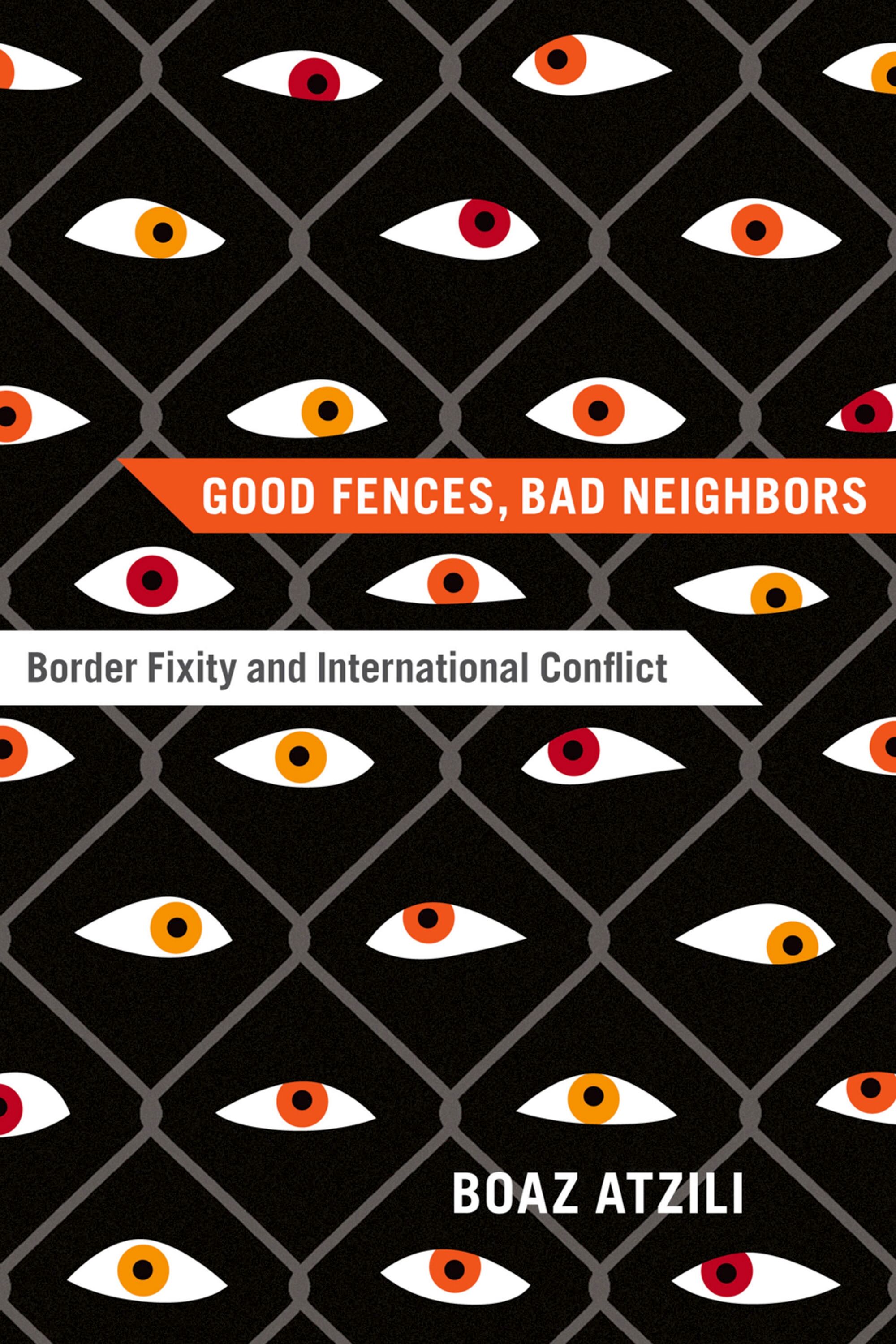
Good fences, bad neighbors
Border fixity—the proscription of foreign conquest and the annexation of homeland territory—has, since World War II, become a powerful norm in world politics. This development has been said to increase stability and peace in international relations. Yet, in a world in which it is unacceptable to challenge international borders by force, sociopolitically weak states remain a significant source of widespread conflict, war, and instability.
In this book, Boaz Atzili argues that the process of state building has long been influenced by external territorial pressures and competition, with the absence of border fixity contributing to the evolution of strong states—and its presence to the survival of weak ones. What results from this norm, he argues, are conditions that make internal conflict and the spillover of interstate war more likely. Using a comparison of historical and contemporary case studies, Atzili sheds light on the relationship between state weakness and conflict. His argument that under some circumstances an international norm that was established to preserve the peace may actually create conditions that are ripe for war is sure to generate debate and shed light on the dynamics of continuing conflict in the twenty-first century.
eBook


Strike Action and Nation Building
Strike-action has long been a notable phenomenon in Israeli society, despite forces that have weakened its recurrence, such as the Arab-Jewish conflict, the decline of organized labor, and the increasing precariousness of employment. While the impact of strikes was not always immense, they are deeply rooted in Israel's past during the Ottoman Empire and Mandate Palestine. Workers persist in using them for material improvement and to gain power in both the private and public sectors, reproducing a vibrant social practice whose codes have withstood the test of time. This book unravels the trajectory of the strikes as a rich source for the social-historical analysis of an otherwise nation-oriented and highly politicized history.
eBook

NATION BUILDING THROUGH FOREIGN INTERVENTION
This study uses discontinuities in U.S. strategies employed during the Vietnam War to estimate their causal impacts. It identifies the effects of bombing by exploiting rounding thresholds in an algorithm used to target air strikes. Bombing increased the military and political activities of the communist insurgency, weakened local governance, and reduced noncommunist civic engagement. The study also exploits a spatial discontinuity across neighboring military regions that pursued different counterinsurgency strategies. A strategy emphasizing overwhelming firepower plausibly increased insurgent attacks and worsened attitudes toward the U.S. and South Vietnamese government, relative to a more hearts-and-minds-oriented approach.
Journal Article

Memory, Institutions, and the Domestic Politics of South Korean–Japanese Relations
How does collective memory shape politics in the domestic and international spheres? I argue that collective memory—an intersubjective understanding of the past—has no inherent meaning and its salience is entirely contextual. What it means politically depends on the historical trajectory through which it came to form and the political exigency for which it is mobilized in the present. I propose three strategies by which social actors mobilize collective memory: framing—negotiating how the past can be interpreted; accrediting—redefining which narrators are authorized to speak; and binding—enforcing the narrative bounds to which narrators must conform. Using this framework, I reassess the failure of South Korea–Japan reconciliation and find that it has as much to do with the mobilization of collective colonial memory in South Korea over the course of its democratization as with Japanese impenitence. Anti-Japanese memory reflects continued domestic political contestation about how South Korea remembers and identifies itself.
Journal Article

Spoils of Truce
InSpoils of Truce, Reinoud Leenders documents the extensive corruption that accompanied the reconstruction of Lebanon after the end of a decade and a half of civil war. With the signing of the Ta'if peace accord in 1989, the rebuilding of the country's shattered physical infrastructure and the establishment of a functioning state apparatus became critical demands. Despite the urgent needs of its citizens, however, graft was rampant. Leenders describes the extent and nature of this corruption in key sectors of the Lebanese economy and government, including transportation, health care, energy, natural resources, construction, and social assistance programs.
Exploring in detail how corruption implicated senior policymakers and high-ranking public servants, Leenders offers a clear-eyed perspective on state institutions in the developing world. He also addresses the overriding role of the Syrian leadership's interests in Lebanon and in particular its manipulation of the country's internal differences. His qualitative and disaggregated approach to dissecting the politics of creating and reshaping state institutions complements the more typical quantitative methods used in the study of corruption. More broadly,Spoils of Trucewill be uncomfortable reading for those who insist that power-sharing strategies in conflict management and resolution provide some sort of panacea for divided societies hoping to recover from armed conflict.
eBook

A Slow Reckoning
A Slow Reckoning examines the
Soviet Union's and the Afghan communists' views of and policies
toward Islam and Islamism during the Soviet-Afghan War
(1979-1989). As Vassily Klimentov demonstrates, the Soviet
and communist Afghan disregard for Islam was telling of the overall
communist approach to reforming Afghanistan and helps explain the
failure of their modernization project.
A Slow Reckoning reveals how during most of the
conflict Babrak Karmal, the ruler installed by the Soviets,
instrumentalized Islam in support of his rule while retaining a
Marxist-Leninist platform. Similarly, the Soviets at all levels
failed to give Islam its due importance as communist ideology and
military considerations dominated their decision making. This
approach to Islam only changed after Mikhail Gorbachev replaced
Karmal by Mohammad Najibullah and prepared to withdraw Soviet
forces. Discarding Marxism-Leninism for Islam proved the correct
approach, but it came too late to salvage the Soviet
nation-building project.
A Slow Reckoning also shows how Soviet leaders only
started seriously paying attention to an Islamist threat from
Afghanistan to Central Asia after 1986. While the Soviets had
concerns related to Islamism in 1979, only the KGB believed the
threat to be potent. The Soviet elites never fully conceptualized
Islamism, continuing to see it as an ideology the United States,
Iran, or Pakistan could instrumentalize at will. They believed the
Islamists had little agency and that their retrograde ideology
could not find massive appeal among progressive Soviet Muslims. In
this, they were only partly right.
eBook