
Catalogue Search | MBRL


Are you sure you want to remove the book from the shelf?

{{itemTitle}}
245
result(s) for
"National Association for the Advancement of Colored People"
Sort by:


NAACP Youth and the Fight for Black Freedom, 1936–1965
Historical studies of black youth activism have until now focused almost exclusively on the activities of the Congress of Racial Equality (CORE) and the Student Nonviolent Coordinating Committee (SNCC). However, the NAACP youth councils and college chapters predate both of those organizations. They initiated grassroots organizing efforts and nonviolent direct-action tactics as early as the 1930s and, in doing so, made significant contributions to the struggle for racial equality in the United States. This deeply researched book breaks new ground in an important and compelling area of study. Thomas Bynum carefully examines the activism of the NAACP youth and effectively refutes the perception of the NAACP as working strictly through the courts. His research illuminates the many direct-action activities undertaken by the young people of the NAACP — activities that helped precipitate the breakdown of racial discrimination and segregation in America. Beginning with the formal organization of the NAACP youth movement under Juanita Jackson, the author traces the group’s activities from their early anti-lynching demonstrations through their post–World War II “withholding patronage” campaigns to their participation in the sit-in protests of the 1960s. He also explores the evolution of the youth councils and college chapters, including their sometime rocky relationship with the national office, and shows how these groups actually provided a framework for the emergence of youth activism within CORE and SNCC. The author provides a comprehensive account of the generational struggle for racial equality, capturing the successes, failures, and challenges the NAACP youth groups experienced at the national, state, and local levels. He firmly establishes the vital role they played in the history of the civil rights movement in the United States and in the burgeoning tradition of youth activism in the postwar decades.
eBook

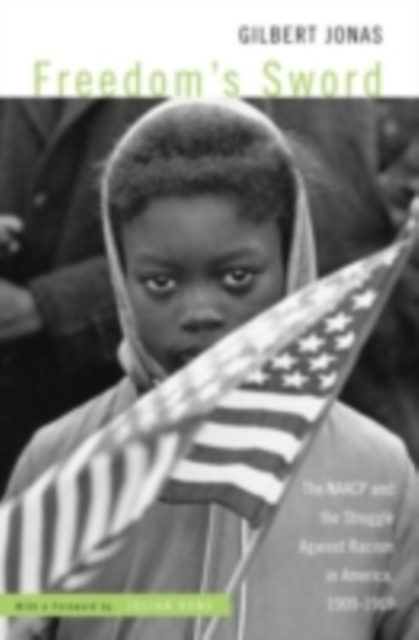
Freedom's Sword
Freedom's Sword is the first history to detail the remarkable, lasting achievements of the NAACP's first sixty years. From its pivotal role in overturning the Jim Crow laws in the South to its twenty-year court campaign that culminated with Brown v. the Board of Education, the NAACP has been at the forefront of the struggle against American racism. Gilbert Jonas, a fifty-year veteran of the organization, tracks America's political and social landscape period by period, as the NAACP grows to 400,000 members and is recognized by both blacks and whites as the leading force for social justice.
Jonas recounts the historic combined efforts of ordinary citizens and black leaders such as W.E.B. Dubois, James Weldon Johnson, and Thurgood Marshall to root out white-only political primaries, separate schools, and segregated city buses. Freedom's Sword is a vivid and passionately written account of the single most influential secular organization in black America.
‘For many Barrack Obama represents the fulfilment of the ideal we call the American Dream and indeed the embodiment of the work of the NAACP … This first hand insider view gives a comprehensive account of the personalities and politics of the movement and the relationship between organisation and the leadership … Freedom’s Sword is an important book and deserves a place in our libraries both for its detail on the NAACP and for our understanding of the civil rights movement.’ – SATH History Teaching Review
Gilbert Jonas is a civil rights activist and journalist who has worked with the NAACP for over fifty years.
eBook


Borders of Equality
As a border city Baltimore made an ideal arena to push for
change during the civil rights movement. It was a city in which all
forms of segregation and racism appeared vulnerable to attack by
the National Association for the Advancement of Colored People's
methods. If successful in Baltimore, the rest of the nation might
follow with progressive and integrationist reforms. The Baltimore
branch of the NAACP was one of the first chapters in the nation and
was the largest branch in the nation by 1946. The branch undertook
various forms of civil rights activity from 1914 through the 1940s
that later were mainstays of the 1960s movement. Nonviolent
protest, youth activism, economic boycotts, marches on state
capitols, campaigns for voter registration, and pursuit of
anti-lynching cases all had test runs.
Borders
of Equality
Brown
eBook

The voting rights war : the NAACP and the ongoing struggle for justice
\"The Voting Rights War tells the story of the ongoing struggle to achieve voting equality through 100 years of work by the NAACP at the Supreme Court. From Plessy v. Ferguson through today's conflicts around voter suppression, the book highlights the challenges facing African American voters and the work of the NAACP\"-- Provided by publisher.
Book

Art for Equality
The National Association for the Advancement of Colored People (NAACP) is the nation's oldest civil rights organization, having dedicated itself to the fight for racial equality since 1909. While the group helped achieve substantial victories in the courtroom, the struggle for civil rights extended beyond gaining political support. It also required changing social attitudes. The NAACP thus worked to alter existing prejudices through the production of art that countered racist depictions of African Americans, focusing its efforts not only on changing the attitudes of the white middle class but also on encouraging racial pride and a sense of identity in the black community.
Art for Equality explores an important and little-studied side of the NAACP's activism in the cultural realm. In openly supporting African American artists, writers, and musicians in their creative endeavors, the organization aimed to change the way the public viewed the black community. By overcoming stereotypes and the belief of the majority that African Americans were physically, intellectually, and morally inferior to whites, the NAACP believed it could begin to defeat racism.
Illuminating important protests, from the fight against the 1915 film The Birth of a Nation to the production of anti-lynching art during the Harlem Renaissance, this insightful volume examines the successes and failures of the NAACP's cultural campaign from 1910 to the 1960s. Exploring the roles of gender and class in shaping the association's patronage of the arts, Art for Equality offers an in-depth analysis of the social and cultural climate during a time of radical change in America.
eBook

Civil rights and the making of the modern American state
\"Did the civil rights movement impact the development of the American state? Despite extensive accounts of civil rights mobilization and narratives of state building, there has been surprisingly little research that explicitly examines the importance and consequence that civil rights activism has had for the process of state building in American political and constitutional development. Through a sweeping archival analysis of the NAACP's battle against lynching and mob violence from 1909 to 1923, this book examines how the NAACP raised public awareness, won over American presidents, and secured the support of Congress. In the NAACP's most far-reaching victory, the Supreme Court ruled that the constitutional rights of black defendants were violated by a white mob in the landmark criminal procedure decision Moore v. Dempsey. This book demonstrates the importance of citizen agency in the making of new constitutional law in a period unexplored by previous scholarship\"-- Provided by publisher.
Book
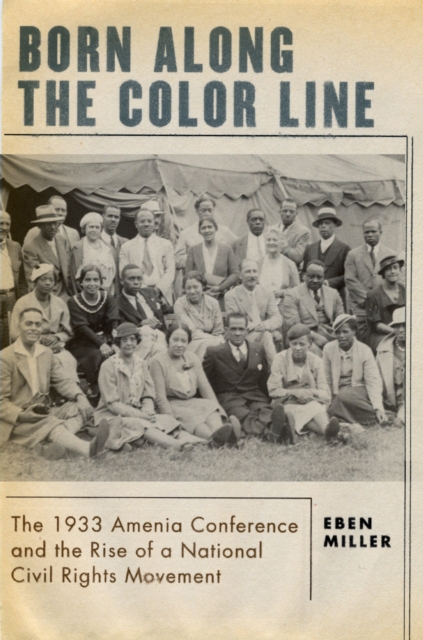
Born along the color line : the 1933 Amenia Conference and the rise of a national civil rights movement
In August, 1933, dozens of people gathered amid seven large, canvas tents in a field near Amenia, in upstate New York. Joel Spingarn, president of the board of the NAACP, had called a conference to revitalize the flagging civil rights organization. In Amenia, such old lions as the 65 year-old W. E. B. DuBois would mingle with “the coming leaders of Negro thought.” It was a fascinating encounter that would transform the civil rights movement. This book narrates how this little-known conference brought together a remarkable young group of African American activists, capturing through the lives of five extraordinary participants—youth activist Juanita Jackson, diplomat Ralph Bunche, economist Abram Harris, lawyer Louis Redding, and Harlem organizer Moran Weston—how this generation shaped the ongoing movement for civil rights during the Depression, World War II, and beyond. The book describes how Jackson, Bunche, Harris, and the others felt that, amidst the global crisis of the 1930s, it was urgent to move beyond the NAACP's legal and political focus to build an economic movement that reached across the racial divide to challenge the capitalist system that had collapsed so devastatingly. They advocated alliances with labor groups, agitated for equal education, and campaigned for anti-lynching legislation and open access to the ballot and employment-spreading their influential ideas through their writings and by mass organizing in African American communities across the country, North and South. In their arguments and individual awakenings, they formed a key bridge between the turn-of-the-century Talented Tenth and the postwar civil rights generation, broadening and advancing the fight for racial equality through the darkest economic times the country has ever faced.
eBook