
Catalogue Search | MBRL


Are you sure you want to remove the book from the shelf?

{{itemTitle}}
8
result(s) for
"National Collegiate Athletic Association Division I"
Sort by:
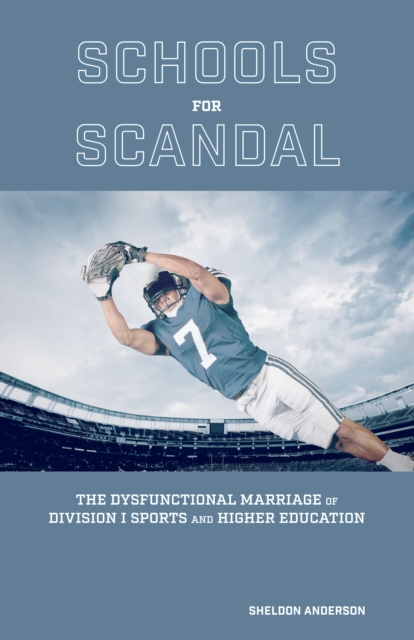
Schools for scandal : the dysfunctional marriage of Division I sports and higher education
For well over a century, big-time college sports has functioned as a business enterprise, one that serves to undermine the mission of institutions of higher education.This book chronicles the long and tortured history of the NCAA's attempt to maintain the myth of amateurism and the student-athlete, along with the attendant fiction that.
eBook

Reclaiming the game
In Reclaiming the Game, William Bowen and Sarah Levin disentangle the admissions and academic experiences of recruited athletes, walk-on athletes, and other students. In a field overwhelmed by reliance on anecdotes, the factual findings are striking--and sobering. Anyone seriously concerned about higher education will find it hard to wish away the evidence that athletic recruitment is problematic even at those schools that do not offer athletic scholarships.
eBook

The Game of Life
The President of Williams College faces a firestorm for not allowing the women's lacrosse team to postpone exams to attend the playoffs. The University of Michigan loses $2.8 million on athletics despite averaging 110,000 fans at each home football game. Schools across the country struggle with the tradeoffs involved with recruiting athletes and updating facilities for dozens of varsity sports. Does increasing intensification of college sports support or detract from higher education's core mission?
James Shulman and William Bowen introduce facts into a terrain overrun by emotions and enduring myths. Using the same database that informedThe Shape of the River, the authors analyze data on 90,000 students who attended thirty selective colleges and universities in the 1950s, 1970s, and 1990s. Drawing also on historical research and new information on giving and spending, the authors demonstrate how athletics influence the class composition and campus ethos of selective schools, as well as the messages that these institutions send to prospective students, their parents, and society at large.
Shulman and Bowen show that athletic programs raise even more difficult questions of educational policy for small private colleges and highly selective universities than they do for big-time scholarship-granting schools. They discover that today's athletes, more so than their predecessors, enter college less academically well-prepared and with different goals and values than their classmates--differences that lead to different lives. They reveal that gender equity efforts have wrought large, sometimes unanticipated changes. And they show that the alumni appetite for winning teams is not--as schools often assume--insatiable. If a culprit emerges, it is the unquestioned spread of a changed athletic culture through the emulation of highly publicized teams by low-profile sports, of men's programs by women's, and of athletic powerhouses by small colleges.
Shulman and Bowen celebrate the benefits of collegiate sports, while identifying the subtle ways in which athletic intensification can pull even prestigious institutions from their missions. By examining how athletes and other graduates view The Game of Life--and how colleges shape society's view of what its rules should be--Bowen and Shulman go far beyond sports. They tell us about higher education today: the ways in which colleges set policies, reinforce or neglect their core mission, and send signals about what matters.
eBook

NCAA's New Structure Finds Fans and Foes Among Sports Officials
The National Collegiate Athletic Association's (NCAA) new administrative structure, which allows each of its three divisions to operate independently, is criticized by some as having an unnecessarily complex legislative process. Others find the structure gives divisions flexibility to address timely issues and more control over their own affairs. Some institutions feel they don't have much say in decision making. (MSE)
Journal Article