
Catalogue Search | MBRL


Are you sure you want to remove the book from the shelf?

{{itemTitle}}
295
result(s) for
"National characteristics, Australian"
Sort by:


Better Britons
In 1932, Aldous Huxley published Brave New World , his famous novel about a future in which humans are produced to spec in laboratories. Around the same time, Australian legislators announced an ambitious experiment to “breed the colour” out of Australia by procuring white husbands for women of white and indigenous descent. In this study, Nadine Attewell reflects on an assumption central to these and other policy initiatives and cultural texts from twentieth-century Britain, Australia, and New Zealand: that the fortunes of the nation depend on controlling the reproductive choices of citizen-subjects.
Better Britons charts an innovative approach to the politics of reproduction by reading an array of works and discourses – from canonical modernist novels and speculative fictions to government memoranda and public debates – that reflect on the significance of reproductive behaviours for civic, national, and racial identities. Bringing insights from feminist and queer theory into dialogue with work in indigenous studies, Attewell sheds new light on changing conceptions of British and settler identity during the era of decolonization.
eBook

Becoming Australian : migration, settlement, citizenship
The year 2013 is the 40th anniversary of the end of the 'White Australia policy'. In these four decades Australia's immigration policy has shifted from a primary concern with cultural homogeneity or Britishness to a focus on demand-based skills through an increasingly fine-tuned system of points tests, occupation lists and employer-sponsored visas. Despite disproportionate politicisation of asylum seekers in recent public discourse, the intake of refugees and humanitarian entrants has remained relatively small. While Australia's contemporary migrant and refugee intake is truly multicultural, and governments continue to adhere to an official multicultural policy, integration into the Australian community and culture has been the dominant process, especially for second and third generation Australians. Australian identity and citizenship have changed in the last forty years, making Australia and its people more pluralistic and richly diverse. Becoming Australian focuses on the ways in which migrants and refugees meet the challenges of 'becoming Australian' and the transformative process for Australia and its people as they incorporate the continuing influx of multicultural peoples.
Book

The White Possessive
The White Possessiveexplores the links between race, sovereignty, and possession through themes of property: owning property, being property, and becoming propertyless. Focusing on the Australian Aboriginal context, Aileen Moreton-Robinson questions current race theory in the first world and its preoccupation with foregrounding slavery and migration. The nation, she argues, is socially and culturally constructed as a white possession.
Moreton-Robinson reveals how the core values of Australian national identity continue to have their roots in Britishness and colonization, built on the disavowal of Indigenous sovereignty. Whiteness studies literature is central to Moreton-Robinson's reasoning, and she shows how blackness works as a white epistemological tool that bolsters the social production of whiteness-displacing Indigenous sovereignties and rendering them invisible in a civil rights discourse, thereby sidestepping thorny issues of settler colonialism.
Throughout this critical examination Moreton-Robinson proposes a bold new agenda for critical Indigenous studies, one that involves deeper analysis of how the prerogatives of white possession function within the role of disciplines.
eBook

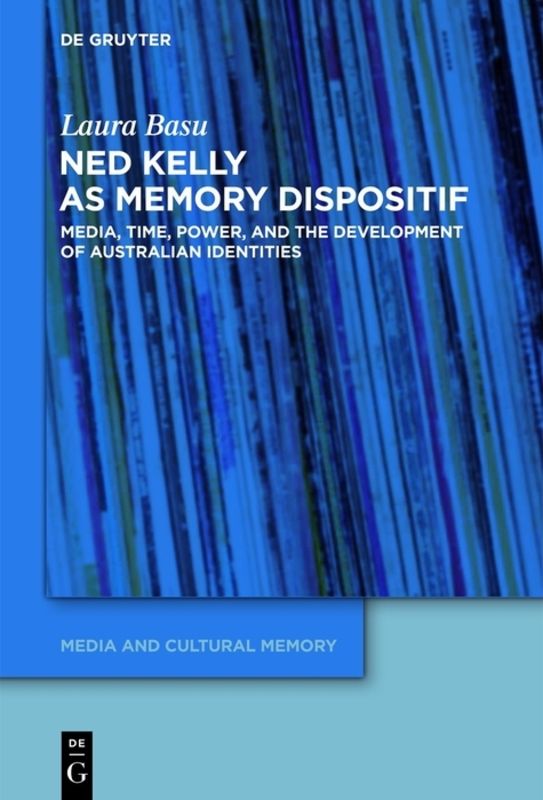
Ned Kelly as Memory Dispositif
Nineteenth-century outlaw Ned Kelly is perhaps Australia's most famous historical figure. Ever since he went on the run in 1878 his story has been repeated time and again, in every conceivable medium. Although the value of his memory has been hotly contested – and arguably because of this – he remains perhaps the main national icon of Australia.
Kelly's flamboyant crimes turned him into a popular hero for many Australians during his lifetime and far beyond: a symbol of freedom, anti authoritarianism, anti imperialism; a Robin Hood, a Jesse James, a Che Guevara. Others have portrayed him as a villain, a gangster, a terrorist. His latest incarnation has been as WikiLeaks founder and fellow Australian \"cyber outlaw\" Julian Assange. Despite the huge number of representations of Kelly – from rampant newspaper reporting of the events, to the iconic Sidney Nolan paintings, to a movie starring Mick Jagger, to contemporary urban street art – this is the first work to take this corpus of material itself as a subject of analysis.
The fascinating case of this young outlaw provides an important opportunity to further our understanding of the dynamics of cultural memory. The book explains the processes by which the cultural memory of Ned Kelly was made and has developed over time, and how it has related to formations and negotiations of national identity. It breaks new ground in memory studies in the first place by showing that cultural memories are formed and develop through tangles of relations, what Basu terms memory dispositifs. In introducing the concept of the memory dispositif, this volume brings together and develops the work of Foucault, Deleuze, and Agamben on the dispositif, along with relevant concepts from the field of memory studies such as allochronism, colonial aphasia, and multidirectionality, the memory site – especially as developed by Ann Rigney – and Jan Assmann's figure of memory.
Secondly, this work makes important headway in our understanding of the relationships between cultural memory and national identity, at a time when matters of identity appear to be more urgent and fraught than ever. In doing so, it shows that national identities are never purely national but are always sub- and transnational. The Ned Kelly memory dispositif has made complex and conflicting contributions to constructions of national identity. Ever since his outlawry, the identities invested in Kelly and those invested in the Australian nation have, in a two-way dynamic, fused into and strengthened each other, so that Kelly is in many ways a symbol for the national identity. Kelly has come to stand for an anti-establishment, working class, subaltern, Irish-inflected national identity. At the same time he has come to represent and enforce the whiteness, hyper-heterosexual masculinity and violence of \"Australianness\". Basu shows that Kelly has therefore always functioned in both radical and conservative ways, often both at once: a turbulent, Janus-faced figure.
eBook


The High Road
As Australia and New Zealand draw closer in a shared travel zone, what can we learn from our trans-Tasman neighbours?.
eBook

The University is Closed for Open Day
Where is analysis in this age of banal tweets and narcissistic comments? Stephen Knight turns his modernly analytical and historically aware mind to current attitudes and actions in need of serious examination. What is the impact of the bush myth on the national consciousness of Australian fiction? What of the modern shift in writing about Indigenous issues, from white writers to First Peoples? What has suddenly happened to Australian crime fiction? Other essays look at unravelling travelling, the tiny machines that obsess us, then those bizarrely flourishing modern identity-enhancers & tattoos and personalised number plates; and of course, the state of the contemporary university. Here is 21st century national complexity, its origins and its international connections, explored in a socially referential and almost always serious way.
eBook