
Catalogue Search | MBRL


Are you sure you want to remove the book from the shelf?

{{itemTitle}}
415
result(s) for
"National characteristics, Israeli"
Sort by:

Falafel nation : cuisine and the making of national identity in Israel
\"When people discuss food in Israel, their debates ask politically charged questions: Who has the right to falafel? Whose hummus is better? But Yael Raviv's Falafel Nation moves beyond the simply territorial to divulge the role food plays in the Jewish nation. She ponders the power struggles, moral dilemmas, and religious and ideological affiliations of the different ethnic groups that make up the \"Jewish State\" and how they relate to the gastronomy of the region. How do we interpret the recent upsurge in the Israeli culinary scene--the transition from ideological asceticism to the current deluge of fine restaurants, gourmet stores, and related publications and media?Focusing on the period between the 1905 immigration wave and the Six-Day War in 1967, Raviv explores foodways from the field, factory, market, and kitchen to the table. She incorporates the role of women, ethnic groups, and different generations into the story of Zionism and offers new assertions from a secular-foodie perspective on the relationship between Jewish religion and Jewish nationalism. A study of the changes in food practices and in attitudes toward food and cooking, Falafel Nation explains how the change in the relationship between Israelis and their food mirrors the search for a definition of modern Jewish nationalism. \"-- Provided by publisher.
Book
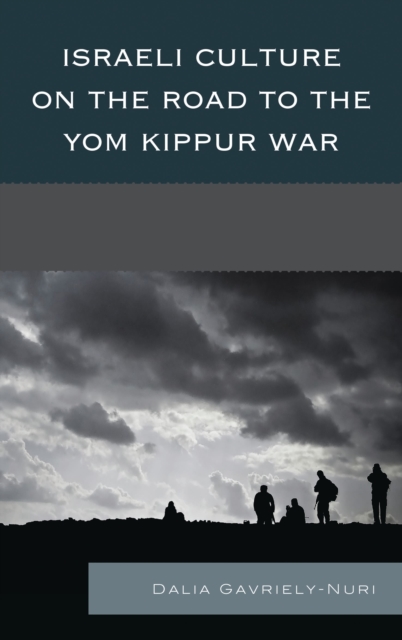
Israeli culture on the road to the Yom Kippur War
The surprise of the Yom Kippur War (1973) rivals that of the other two major strategic surprises in the twentieth century—Operation Barbarossa, the German surprise attack on the Soviet Union and the bombing of Pearl Harbor. The major difference between these events is that Israeli intelligence had a lot more and better quality information leading up to the attack than did the Soviet Union or the United States prior to those attacks. Why, then, was the beginning of the Yom Kippur War such a surprise? While many scholars have tried to explain why Israel was caught unawares despite its sophisticated military intelligence services, Dalia Gavriely-Nuri looks beyond the military, intelligence, and political explanations to a cultural explanation. Israeli Culture on the Road to the Yom Kippur War reveals that the culture that evolved in Israel between the Six Day War and the Yom Kippur War played a large role in the surprise. Gavriely-Nuri’s analysis provides new and innovative insights into the relationship between culture and socio-political phenomena and security.
eBook

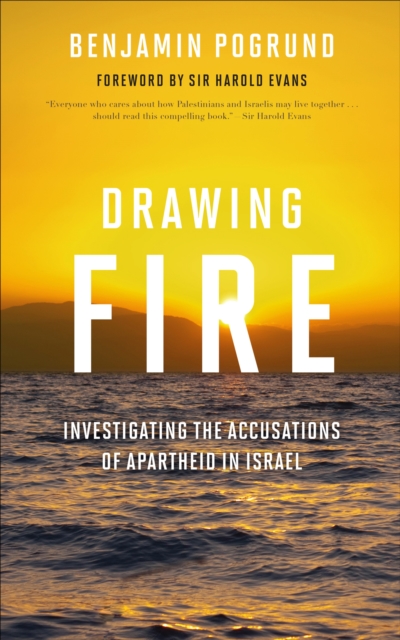
Drawing Fire
Benjamin Pogrund, who spent 26 years as a journalist in South Africa investigating apartheid and who has been living in Israel for the past 15 years, investigates the accusation that Israel is practicing apartheid and the motives of those who make it. His study is founded on a belief in Israel, combined with frank criticism, to provide a balanced view of Israel’s strengths and problems. To understand Israel today, one must first look at the past and so the book first outlines key foundational events to explain current attitudes. It then explores the contradictions found in the region, including discrimination against Israeli Arabs and among Jews, before concluding that it is wrong to affix the apartheid label to Israel inside the Green Line of 1948/1967. It also deconstructs the criticisms of Israel and the boycott movement before arguing for two states, Israeli and Palestinian, as the only way forward for Jews and Arabs. This detailed and balanced study offers a unique comparison between South Africa and Israel and explains complex political and social situations in language accessible to all readers.
eBook

Shared Land/Conflicting Identity
Shared Land/Conflicting Identity: Trajectories of Israeli and Palestinian Symbol Useargues that rhetoric, ideology, and myth have played key roles in influencing the development of the 100-year conflict between first the Zionist settlers and the current Israeli people and the Palestinian residents in what is now Israel. The Israeli-Palestinian conflict is usually treated as an issue of land and water. While these elements are the core of the conflict, they are heavily influenced by the symbols used by both peoples to describe, understand, and persuade each other. The authors argue that symbolic practices deeply influenced the Oslo Accords, and that the breakthrough in the peace process that led to Oslo could not have occurred without a breakthrough in communication styles.Rowland and Frank develop four crucial ideas on social development: the roles of rhetoric, ideology, and myth; the influence of symbolic factors; specific symbolic factors that played a key role in peace negotiations; and the identification and value of criteria for evaluating symbolic practices in any society.
eBook

Popular Music and National Culture in Israel
A unique Israeli national culture-indeed, the very nature of \"Israeliness\"-remains a matter of debate, a struggle to blend vying memories and backgrounds, ideologies and wills. Identifying popular music as an important site in this wider cultural endeavor, this book focuses on the three major popular music cultures that are proving instrumental in attempts to invent Israeliness: the invented folk song repertoire known as Shirei Eretz Israel; the contemporary, global-cosmopolitan Israeli rock; and the ethnic-oriental musica mizrahit. The result is the first ever comprehensive study of popular music in Israel. Motti Regev, a sociologist, and Edwin Seroussi, an ethnomusicologist, approach their subject from alternative perspectives, producing a truly interdisciplinary, sociocultural account of music as a feature and a force in the shaping of Israeliness. A major ethnographic undertaking, describing and analyzing the particular history, characteristics, and practices of each music culture,Popular Music and National Culture in Israelmaps not only the complex field of Israeli popular music but also Israeli culture in general.
eBook

Multiple Identity Politics: Dahn Ben-Amotz and the Biased Readings of Hebrew Literature
This article introduces the concept of “passing” into the study of Hebrew literature, through the oeuvre and biography of Dahn Ben-Amotz, the infamous Israeli icon, prolific novelist, humorist, journalist, artist, linguist, bon vivant, and polygamist. Born in Rivne, Poland as Musia Tehilimzogger, Ben-Amotz is sent to Palestine in 1938. Failing to fit in as an immigrant, he begins his passing, shedding the skin of a meek diaspora Jew to become the ultimate representation of the New Hebrew; reborn in Tel Aviv, he erases all connections to the past. Hebrew literary criticism deals primarily with these two polarities of the historic Jew—the old versus the new, the diasporic versus the Hebrew. But this article argues that this negotiation has an adverse effect on our study and understanding of Israeli fiction and nation creation. Through an analysis of Ben-Amotz's semiautobiographical 1968 novel, Lizkor velishkoaḥ (To Remember, To Forget), the article shows that, while aspiring to locate a space for multiple identities, critical readings of Israeli literature also work overtime to emphasize the negotiation of identity/difference and end up creating more segregated, essentialist identities instead of ones that are multiple and contingent. This reading of Ben-Amotz's novel uses passing criticism, legal theory, and political science to argue that an unconventional author calls for an unconventional reading that diverges from and challenges prior understandings and approaches to trauma, testimony, and identity in Hebrew literature and opens the discourse to other tangible possibilities in the search for individual coherency, outside the binary of the Old/New Jew, possibilities that previous negotiations seem to dismiss.
Journal Article

Falafel Nation
When people discuss food in Israel, their debates ask politically charged questions: Who has the right to falafel? Whose hummus is better? But Yael Raviv'sFalafel Nationmoves beyond the simply territorial to divulge the role food plays in the Jewish nation. She ponders the power struggles, moral dilemmas, and religious and ideological affiliations of the different ethnic groups that make up the \"Jewish State\" and how they relate to the gastronomy of the region. How do we interpret the recent upsurge in the Israeli culinary scene-the transition from ideological asceticism to the current deluge of fine restaurants, gourmet stores, and related publications and media?
Focusing on the period between the 1905 immigration wave and the Six-Day War in 1967, Raviv explores foodways from the field, factory, market, and kitchen to the table. She incorporates the role of women, ethnic groups, and different generations into the story of Zionism and offers new assertions from a secular-foodie perspective on the relationship between Jewish religion and Jewish nationalism. A study of the changes in food practices and in attitudes toward food and cooking,Falafel Nationexplains how the change in the relationship between Israelis and their food mirrors the search for a definition of modern Jewish nationalism.
eBook

Israel on the couch : the psychology of the peace process
Applies clinical pyschology to explain the dynamics of the Middle East peace process. By applying a clinical psychologist’s insight into the Israeli-Arab conflict, Ofer Grosbard lays the foundation for a new theory and practice that espouses the use of clinical tools to promote relations between countries, religions, political parties, cultures, and different identities.
eBook

The Origins of Israeli Mythology
It is claimed that Zionism as a meta-narrative has been formed through contradiction to two alternative models, the Canaanite and crusader narratives. These narratives are the most daring and heretical assaults on Israeli-Jewish identity. The Israelis, according to the Canaanite narrative, are from this place and belong only here; according to the crusader narrative, they are from another place and belong there. The mythological construction of Zionism as a modern crusade describes Israel as a Western colonial enterprise planted in the heart of the East and alien to the area, its logic and its peoples. The nativist construction of Israel as neo-Canaanism demands breaking away from the chain of historical continuity. These are the greatest anxieties that Zionism and Israel needed to encounter and answer forcefully. The Origins of Israeli Mythology seeks to examine the intellectual archaeology of Israeli mythology, as it reveals itself through the Canaanite and crusader narratives.
eBook