
Catalogue Search | MBRL


Are you sure you want to remove the book from the shelf?

{{itemTitle}}
79
result(s) for
"National characteristics, Palestinian"
Sort by:

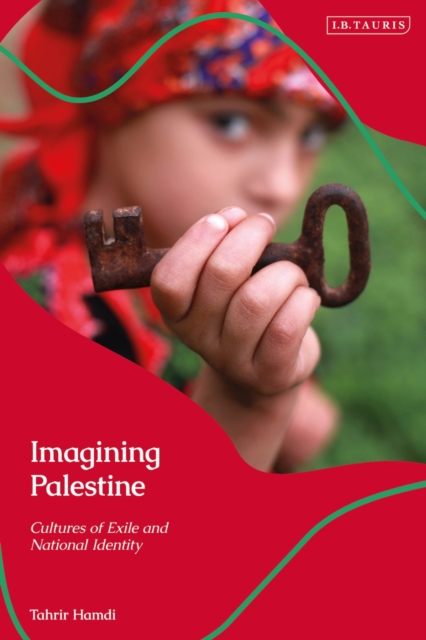
IMAGINING PALESTINE
All national identities are somewhat fluid, held together by collective beliefs and practices as much as official territory and borders. In the context of the Palestinians, whose national status in so many instances remains unresolved, the articulation and ‘imagination’ of national identity is particularly urgent. This book explores the ways that Palestinian intellectuals, artists, activists and ordinary citizens ‘imagine’ their homeland, examining the works of key Palestinian thinkers and writers such as Edward Said, Mahmoud Darwish, Mourid Barghouti, Ghassan Kanafani and Naji Al Ali. Deploying Benedict Anderson’s notion of ‘Imagined Communities’ and Edward Soja’s theory of ‘Third Space’, Tahrir Hamdi argues that the imaginative construction of Palestine is a key element in the Palestinians’ ongoing struggle. An interdisciplinary work drawing upon critical theory, postcolonial studies and literary analysis, this book will be of interest to students and scholars of Palestine and Middle East studies and Arabic literature
eBook

Palestinians born in exile : diaspora and the search for a homeland
In the decade following the 1993 Oslo Peace Accords, some 100,000 diasporic Palestinians returned to the West Bank and Gaza. Among them were children and young adults who were born in exile and whose sense of Palestinian identity was shaped not by lived experience but rather through the transmission and re-creation of memories, images, and history. As a result, “returning” to the homeland that had never actually been their home presented challenges and disappointments for these young Palestinians, who found their lifeways and values sometimes at odds with those of their new neighbors in the West Bank and Gaza. This original ethnography records the experiences of Palestinians born in exile who have emigrated to the Palestinian homeland. Juliane Hammer interviews young adults between the ages of 16 and 35 to learn how their Palestinian identity has been affected by living in various Arab countries or the United States and then moving to the West Bank and Gaza. Their responses underscore how much the experience of living outside of Palestine has become integral to the Palestinian national character, even as Palestinians maintain an overwhelming sense of belonging to one another as a people.
eBook

National Identities and the Right to Self-Determination of Peoples
In National Identities and the Right to Self-Determination of Peoples, Hilly Moodrick-Even Khen revisits the legal right to self-determination of peoples and suggests an integrative model for securing the cohesion of the various nationalities within multinational states.
eBook

The Palestinian diaspora : formation of identities and politics of homeland
From the refugee camps of the Lebanon to the relative prosperity of life in the USA, the Palestinian diaspora has been dispersed across the world. In this pioneering study, Helena Lindholm Schulz examines the ways in which Palestinian identity has been formed in the diaspora through constant longing for a homeland lost. In so doing, the author advances the debate on the relationship between diaspora and the creation of national identity as well as on nationalist politics tied to a particular territory. But The Palestinian Diasporaalso sheds light on the possibilities opened up by a transnational existence, the possibility of new, less territorialized identities, even in a diaspora as bound to the idea of an idealized homeland as the Palestinian. Members of the diaspora form new lives in new settings and the idea of homeland becomes one important, but not the only, source of identity. Ultimately though, Schulz argues, the strong attachment to Palestine makes the diaspora crucial in any understandings of how to formulate a viable strategy for peace between Israelis and Palestinians.
eBook

Stories from Palestine
Stories from Palestine profiles Palestinians
engaged in creative and productive pursuits in their everyday lives
in the West Bank, Jerusalem, and the Gaza Strip. Their narratives
amplify perspectives and experiences of Palestinians exercising
their own constructive agency.
In Stories from Palestine: Narratives of Resilience ,
Marda Dunsky presents a vivid overview of contemporary Palestinian
society in the venues envisioned for a future Palestinian state.
Dunsky has interviewed women and men from cities, towns, villages,
and refugee camps who are farmers, scientists, writers, cultural
innovators, educators, and entrepreneurs. Using their own words,
she illuminates their resourcefulness in navigating agriculture,
education, and cultural pursuits in the West Bank; persisting in
Jerusalem as a sizable minority in the city; and confronting the
challenges and uncertainties of life in the Gaza Strip. Based on
her in-depth personal interviews, the narratives weave in
quantitative data and historical background from a range of primary
and secondary sources that contextualize Palestinian life under
occupation.
More than a collection of individual stories, Stories from
Palestine presents a broad, crosscut view of the tremendous
human potential of this particular society. Narratives that
emphasize the human dignity of Palestinians pushing forward under
extraordinary circumstances include those of an entrepreneur who
markets the yields of Palestinian farmers determined to continue
cultivating their land, even as the landscape is shrinking; a
professor and medical doctor who aims to improve health in local
Palestinian communities; and an award-winning primary school
teacher who provides her pupils a safe and creative learning
environment. In an era of conflict and divisiveness, Palestinian
resilience is relatable to people around the world who seek to
express themselves, to achieve, to excel, and to be free.
Stories from Palestine creates a new space from which to
consider Palestinians and peace.
The book will interest general readers who want to learn about
contemporary Palestinian life in the West Bank, Jerusalem, and the
Gaza Strip beyond oft-repeated themes of oppression and violence,
as well as students and scholars of Israel-Palestine studies, peace
studies, journalistic conflict-zone reporting, and narrative
writing.
eBook

Israel’s Palestinians
Arguing that a comprehensive and lasting solution to the Israeli-Palestinian conflict depends on a resolution of the Jewish-Palestinian conflict within Israel as much as it does on resolving the conflict between Israel and Palestinians in the Occupied Territories, this timely book explores the causes and consequences of the growing conflict between Israel's Jewish majority and its Palestinian-Arab minority. It warns that if Jewish-Arab relations in Israel continue to deteriorate, this will pose a serious threat to the stability of Israel, to the quality of Israeli democracy and to the potential for peace in the Middle East. The book examines the views and attitudes of both the Palestinian minority and the Jewish majority, as well as the Israeli state's historic approach to its Arab citizens. Drawing upon the experience of other states with national minorities, the authors put forward specific proposals for safeguarding and enhancing the rights of the Palestinian minority while maintaining the country's Jewish identity.
eBook
Hebrew Literature and the 1948 War
Hebrew Literature and the 1948 War: Essays on Philology and Responsibility is the first book-length study that examines the conspicuous absence of the Palestinian Nakba in modern Hebrew literature. Through a rigorous reading of canonical Hebrew literary texts, the author addresses the general failure of Hebrew literature to take responsibility for the Nakba. The book illustrates how the language of modern Hebrew poetry and fiction reflects symptoms of Israeli national violence, in which the literary language produces a picture of Palestine as an arena where the violent clash between the perpetrators and the victims takes place. In doing so, the author develops a new and critical paradigm for reflecting on the moral responsibility of literature and the ethics of reading. The book includes close readings of the works of Avot Yeshurun, S. Yizhar, Nathan Alterman, Yehuda Amichai, Yitzhak Laor, and Amos Oz, among others.
eBook

Palestinians Born in Exile
In the decade following the 1993 Oslo Peace Accords, some 100,000 diasporic Palestinians returned to the West Bank and Gaza. Among them were children and young adults who were born in exile and whose sense of Palestinian identity was shaped not by lived experience but rather through the transmission and re-creation of memories, images, and history. As a result, \"returning\" to the homeland that had never actually been their home presented challenges and disappointments for these young Palestinians, who found their lifeways and values sometimes at odds with those of their new neighbors in the West Bank and Gaza.
This original ethnography records the experiences of Palestinians born in exile who have emigrated to the Palestinian homeland. Juliane Hammer interviews young adults between the ages of 16 and 35 to learn how their Palestinian identity has been affected by living in various Arab countries or the United States and then moving to the West Bank and Gaza. Their responses underscore how much the experience of living outside of Palestine has become integral to the Palestinian national character, even as Palestinians maintain an overwhelming sense of belonging to one another as a people.
eBook