
Catalogue Search | MBRL


Are you sure you want to remove the book from the shelf?

{{itemTitle}}
1,115
result(s) for
"National security Caribbean Area"
Sort by:
The Quest for Security in the Caribbean
This comprehensive work on security in the English-speaking Caribbean, offers a wealth of information about the history, politics, economics and geography of the entire region. The author examines security problems in the region as a geopolitical unit, not on a selective case-study basis, as is usually done. He assesses Caribbean security within a theoretical framework where four factors are critical: perceptions of the political elites; capabilities of the states; the geopolitics of the area; and the ideological orientations of the parties in power. Political and economic issues are judged to be as relevant to security as military factors. The author identifies safeguards which countries in the region may take in the coming decade.
eBook

Population aging : is Latin America ready?
The past half-century has seen enormous changes in the demographic makeup of Latin America and the Caribbean (LAC). In the 1950s, LAC had a small population of about 160 million people, less than today's population of Brazil. Two-thirds of Latin Americans lived in rural areas. Families were large and women had one of the highest fertility rates in the world, low levels of education, and few opportunities for work outside the household. Investments in health and education reached only a small fraction of the children, many of whom died before reaching age five. Since then, the size of the LAC population has tripled and the mostly rural population has been transformed into a largely urban population. There have been steep reductions in child mortality, and investments in health and education have increased, today reaching a majority of children. Fertility has been more than halved and the opportunities for women in education and for work outside the household have improved significantly. Life expectancy has grown by 22 years. Less obvious to the casual observer, but of significance for policy makers, a population with a large fraction of dependent children has evolved into a population with fewer dependents and a very large proportion of working-age adults. This overview seeks to introduce the reader to three groups of issues related to population aging in LAC. First is a group of issues related to the support of the aging and poverty in the life cycle. Second is the question of the health transition. Third is an understanding of the fiscal pressures that are likely to accompany population aging and to disentangle the role of demography from the role of policy in that process.
eBook

Measuring inequality of opportunities in Latin America and the Caribbean
Equality of opportunity is about leveling the playing field so that circumstances such as gender, ethnicity, place of birth, or family background do not influence a person's life chances. Success in life should depend on people's choices, effort and talents, not to their circumstances at birth. 'Measuring Inequality of Opportunities in Latin America and the Caribbean' introduces new methods for measuring inequality of opportunities and makes an assessment of its evolution in Latin America over a decade. An innovative Human Opportunity Index and other parametric and non-parametric techniques are presented for quantifying inequality based on circumstances exogenous to individual efforts. These methods are applied to gauge inequality of opportunities in access to basic services for children, learning achievement for youth, and income and consumption for adults.
eBook
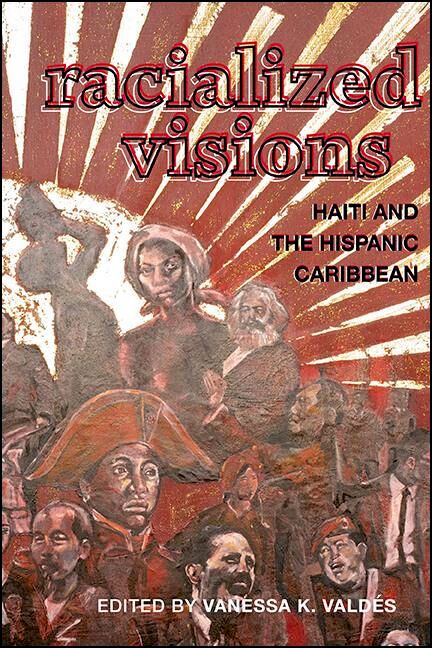
Racialized Visions
As a Francophone nation, Haiti is seldom studied in conjunction
with its Spanish-speaking Caribbean neighbors. Racialized
Visions challenges the notion that linguistic difference has
kept the populations of these countries apart, instead highlighting
ongoing exchanges between their writers, artists, and thinkers.
Centering Haiti in this conversation also makes explicit the role
that race-and, more specifically, anti-blackness-has played both in
the region and in academic studies of it. Following the Revolution
and Independence in 1804, Haiti was conflated with blackness.
Spanish colonial powers used racist representations of Haiti to
threaten their holdings in the Atlantic Ocean. In the years since,
white elites in Cuba, the Dominican Republic, and Puerto Rico
upheld Haiti as a symbol of barbarism and savagery. Racialized
Visions powerfully refutes this symbolism. Across twelve
essays, contributors demonstrate how cultural producers in these
countries have resignified Haiti to mean liberation. An
introduction and conclusion by the editor, Vanessa K. Valdés, as
well as foreword by Myriam J. A. Chancy, provide valuable
historical context and an overview of Afro-Latinx studies and its
futures.
eBook

A Leader Without Followers? The Growing Divergence Between the Regional and Global Performance of Brazilian Foreign Policy
Brazilian diplomats and academics alike have long regarded regional leadership as a springboard to global recognition. Yet Brazil's foreign policy has not translated the country's structural and instrumental resources into effective regional leadership. Brazil's potential followers have not aligned with its main goals, such as a permanent seat on the UN Security Council and Directorship-General of the World Trade Organization; some have even challenged its regional influence. Nevertheless, Brazil has been recognized as an emergent global power. This article analyzes the growing mismatch between the regional and global performance of Brazilian foreign policy and shows how both theoretical expectations and policy planning were \"luckily foiled\" by unforeseen developments. It argues that because of regional power rivalries and a relative paucity of resources, Brazil is likely to consolidate itself as a middle global power before gaining acceptance as a leader in its region.
Journal Article
The Bolsonaro Voter
The 2018 Brazilian elections saw the rise to power of Jair Bolsonaro, yet another conservative politician who won an election in recent years. What were the ideological underpinnings of the Bolsonaro vote? Was his support based exclusively on resentment toward the Workers’ Party? This article uses a unique public opinion dataset, the 2018 Brazilian Electoral Panel Study, to explore how positions on divisive issues related to social, political, and cultural factors influenced vote choice and Bolsonarismo—affection toward Bolsonaro supporters—in the 2018 Brazilian presidential elections. Results indicate that in addition to resentment against the Workers’ Party, a cultural backlash perspective, and strict views on law and order, as well as economic liberalism and rejection of social policies, were the characteristics of support for Bolsonaro.
Journal Article

THE MONOPOLY OF VIOLENCE: EVIDENCE FROM COLOMBIA
Many states in Latin America, Africa, and Asia lack the monopoly of violence, even though this was identified by Max Weber as the foundation of the state, and thus the capacity to govern effectively. In this paper we develop a new perspective on the establishment of the monopoly of violence. We build a model to explain the incentive of central states to eliminate nonstate armed actors (paramilitaries) in a democracy. The model is premised on the idea that paramilitaries may choose to and can influence elections. Since paramilitaries have preferences over policies, this reduces the incentives of the politicians they favor to eliminate them. We then investigate these ideas using data from Colombia between 1991 and 2006. We first present regression and case study evidence supporting our postulate that paramilitary groups can have significant effects on elections for the legislature and the executive. Next, we show that the evidence is also broadly consistent with the implication of the model that paramilitaries tend to persist to the extent that they deliver votes to candidates for the executive whose preferences are close to theirs and that this effect is larger in areas where the presidential candidate would have otherwise not done as well. Finally, we use roll-call votes to illustrate a possible \"quid pro quo\" between the executive and paramilitaries in Colombia.
Journal Article
From right to reality : incentives, labor markets, and the challenge of universal social protection in Latin America and the Caribbean
This series was created in 2003 to promote debate, disseminate information and analysis, and convey the excitement and complexity of the most topical issues in economic and social development in Latin America and the Caribbean. This volume aims to move the debate forward by: 1) developing a common policy framework for the region's Social Protection (SP) system as a whole, including health insurance; 2) providing guidelines on ways to extend coverage through rationalizing financing mechanisms and the design of redistributive arrangements; and 3) making the case for improved coordination of policies and programs. Building on careful, detailed analysis of a wealth of data on social protection programs across Latin America and the Caribbean, this book addresses these challenges in a thorough yet accessible manner. Although the analysis is comprehensive, the authors focus primarily on three fundamental questions that must be faced by any effort to strengthen social protection in the region: how can programs protect the most vulnerable without promoting informality and dampening incentives to work and save? How can programs ensure that scarce public resources are used for subsidies that are transparent, fair, and effective-and not for badly targeted and regressive benefits for formal sector workers? Finally, how can programs reinforce human capital development so that the more mobile workers that the region needs are able to insure themselves through savings or risk-pooling arrangements, thus reducing vulnerability and the need for subsidies?
eBook

Understanding the poverty impact of the global financial crisis in Latin America and the Caribbean
This study documents the effects of the 2008–09 global financial crisis on poverty in Latin America and the Caribbean (LAC). In doing so, it describes and decomposes the effects of the crisis on poverty using data from comparable household budget surveys for Argentina, Brazil, Chile, Colombia, Costa Rica, Dominican Republic, Ecuador, El Salvador, Mexico, Paraguay, Peru, and Uruguay, and labor force surveys for Argentina, Brazil, Chile, Colombia, Ecuador, Mexico, Peru, and Uruguay. The study also provides macro-micro modeling of crisis and no-crisis scenarios for Mexico and Brazil, as well as the big picture and program-specific details of the social protection policy responses for these countries and more. Among the findings are the following. First, the effects of the global financial crisis on those living in poverty were not trivial: more than 3 million people fell into or remained mired in poverty in 2009 as a result of the crisis. Of these, 2.5 million were Mexican. Second, the changes in poverty were driven by changes in labor incomes caused by a variable combination of changes in employment rates and real wages. Third, the macro-micro modeling revealed different adjustment mechanisms but similar final incidence results for Brazil and Mexico. The results were regressive overall, with the middle of the income distribution hit even a bit more than the poor. According to the descriptive results from the larger set of countries, changes in inequality accounted for a tenth to a third of changes in poverty. Fourth, countries were quite active in their social protection policy responses, largely taking advantage of programs built in precrisis years. Social transfers partially offset the lower labor earnings of the poor, although income protection for the unemployed was weak. Finally, overall the policy messages are that good policy helps attenuate the links between a global crisis and poverty in the LAC countries, and many of the important things need to be done ex ante such as dealing with the macro fundamentals and building social protection programs.
eBook