
Catalogue Search | MBRL


Are you sure you want to remove the book from the shelf?

{{itemTitle}}
5,672
result(s) for
"Nationalism -- United States"
Sort by:

Sealed with Blood
The first martyr to the cause of American liberty was Major General Joseph Warren, a well-known political orator, physician, and president of the Provincial Congress of Massachusetts. Shot in the face at close range at Bunker Hill, Warren was at once transformed into a national hero, with his story appearing throughout the colonies in newspapers, songs, pamphlets, sermons, and even theater productions. His death, though shockingly violent, was not unlike tens of thousands of others, but his sacrifice came to mean something much more significant to the American public.Sealed with Bloodreveals how public memories and commemorations of Revolutionary War heroes, such as those for Warren, helped Americans form a common bond and create a new national identity. Drawing from extensive research on civic celebrations and commemorative literature in the half-century that followed the War for Independence, Sarah Purcell shows how people invoked memories of their participation in and sacrifices during the war when they wanted to shore up their political interests, make money, argue for racial equality, solidify their class status, or protect their personal reputations. Images were also used, especially those of martyred officers, as examples of glory and sacrifice for the sake of American political principles. By the midnineteenth century, African Americans, women, and especially poor white veterans used memories of the Revolutionary War to articulate their own, more inclusive visions of the American nation and to try to enhance their social and political status. Black slaves made explicit the connection between military service and claims to freedom from bondage. Between 1775 and 1825, the very idea of the American nation itself was also democratized, as the role of \"the people\" in keeping the sacred memory of the Revolutionary War broadened.
eBook
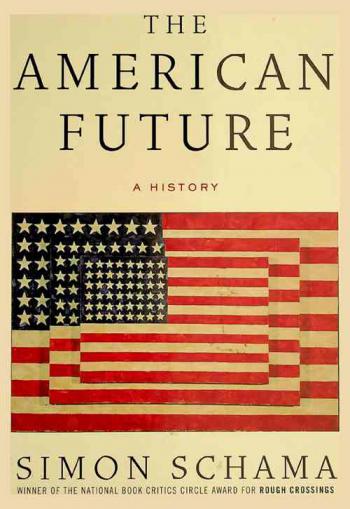
The American future : A history
This book examines the history of American exceptionalism tht means so much to it's people but has led into calamaties as well as triumphs. With the election of a new president in November 2008, the fate of America, by extension of the world will be hanging in the balance.
Book

The Politics of Fashion in Eighteenth-Century America
In eighteenth-century America, fashion served as a site of contests over various forms of gendered power. Here, Kate Haulman explores how and why fashion--both as a concept and as the changing style of personal adornment--linked gender relations, social order, commerce, and political authority during a time when traditional hierarchies were in flux.In the see-and-be-seen port cities of Boston, New York, Philadelphia, and Charleston, fashion, a form of power and distinction, was conceptually feminized yet pursued by both men and women across class ranks. Haulman shows that elite men and women in these cities relied on fashion to present their status but also attempted to undercut its ability to do so for others. Disdain for others' fashionability was a means of safeguarding social position in cities where the modes of dress were particularly fluid and a way to maintain gender hierarchy in a world in which women's power as consumers was expanding. Concerns over gendered power expressed through fashion in dress, Haulman reveals, shaped the revolutionary-era struggles of the 1760s and 1770s, influenced national political debates, and helped to secure the exclusions of the new political order.
eBook

Private property and the origins of nationalism in the United States and Norway : the making of propertied communities
In the eighteenth century, before a national political movement took hold in either the United States or Norway, both countries were agrarian societies marked by widespread private land ownership. Tracing the emergence and development of national ideology in each, Eirik Magnus Fuglestad argues that land ownership became tied up with these national ideologies and was ultimately a central driver of nationalism. In this book, the United States and Norway emerge as propertied communities, shaped by historical narratives of self-government and by property regimes that linked popular sovereignty with land ownership. Covering the mid-eighteenth century through industrialization in the nineteenth century, this book lays the groundwork for understanding the rise of nationalism as an agrarian, landed phenomenon, which later became the foundation of industrial society.
Book

Americanizing the movies and \movie-mad\ audiences, 1910-1914
This engaging, deeply researched study provides the richest and most nuanced picture we have to date of cinema—both movies and movie-going—in the early 1910s. At the same time, it makes clear the profound relationship between early cinema and the construction of a national identity in this important transitional period in the United States. Richard Abel looks closely at sensational melodramas, including westerns (cowboy, cowboy-girl, and Indian pictures), Civil War films (especially girl-spy films), detective films, and animal pictures—all popular genres of the day that have received little critical attention. He simultaneously analyzes film distribution and exhibition practices in order to reconstruct a context for understanding moviegoing at a time when American cities were coming to grips with new groups of immigrants and women working outside the home. Drawing from a wealth of research in archive prints, the trade press, fan magazines, newspaper advertising, reviews, and syndicated columns—the latter of which highlight the importance of the emerging star system—Abel sheds new light on the history of the film industry, on working-class and immigrant culture at the turn of the century, and on the process of imaging a national community.
eBook

Give me liberty : a history of America's exceptional idea
\"An award-winning historian recounts the history of American liberty through the stories of twelve essential documents. Nationalism is inevitable: It supplies feelings of belonging, identity, and recognition. It binds us to our neighbors and tells us who we are. But increasingly-from the United States to India, from Russia to Burma-nationalism is being invoked for unworthy ends: to disdain minorities or to support despots. As a result, nationalism has become to many a dirty word.In Give Me Liberty, award-winning historian and biographer Richard Brookhiser offers up a truer and more inspiring story of American nationalism as it has evolved over four hundred years. He examines America's history through twelve documents that made the United States a new country in a new world: a free country. We are what we are because of them; we stay true to what we are by staying true to them.Americans have always sought liberty, asked for it, fought for it; every victory has been the fulfillment of old hopes and promises. This is our nationalism, and we should be proud of it.\"--Provided by publisher.
Book

Black Muslim Religion in the Nation of Islam, 1960-1975
Elijah Muhammad's Nation of Islam came to America's attention in the 1960s and 1970s as a radical separatist African American social and political group. But the movement was also a religious one. Edward E. Curtis IV offers the first comprehensive examination of the rituals, ethics, theologies, and religious narratives of the Nation of Islam, showing how the movement combined elements of Afro-Eurasian Islamic traditions with African American traditions to create a new form of Islamic faith.Considering everything from bean pies to religious cartoons, clothing styles to prayer rituals, Curtis explains how the practice of Islam in the movement included the disciplining and purifying of the black body, the reorientation of African American historical consciousness toward the Muslim world, an engagement with both mainstream Islamic texts and the prophecies of Elijah Muhammad, and the development of a holistic approach to political, religious, and social liberation. Curtis's analysis pushes beyond essentialist ideas about what it means to be Muslim and offers a view of the importance of local processes in identity formation and the appropriation of Islamic traditions.
eBook

The Nationalist Revival : trade, immigration, and the revolt against globalization
\"Trump in America, Brexit in the U.K., anti-EU parties in Italy, Germany, France, the Netherlands, Austria, Poland, and Hungary, and nativist or authoritarian leaders in Turkey, Russia, India, and China -- Why has nationalism suddenly returned with a vengeance? Is the world headed back to the fractious conflicts between nations that led to world wars and depression in the early 20th Century? Why are nationalists so angry about free trade and immigration? Why has globalization become a dirty word? Based on travels in America, Europe, and Asia, veteran political analyst John B. Judis found that almost all people share nationalist sentiments that can be the basis of vibrant democracies as well as repressive dictatorships. Today's outbreak of toxic \"us vs. them\" nationalism is an extreme reaction to utopian cosmopolitanism, which advocates open borders, free trade, rampant outsourcing, and has branded nationalist sentiments as bigotry. Can a new international order be created that doesn't dismiss what is constructive about nationalism? As he did for populism in The Populist Explosion, a runaway success after the 2016 election, Judis looks at nationalism from its .i modedern origins in the 1800s to today to find answers\"--Amazon.com
Book

Spectacular Blackness
Exploring the interface between the cultural politics of the Black Power and the Black Arts movements and the production of postwar African American popular culture, Amy Ongiri shows how the reliance of Black politics on an oppositional image of African Americans was the formative moment in the construction of \"authentic blackness\" as a cultural identity. While other books have adopted either a literary approach to the language, poetry, and arts of these movements or a historical analysis of them, Ongiri's captures the cultural and political interconnections of the postwar period by using an interdisciplinary methodology drawn from cinema studies and music theory. She traces the emergence of this Black aesthetic from its origin in the Black Power movement's emphasis on the creation of visual icons and the Black Arts movement's celebration of urban vernacular culture.
eBook