
Catalogue Search | MBRL


Are you sure you want to remove the book from the shelf?

{{itemTitle}}
89
result(s) for
"Nationalism Denmark."
Sort by:

Culture war : affective cultural politics, tepid nationalism and art activism
\"The culture wars intertwining art, culture, and politics - have sparked prominent political debates across the globe for many years, but particularly in Europe and America since 2001. Focusing specifically on the experience of Denmark during this period, Culture War aims to analyse and understand the rise of right-wing nationalism in Europe as part of the globalisation and mediatisation of the modern nation state and the culture war and affective politics arising from it. This culture war provides an example of an affective cultural politics in which institutional structures become entwined with media representations, events, and patterns of belonging.0Employing a detailed and critically reflective argument covering social media, television, political campaigns, advertising, and 'artivism,' Camilla Møhring Reestorff refuses the traditional distinction between the world of visual culture and the political domain, and she provides multiple tools for understanding the dynamics of contemporary affective cultural politics in a highly mediatised environment.\"--Back cover.
Book
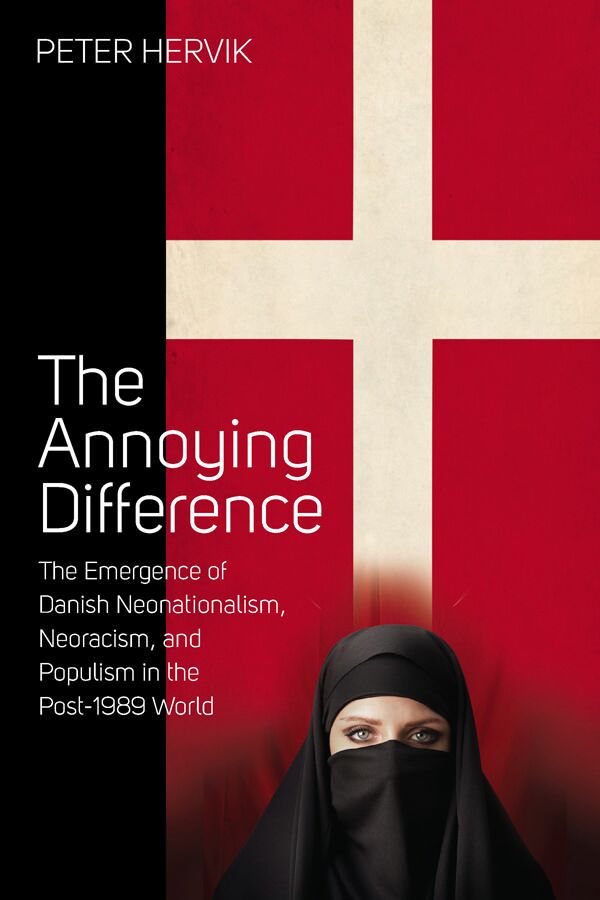
The Annoying Difference
The Muhammad cartoon crisis of 2005−2006 in Denmark caught the world by surprise as the growing hostilities toward Muslims had not been widely noticed. Through the methodologies of media anthropology, cultural studies, and communication studies, this book brings together more than thirteen years of research on three significant historical media events in order to show the drastic changes and emerging fissures in Danish society and to expose the politicization of Danish news journalism, which has consequences for the political representation and everyday lives of ethnic minorities in Denmark.
eBook

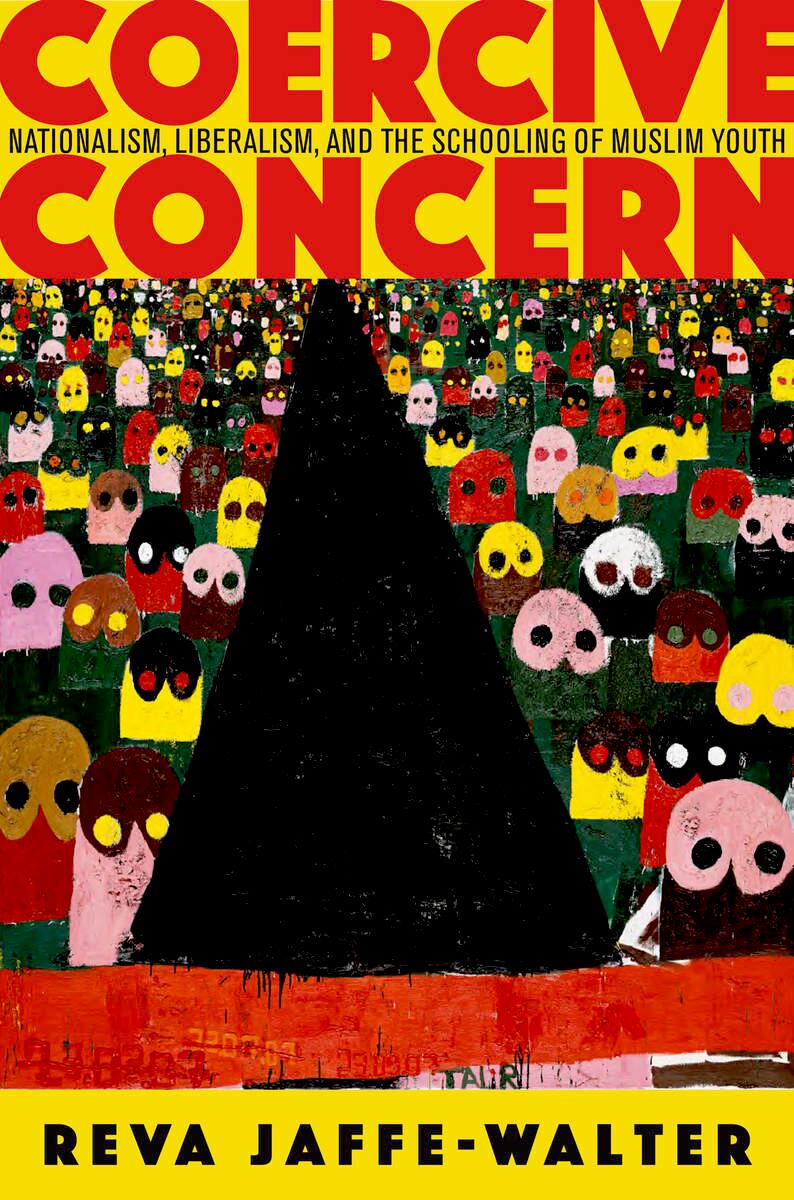
Coercive concern : nationalism, liberalism, and the schooling of Muslim youth
Many liberal-minded Western democracies pride themselves on their commitments to egalitarianism, the fair treatment of immigrants, and the right to education. These environments would seem to provide a best-case scenario for the reception of immigrant youth. But that is not always the case. Coercive Concern explores how stereotypes of Muslim immigrants in Western liberal societies flow through public schools into everyday interactions, informing how Muslim youth are perceived by teachers and peers. Beyond simply identifying the presence of racialized speech in schools, this book uncovers how coercive assimilation is cloaked in benevolent narratives of care and concern.
Coercive Concern provides an ethnographic critique of the \"concern\" that animates integration policy in Danish schools. Reva Jaffe-Walter focuses on the experiences of Muslim youth at a public school where over 40% of the student body is of immigrant descent, showing how schools operate as sites of governance. These efforts are led by political leaders who promote national fears of immigrant take-over, by teachers in schools, and by everyday citizens who are concerned about \"problems\" of immigration. Jaffe-Walter exposes the psychic and material costs immigrant youth endure when living in the shadow of social scrutiny, but she also charts a path forward by uncovering the resources these youth need to attain social mobility and success.
eBook

Culture War
The culture wars - intertwining art, culture and politics - have sparked political debates worldwide for many years, but particularly in Europe and America since 2001. Culture War focuses on Denmark's experience during this period, aiming to understand the dynamics of contemporary affective cultural politics in a highly mediatized environment.
eBook

Family Upheaval
Pakistani migrant families in Denmark find themselves in a specific ethno-national, post-9/11 environment where Muslim immigrants are subjected to processes of non-recognition, exclusion and securitization. This ethnographic study explores how, why, and at what costs notions of relatedness, identity, and belonging are being renegotiated within local families and transnational kinship networks. Each entry point concerns the destructive-productive constitution of family life, where neglected responsibilities, obligations, and trust lead not only to broken relationships, but also, and inevitably, to the innovative creation of new ones. By connecting the micro-politics of the migrant family with the macro-politics of the nation state and global conjunctures in general, the book argues that securitization and suspicion-launched in the name of \"integration\"-escalate internal community dynamics and processes of family upheaval in unpredicted ways.
eBook

Sovereignty, Substance, and Public Support for European Courts’ Human Rights Rulings
Is the public backlash against human rights rulings from European courts driven by substantive concerns over case outcomes, procedural concerns over sovereignty, or combinations thereof? We conducted preregistered survey experiments in Denmark, France, Poland, Spain, and the United Kingdom using three vignettes: a foreigner who faces extradition, a person fighting a fine for burning Qurans, and a home owner contesting eviction. Each vignette varies with respect to whether a European court disagrees with a national court (deference treatment) and whether an applicant wins a case (outcome treatment). We find little evidence that deference moves willingness to implement judgments or acceptance of court authority but ample evidence that case outcomes matter. Even nationalists and authoritarians are unmoved by European court decisions as long as they agree with the case outcome. These findings imply that nationalist opposition to European courts is more about content than the location of authority and that backlash to domestic and international courts may be driven by similar forces.
Journal Article

Voices from the margins: How national stories are linked with support for populist radical right parties
How do national stories shape voter behavior? Do they affect all voters equally, or are some groups more influenced by these narratives? This article examines the impact of \"boundary national stories,\" which highlight clear distinctions between \"us\" and \"them\" in national identity, on voting patterns for populist radical right parties (PRRPs). Using original representative election surveys conducted in four Western democracies, we find that voters who embrace a Boundary national story are more likely to vote for Populist Radical Right Parties (PRRPs) than those who do not hold such stories, and that the electoral effect of such stories is more salient for marginalized groups in society. Our findings demonstrate that, while national stories can foster cohesion, they can also drive us apart and polarize our politics. We conclude by discussing the broader implications of these findings for the study of populism in political science.
Journal Article

Immigration, Ethnic Diversity, and Political Outcomes: Evidence from Denmark
I study the impact of immigration and increasing ethnic diversity on political outcomes in immigrant-receiving countries, focusing on immigration and election outcomes in Danish municipalities between 1981 and 2001. A novel instrumental variable strategy based on historical housing stock data addresses issues of endogenous location choices of immigrants and a rich set of control variables is employed to isolate ethnic diversity effects from those of other immigrant characteristics. Increases in local ethnic diversity lead to rightward shifts in election outcomes by shifting electoral support away from traditional \"big government\" left-wing parties and towards anti-immigrant nationalist parties. This holds for both local and national elections.
Journal Article